
Single-use formulation mixing for sterile drug manufacturing
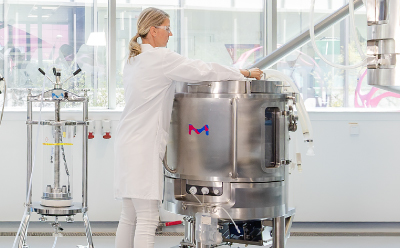
Successful formulation is more than simply mixing: sensitive biomolecules must be protected from shear and thermal stress, risks from contamination minimized, while the process must achieve and maintain chemical and physical homogeneity in advance of sterile filtration and filling. This critical step must also maximize product recovery, as any product loss means fewer filled vials.
Integrated single-use formulation systems that combine low-shear mixing, robust mixing bags designed to handle large fluid volumes, real-time process monitoring, and validation support can reduce operational risk.
Learn how these systems help biomanufacturers meet product quality targets while aligning with regulatory expectations for process control and risk mitigation.
Learn more by reading through the article:
- Why is formulation a critical step in your aseptic processing?
- How does low-shear mixing protect sensitive biologics?
- Why does single-use film matter during drug product formulation?
- How does formulation connect to sterile filtration and final fill?
- Supporting implementation with validation and regulatory expertise.
- Frequently asked questions
Why is formulation a critical step in your aseptic processing?
Complex biologics can be highly sensitive to the manufacturing environment, including the drug product formulation steps. Formulation, positioned immediately upstream of sterile filtration and final fill, determines the drug product’s final composition while preserving molecular integrity in preparation for aseptic fill-and-finish operations. Our high-quality excipients, manufactured under IPEC-PQG GMP guidelines, protect biologics from degradation while optimizing stability and performance.1
Whether manufacturing large or small molecules, manufacturers must balance multiple process requirements simultaneously. Formulation must protect sensitive biomolecules from shear and temperature stress while producing a homogeneous solution with precise incorporation of buffers, stabilizers, surfactants, salts, and other excipients. Inadequate mixing can create concentration gradients or inconsistent pH that may affect product stability or product quality.
At the same time, optimized vessel design should minimize product loss to the system to maximize product recovery. Because formulation occurs immediately before sterile filtration and aseptic filling, formulation is usually a closed process, supporting contamination control strategies to minimize bioburden contamination risk and meet evolving regulatory expectations, including EU GMP Annex 1.2
These technical challenges are compounded by increasing demands for manufacturing flexibility, easy scalability, reduced time and costs on routine cleaning operations and cleaning validation, coupled with faster product changeovers. As a result, formulation requires more than an effective mixing vessel. It requires an integrated solution that combines the technology for gentle mixing with robust single-use assemblies, real-time process monitoring, and validation support to help manufacturers consistently produce high-quality drug product while reducing operational risks.
How does low-shear mixing protect sensitive biologics?
Meeting the requirements for formulation begins with mixing technology specifically designed for sensitive biologics, such as Mobius® MIX for Formulation system.
In contrast to standard mechanical agitators, Mobius® MIX for Formulation system utilizes a magnetically driven levitating impeller that efficiently mixes while minimizing shear forces. This configuration eliminates mechanical contact between moving components, reducing friction, particle generation, and wear.
The off-center, angled impeller generates both radial and axial flow without requiring internal baffles, minimizing dead zones while producing efficient mixing throughout the vessel. This configuration supports consistent component blending while preserving the integrity of the biologic.
Mobius® MIX for Formulation system enables process consistency across scale-up, with sizes for any processing volume from development to commercial manufacturing.
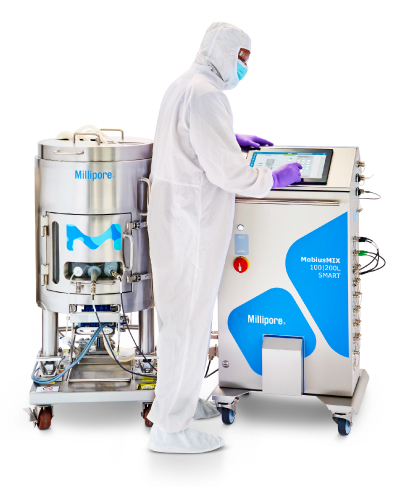
Figure 1.Mobius® MIX for Formulation System
The Mobius® MIX for Formulation system incorporates key performance advantages:
Maximizes product recovery
The conical bottom on the cylindrical vessel promotes efficient draining, minimizing residual product volume and maximizing high-value drug product recovery. Optimized probe placement and bottom sampling enable operation at low minimum working volumes without compromising process monitoring.
Enables real-time process control
Integrated sensing for pH, conductivity, temperature, and weight allows operators to continuously monitor and adjusts conditions throughout formulation operations. This supports more consistent performance and reduces reliance on end-point testing.
Supports closed, aseptic processing
Needle-free sampling enables representative sample collection while maintaining a closed process. Combined with sanitary, cleanroom-ready hardware and seamless connectivity to downstream filtration and filling, the mixing system design supports contamination control strategies.
Simplifies operation and scale-up
With multiple vessel sizes, consistent mixing technology and configurable automation, the system supports efficient scale-up from development to commercial manufacturing. Features such as large access doors, jacketed vessels, touchscreen human-machine interface (HMI), and embedded common control platform (CCP) software simplify operation and improve consistency.
Why does single-use film matter during drug product formulation?
Formulation bags must withstand installation, mixing, handling, transportation, storage, and gamma sterilization without compromising sterility or product quality. Failures at any point in the process can result in substantial product loss and manufacturing delays. Leak events become increasingly costly as products progress through manufacturing.
Formulation bags made with Ultimus® film are designed with superior strength, improved durability, and leak resistance – key attributes for formulating or shipping drug product.
The multilayer construction of Ultimus® film improves film durability while maintaining compatibility with demanding bioprocess applications (Figure 2). Development testing verified puncture resistance, tear strength, abrasion resistance, flexibility, shipping performance, and cell culture compatibility under representative manufacturing conditions.
The exceptional performance of Ultimus® film was confirmed when tested against five commercially available single-use bioprocessing films according to American Society of Testing Materials (ASTM) standard tests including ASTM D882, ASTM F3300, ASTM F1306 and ASTM F392 3,4,5,6. Ultimus® film offers 2.85 times greater tensile strength, 10 times greater abrasion resistance, and 2 times greater puncture resistance compared to the average performance of these films.
For operations involving valuable drug product formulation, the performance advantage of Ultimus® film provides an additional layer of process protection.
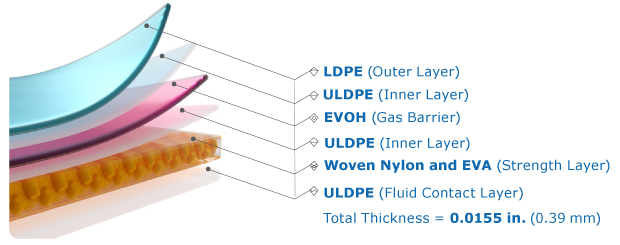
Figure 2.Schematic of Ultimus® film structure showing the LDPE outer layer, EVOH gas barrier, Woven nylon and EVA strength layer and ULDPE safe fluid contact inner layer. The film thickness is 0.0155 in. (0.39 mm).
Successful formulation is more than simply mixing
Protecting sensitive biomolecules from shear and thermal stress, maintaining chemical and physical homogeneity, minimizing contamination risk, and maximizing product recovery are all critical to formulation success. Watch our on-demand webinar to explore key considerations for developing robust formulation processes that support downstream sterile filtration and final fill.
How does formulation connect to the sterile filtration and final fill?
Formulation operations do not exist in isolation. Following formulation, the drug product moves directly into sterile filtration and finally aseptic filling. Decisions made during formulation, including equipment selection, sampling strategy, process monitoring, and process connectivity can influence subsequent manufacturing performance.
An integrated single-use ecosystem helps maintain a closed process throughout the formulation, sterile filtration, and filling sequence (Figure 3). This approach provides several advantages including:
- Reduced contamination risk through closed processing
- Simplified facility operations
- Reduced cleaning validation
- Faster product changeovers
- Improved manufacturing flexibility
- Better integration between unit operations
Rather than viewing formulation, filtration, and filling as separate activities, manufacturers are designing complete aseptic workflows that minimize interventions while supporting consistent product quality.
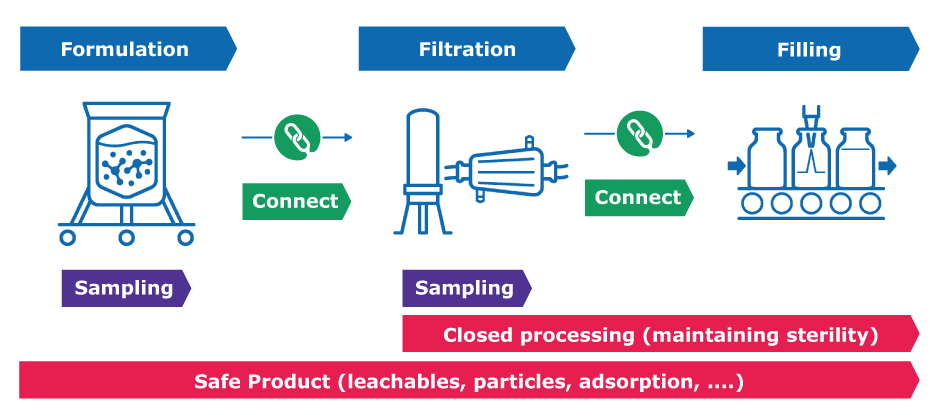
Figure 3.A complete, integrated, single-use solution for formulation, final filtration, and filling helps maintain a closed process.
Supporting implementation with validation and regulatory expertise
Successful implementation extends beyond equipment selection. Manufacturers must also qualify systems, document material suitability, characterize extractables and leachables, and provide the documentation on all single-use components to support regulatory submissions.
The Emprove® Advance Qualification Dossier (AQD) is the first of its kind dossier that meets the qualification needs for both custom and configurable Mobius® assemblies. By consolidating information for individual components in a single document, the AQD Dossier expedites risk assessments and the patient safety evaluation for your Mobius® assembly and streamlines implementation in biopharmaceutical production.
Our single-use and filter validation services can simplify your path to market by helping to test and validate your assemblies, and single-use systems for drug manufacturing, and avoid regulatory observations and delays in your approval process.
Together, these resources help manufacturers reduce implementation risk while building confidence in their contamination control strategy.
Explore the aseptic processing ecosystem
Formulation mixing is the foundation of a successful aseptic manufacturing process, but it is only one step in the journey from drug product preparation to final fill. Explore the Aseptic Processing Ecosystem to learn how formulation mixing, single-use assemblies, sterile filtration, validation services, and regulatory support work together to help maintain product quality and reduce risk throughout aseptic manufacturing.
Need help with your formulation mixing process?
Connect with our experts to discuss single-use mixing solutions, scale-up considerations, process monitoring, product recovery, and other factors that can help support consistent, low-shear formulation prior to sterile filtration and final fill.
Frequently asked questions
What are the advantages of single-use formulation systems?
Single-use systems reduce cleaning validation, minimize cross-contamination risk, support closed processing, improve manufacturing flexibility, and enable faster product changeovers.
Why is product recovery a key consideration in formulation?
High-value biologics make every milliliter important. Vessel designs with conical bottoms and low hold-up volumes help maximize recovery while reducing product loss.
How does single-use film contribute to product quality?
The film must maintain integrity throughout sterilization, handling, mixing, and transport while minimizing extractables and leachables that could affect product quality.
How do validation services support aseptic manufacturing?
Validation services and documentation programs help manufacturers qualify equipment, support regulatory submissions, assess material suitability, and implement compliant contamination control strategies.