
Sterility Testing
Sterility testing is a critical GMP requirement to confirm that pharmaceutical products, medical devices, biologics, and cell & gene therapies are free from viable microorganisms prior to patient administration. A failed sterility test — whether a true positive or a false result — carries significant consequences: product recalls, patient safety risks, and costly regulatory investigations.
As pharmacopoeia standards evolve and regulatory scrutiny intensifies, modern sterility testing programs must address three interconnected challenges: methodological accuracy, data integrity, and speed-to-release. Understanding the available sterility testing methods, their regulatory frameworks, and the latest advances in digital workflows and rapid microbiological methods is essential for any quality control laboratory operating under GMP.
From selecting the right testing method for your product and packaging format, to meeting evolving regulatory expectations around data integrity and speed-to-release, this guide walks you through every key aspect of sterility testing.
- Pharmaceutical Sterility Testing Methods
- Membrane Filtration Sterility Testing
- Direct Inoculation Sterility Testing
- Rapid Microbiological Methods (RMM) for sterility testing
- Data Integrity and Governance in Sterility Testing
- Sterility Testing Applications: From Pharmaceuticals to Cell & Gene Therapies
- Sterility Testing Workflows
Featured categories
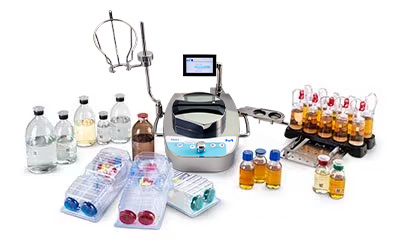
Laboratory instruments and consumables for sterility testing in microbiological quality control: Sterility test media, pumps, hardware and accessories.

Ensure safety: Pyrogen testing is vital for pharmaceuticals, devices. Monocyte Activation Test (MAT) detects endotoxin, non-endotoxin pyrogens.
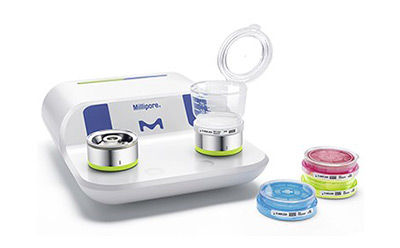
Speed up your time-to-result with rapid microbial testing using our complete membrane filtration systems; used in bioburden testing, food and beverage analysis, and cannabis microbiology testing.
Pharmaceutical sterility testing methods
Compendial sterility testing for pharmaceutical products is governed by USP <71>, Ph. Eur. 2.6.1, and JP <4.06>, which require samples to be cultured in two separate media over a 14-day incubation period. Two culture media are used to ensure comprehensive microorganism coverage: Fluid Thioglycolate Medium (FTM) for anaerobic and aerobic bacteria (incubated at 32.5°C), and Soybean Casein Digest Medium (SCDM) also called Trypticase Soy Broth (TSB) for aerobic bacteria and fungi (incubated at 22.5°C). Any turbidity observed after incubation indicates potential microbial contamination and must be investigated.
Two compendial methods are recognized: membrane filtration and direct inoculation. The choice of method depends on the nature of the product, its packaging format, and its physicochemical properties. Where the nature of the product permits, membrane filtration is the method of choice as stated by USP <71>, Ph. Eur. 2.6.1, and JP <4.06>, owing to its superior sensitivity and ability to remove inhibitory substances. Direct inoculation remains applicable where filtration is not feasible.
While the 14-day incubation period remains the pharmacopoeial standard, Rapid Microbiological Methods (RMMs) based on ATP bioluminescence technology are increasingly accepted by regulators for short shelf-life products, including cell and gene therapies. The new USP <73> chapter — "ATP Bioluminescence-Based Microbiological Methods for the Detection of Contamination in Short-Life Products" — provides a clear regulatory framework for RMM adoption and for the validation and implementation of this technology, effective August 2025.
Regardless of the method selected, data integrity requirements apply equally to all sterility testing workflows: all test data must be fully traceable, audit-ready, and compliant with ALCOA++, 21 CFR Part 11, and EU Annex 11 — from sample receipt to final result recording.
Membrane filtration sterility testing

Visit our document search for data sheets, certificates and technical documentation.

With 50+ years of experience as the industry pioneer, the Steritest® solution delivers robust and safe sterility testing for trusted results. Membrane filtration is the regulatory method of choice for filterable pharmaceutical products under USP <71>, Ph. Eur. 2.6.1, and JP <4.06>. The sample is passed through a 0.45 µm membrane filter, where microorganisms are retained and subsequently cultured in appropriate media.
This method offers key advantages over direct inoculation:
- Higher sensitivity — the entire sample, or a composite, is filtered through a single membrane
- Inhibitor removal — antimicrobial compounds such as antibiotics or preservatives can be rinsed away before incubation, preventing false negative results
- Closed-system protection — modern closed-system filtration devices ensure the product is never exposed to the environment during testing, significantly reducing the risk of extraneous contamination and invalid test results
The use of closed-system, single-use membrane filtration devices is considered best practice in GMP sterility testing environments, both in laminar flow hoods and isolators.
Direct inoculation sterility testing
In direct inoculation sterility testing, a small volume of sample is aseptically transferred into a suitable growth medium and incubated. While straightforward to perform, this method presents several limitations that laboratories should consider:
- Reduced sensitivity — only small sample volumes can be inoculated, increasing the risk of missing low-level contamination
- Turbidity interference — inherently turbid or colored products can mask microbial growth during visual examination
- Antimicrobial inhibition — products with antimicrobial properties must be neutralized prior to inoculation to avoid false negative results
Rapid Microbiological Methods (RMM) for sterility testing
As regulatory frameworks evolve to accommodate innovation, Rapid Microbiological Methods (RMMs) are gaining acceptance as scientifically validated alternatives to traditional compendial sterility testing. RMMs are particularly relevant for short shelf-life products — such as cell and gene therapies, radiopharmaceuticals, and short-life biologics — where a 14-day incubation period is incompatible with product release timelines or patient treatment schedules.
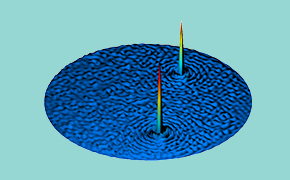
Among the most established RMM technologies, ATP bioluminescence detects light emitted by viable microorganisms following reaction with a bioluminescence reagent, enabling rapid, sensitive, and quantitative contamination detection. Unlike traditional incubation-based methods, ATP bioluminescence replaces subjective visual turbidity assessment with a quantitative, instrument-based measurement, enabling earlier and more reproducible result interpretation.
The introduction of USP <73> — "ATP Bioluminescence-Based Microbiological Methods for the Detection of Contamination in Short-Life Products", effective August 2025 — marks a significant regulatory milestone, providing laboratories with a clear pharmacopoeial framework to implement and validate RMM-based sterility testing. This is complemented by USP <1071>, which provides broader guidance on the implementation and validation of rapid microbial methods.
RMMs are suitable not only for end-product sterility testing but also for in-process bioburden monitoring throughout the manufacturing workflow, offering laboratories a versatile and compliant solution across multiple quality control applications.
The Milliflex® Rapid System 2.0 is fully aligned with USP <73> requirements and enables your laboratory to implement a validated, compliant RMM-based sterility testing workflow — delivering results in 5 days or less.

Data integrity and governance in sterility testing
A sterility test result is only as reliable as the data behind it — and regulatory agencies worldwide are placing data integrity at the heart of GMP microbiology compliance. Beyond methodology, equal importance is placed on how sterility test data is generated, recorded, and maintained throughout the entire test lifecycle. Regulatory bodies including the FDA, EMA, and PMDA require that all laboratory data meets ALCOA++ principles: data must be Attributable, Legible, Contemporaneous, Original, and Accurate, with additional expectations around completeness, consistency, and availability.
In the US, 21 CFR Part 11 defines the requirements for electronic records and electronic signatures, making digital documentation legally equivalent to paper records. In Europe, EU Annex 11 establishes equivalent expectations for computerized systems in GMP environments. Together, these regulations set a clear framework for Data Integrity for QC lab data, including Sterility Testing: real-time data capture, automatic audit trail generation, and complete end-to-end digital traceability — from operator identification and instrument data, to sample information and final results — are increasingly expected by regulators during GMP inspections and considered industry best practice. The M-Trace® software & Mobile App helps your laboratory meet these regulatory expectations.
Sterility Testing Applications: From Pharmaceuticals to Cell & Gene Therapies
Sterility testing is a routine quality control requirement across a broad range of GMP-regulated industries. While the fundamental principles remain consistent, the choice of method, regulatory framework, and speed-to-result requirements vary significantly by segment:
- Pharmaceutical products — including injectables, ophthalmic preparations, and infusion fluids — represent the largest volume of sterility testing, governed by USP <71>, Ph. Eur. 2.6.1, and JP <4.06>
- Biologics, biosimilars & vaccines — sterile parenteral products requiring rigorous batch release testing under GMP
- Medical devices — sterility testing adapted to device format, using direct transfer or product flush methods
- Cell & Gene Therapies (CGT) and ATMPs — short or ultra-short shelf-life products where rapid microbiological methods are often the only viable option for same-day or next-day release decisions
- Radiopharmaceuticals — products with half-lives measured in hours, for which traditional 14-day incubation is not feasible and RMMs are increasingly mandated
- Tissue & regenerative medicine — sterility confirmation prior to transplantation or administration"
Sterility testing workflows
Traditional compendial workflow — membrane filtration
The following step-by-step workflow describes the membrane filtration sterility test as performed under USP <71>, Ph. Eur. 2.6.1, and JP <4.06>.
Test preparation — Assemble the membrane filtration device and connect tubing to the sterility testing pump inside the controlled environment (laminar flow hood or isolator)
- Rinsing of the membrane/filter prewetting — Prewet the membrane to optimize filtration efficiency and minimize product adsorption to the filter
- Sample filtration — Filter equal volumes of product into both canisters; microorganisms are retained on the 0.45 µm membrane
- Rinsing — Remove inhibiting compounds using a validated rinsing solution to prevent false negative results
- Culture media filling — Fill membrane filtration devices with SCDM (TSB) and FTM sterile culture media
- Incubation — 14 days at 32.5°C (FTM) and 22.5°C (SCDM). These temperatures represent the midpoints of the pharmacopoeial ranges of 30–35°C and 20–25°C respectively, as specified under USP <71>, Ph. Eur. 2.6.1, and JP <4.06>
- Result examination — Visual turbidity check; any turbidity must be investigated as potential microbial contamination
- Digital test record — Contemporaneous, automatic capture of all test steps, operator actions, and instrument data into a single, auditable electronic record supports compliance with 21 CFR Part 11, ALCOA++ data integrity principles, and regulatory inspection readiness
Step descriptions are aligned with compendial requirements of USP <71>, Ph. Eur. 2.6.1, and JP <4.06>. Step 8 reflects current regulatory expectations for data integrity under 21 CFR Part 11 and EU Annex 11, beyond pharmacopoeial requirements.
Rapid sterility testing workflow — ATP bioluminescence
For short shelf-life products — including cell and gene therapies, radiopharmaceuticals, and short-life biologics — the traditional 14-day incubation period is often incompatible with product release timelines. Rapid Microbiological Methods (RMMs) offer a scientifically validated, regulatory-accepted alternative.
ATP bioluminescence is one of the most established RMM technologies for sterility testing. It detects light emitted by viable microorganisms following reaction with a bioluminescence reagent, enabling rapid, sensitive, and quantitative contamination detection. The new USP <73> chapter—"ATP Bioluminescence-Based Microbiological Methods for the Detection of Contamination in Short-Life Products"—provides a clear regulatory framework for RMM adoption, effective August 2025.
A typical ATP bioluminescence rapid sterility testing workflow proceeds as follows:
- Sample filtration — The sample is filtered through a dedicated membrane, retaining viable microorganisms
- ATP reagent application — Bioluminescence reagents are applied to the membrane, targeting viable cells
- Automated detection and Quantification — A highly sensitive detection camera captures and quantifies light signals from viable microorganisms
- Results in 5 days or less — Delivering results up to 75% faster than the traditional 14-day compendial method. Actual time-to-result depends on the validated method and product type.
- Electronic test record — All results are captured in a 21 CFR Part 11-compliant, fully auditable digital record
This workflow is based on ATP bioluminescence technology as described in USP <73>. Step 5 reflects current regulatory expectations for data integrity and electronic recordkeeping under 21 CFR Part 11 and EU Annex 11.
RMMs using ATP bioluminescence are suitable for both sterility testing and in-process bioburden monitoring, providing laboratories with a versatile, fast, and compliant solution across the manufacturing workflow.
Related Articles
- The user-friendly Steritest® Symbio pumps and accessories are designed for easy and reliable sterility testing. The system improves your workflow and maximizes safety, confidence, and convenience.
- Sterility testing is one of the most crucial steps in pharmaceutical product release. Regulatory-compliant membrane filtration sterility testing devices ensure the safety of pharmaceutical products.
- Our sterility testing media and fluids are formulated and tested to meet EU, US, and JP pharmacopeia regulations, and are supplied with full certification containing pH, sterility, and growth promotion information.
- Direct inoculation of culture media is the method of choice for sterility testing of non-filterable samples. Select from our range of sterility testing media including soybean casein digest medium (TSB), and Fluid Thioglycollate medium (FTM standard and clear).
- Irradiated Isopropyl Myristate (IPM) enhances filterability for sterility testing of viscous products using the Steritest® NEO device.
- See All (9)
Related Protocols
- Cell culture protocol for testing cell lines for bacterial and fungal contamination.
Find More Articles and Protocols
How Can We Help
In case of any questions, please submit a customer support request
or talk to our customer service team:
Email custserv@sial.com
or call +1 (800) 244-1173
Additional Support
- Chromatogram Search
Use the Chromatogram Search to identify unknown compounds in your sample.
- Calculators & Apps
Web Toolbox - science research tools and resources for analytical chemistry, life science, chemical synthesis and materials science.
- Customer Support Request
Customer support including help with orders, products, accounts, and website technical issues.
- FAQ
Explore our Frequently Asked Questions for answers to commonly asked questions about our products and services.
