
Eshmuno® Fit custom affinity resin development services
Streamline your downstream processing with Eshmuno® Fit custom affinity resin development services. Our approach utilizes tailored caustic-stable Nanofitin® ligands designed specifically for your target molecule and conjugates them to our well-established Eshmuno® base beads. This enables the creation of custom and optimized affinity resins to address your specific purification challenges.
Benefits:
- High yield, even for difficult-to-purify molecules
- High purity levels can be achieved in just one step, streamlining the purification process
- Improves and simplifies the overall purification workflow by reducing the number of downstream processing steps
- Cost savings from optimized and simplified downstream processes, high efficiency, and increased recovery of valuable therapeutics
- Easy to scale, ensuring consistent performance through scale-up and flexible manufacturing
Why choose Eshmuno® Fit custom affinity resin development services?
- Diversity: Our technology relies on a library of over 1e14 Nanofitin® variants, enabling custom generation of ligands for affinity separation of various target molecules such as vaccines, viral vectors, and novel mAbs.
- Tailored caustic stability: Allows for reusability and the reduction of consumables costs.
- Versatility: Randomization of binding sites combined with a ribosomal display screening platform allows for the customization of ligands to specific interactions and tailored process conditions.
- Templated manufacturing: Manufactured under controlled conditions. Established quality system, certified ISO 9001, and Rx-360 audited site.
- Project execution: Ensuring the implementation of the custom affinity resin from start to finish through our dedicated team of technical experts and project managers.
Eshmuno® FIT framework
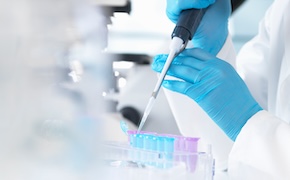

Small-scale prototypes
- Up to 3 pre-packed prototypes of selected ligands coupled with Eshmuno® matrix
- Physical characterization testing
- Functional testing, including static binding capacity, dynamic binding capacity, and cleaning-in-place
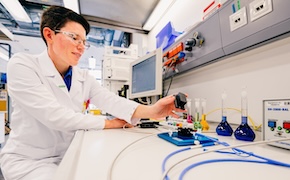
Research-scale prototypes
- 6 statistical batches, including bicinchoninic acid (BCA) protein assay and dynamic binding capacity
- Research scale production (ISO9001)
- QC testing, including bicinchoninic acid (BCA) protein assay, dynamic binding capacity, etc.

Production transfer and qualification
- Scale-up of Nanofitin® ligand and resin production
- Definition of extended specifications
- Validation of analytical methods
- Process validation through qualification batches
- Quality and regulatory compliance for GMP applications
- Regulatory support files
Related resources
- Application note: Eshmuno® Fit services
Custom Affinity Resin Development Services to Streamline Downstream Processing of Difficult to Purify Molecules
- White paper: Vaccine manufacturing: collaboration helps to overcome vaccine process challenges
This white paper showcases collaborative technology-development efforts carried out by the DiViNe consortium to advance the use of an innovative affinity chromatography platform during vaccine manufacturing.
- ebook: Enabling vaccine production - solving challenges together
This eBook presents a series of vaccine case studies highlighting our recent collaborations with organizations and thought leaders
Related webinars
Frequently asked questions
How does the Eshmuno® Fit custom affinity technology work?
The Eshmuno® Fit custom affinity technology uses Nanofitin® ligands, specifically designed to bind to a target molecule, such as a protein or other biological target. These custom ligands are immobilized onto the Eshmuno® chromatography matrix, creating a custom affinity resin. This technology allows for the selective capture and purification of the target molecule from a complex mixture, such as a clarified cell lysate or cell culture supernatant.
What are Nanofitin® ligands?
Nanofitin® ligands are small, single-chain, cysteine-free affinity proteins derived from the Sac7d protein, isolated from the hyperthermophile archaeon discovered in the Yellowstone USA National Park geysers. Nanofitin® proteins frame a versatile platform for custom-generating ligands for affinity separation. They fold into a well-characterized OB-fold and share stability profiles that make them suitable for various applications, including as custom affinity ligands for purification processes.
How do Nanofitin® library generation and screening work?
The Nanofitin® ligand library is screened through a process called ribosome display, which involves the in vitro selection of high-affinity ligands from a combinatorial library of Nanofitin®. The library is generated by randomizing the natural DNA-binding site of the Sac7d protein, yielding a diverse set of Nanofitin® with unique binding properties. These Nanofitin® ligands are then screened for their ability to bind to a specific target molecule through multiple rounds of selection, and the best candidates are further characterized for their expression yield, binding kinetics, and stability under cleaning-in-place (CIP)-like conditions.
Can the Eshmuno® Fit resin be customized for a specific molecule or a cluster of molecules?
Yes, Eshmuno® Fit resin can be customized for a specific molecule or cluster of molecules. This process typically includes ligand generation and selection, Nanofitin® ligand expression and purification, and evaluation of the custom affinity resin to ensure it meets the required specifications for downstream applications.
How is the optimal ligand determined for the Eshmuno® Fit custom affinity resin?
The optimal ligand for Eshmuno® Fit custom affinity resin is determined through a process of ligand generation and selection, ribosome display selection, enzyme-linked immunosorbent assay (ELISA) screening, sequencing, expression, purification, and validation of binding kinetics and stability under cleaning-in-place (CIP)-like conditions. This comprehensive process ensures that the optimal ligand is chosen for the Eshmuno® Fit custom affinity resin, providing high binding capacity and tailored stability in caustic solutions.
What is the expected binding capacity and resolution of the Eshmuno® Fit resin?
The typical binding capacity is usually in the double-digit milligrams per milliliter range, and the resolution is influenced by the ligand to target specific affinity constants of < 10-7 M. However, this varies depending on the particular ligand and target molecule used in the purification process.
Can the resin be scaled up for larger manufacturing processes?
Yes, the scalability of the Eshmuno® Fit resin was investigated for larger manufacturing processes. A template process has been developed to flexibly scale custom affinity resins from the research scale to the final lot size required for industrial applications.
What quality control criteria are in place for the custom affinity resins?
The custom affinity resins’ quality control criteria include the following parameters: appearance, microscopic evaluation, particle size, dynamic binding capacity (DBC), bicinchoninic acid (BCA) protein assay, dynamic binding capacity, total yeast and mold count (TYMC), total aerobic microbial count (TAMC), and endotoxins.