
Organolithium Reagents
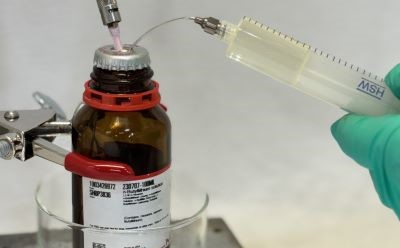

Organolithium reagents are strong bases and powerful nucleophiles that drive modern organic synthesis and lithiation chemistry. Since their discovery by Schlenk and Holtz, organolithiums have become indispensable tools for nucleophilic addition and substitution reactions, enabling efficient routes to complex natural products and novel scaffolds. As demand grows for faster, more selective methods, stereochemically enriched organolithium compounds accelerate the development of innovative synthetic technologies across academia and industry.
Products
Products
Reactivity and applications of organolithium reagents
Organolithiums are characterized by the direct carbon-lithium bond and are typically compared to other carbanionic compounds, such as Grignard reagents. These reagents are widely used across organic and organometallic chemistry for their exceptional reactivity and selectivity.
Typical applications include:
- Nucleophilic additions to aldehydes and ketones, generating secondary and tertiary alcohols
- Deprotonation reactions of alcohols, amines, and other acidic protons
- Formation of lithium enolates, which undergo further reactions with electrophiles
- Synthesis of organometallic complexes for catalysis and cross-coupling
- Initiation of anionic polymerizations and formation of functionalized polymers
Traditional organolithium reagents
Traditional organolithiums display high sensitivity to both air and moisture, and are provided in our Sure/Seal™ packaging system to prolong their shelf life.
Alkyllithium reagents for synthesis
Alkyllithium reagents include n-butyllithium and its isomers, chiral sec-butyllithium, and t-butyllithium, which are widely used as strong bases and nucleophiles in organic synthesis. They serve as sources of butyl carbanions in Grignard-type reactions, initiators for anionic polymerization, and intermediates for functional group transformations.
These reagents are offered in various hydrocarbon and Lewis base solvent systems such as hexane, heptanes, methyl tetrahydrofuran (MeTHF), and diethyl ether.
Specialty organolithium reagents
Specialty organolithium complexes, such as lithium (trimethylsilyl) acetylide solution, phenyllithium solution, and lithium pentamethylcyclopentadienide support advanced synthetic applications.
- Lithium (trimethylsilyl)acetylide is used for ferrocene synthesis.
- Phenyllithium enables the conversion of γ- and δ-thiolactams to thioiminium salts in combination with Grignard reagents.
- Lithium pentamethylcyclopentadienide serves as a catalytic base in palladium-catalyzed cross-coupling reactions.
Lithium amides
Lithium amides such as lithium diisopropylamide (LDA) and lithium bis(trimethylsilyl)amide (LiHMDS), are often grouped with organolithium reagents even though they do not possess a direct carbon-lithium bond. These reagents are strong, non-nucelophilic lithium bases and are often more selective than alkyllithiums.
- Lithium diisopropylamide (LDA) is used for enolate formation and selective deprotonation.
- Lithium bis(trimethylsilyl)amide (LiHMDS) is used to generate acetylides and enolates.
Non-pyrophoric organolithium reagents
Our non-pyrophoric organolithium formulations have replaced small-chain hydrocarbon solvents with a poly-α-olefin (PAO)/solvent mixture (n-butyllithium solution in PAO/hexanes). These innovative formulations have been proven to be non-pyrophoric according to the EPA's SW-846 Test Method 1050.
They retain their effectiveness in a variety of reactions, including C-H lithiations, nucleophilic substitutions, (SNAr), addition and halogen-exchange reactions.
Additionally, they are compatible with traditional lithiation additives such as KOtBu and TMEDA. These new formulations are also packaged in our Sure/Seal™ system to help extend the shelf life of these reagents.
Related resources
- Brochure: Reagents for Chemical Synthesis
Advance chemical synthesis with a comprehensive reagent portfolio supporting precise, reliable transformations across diverse applications.
- Article: Selective 1,2-Additions with LaCl3·2LiCl
Grignard reagent's 1,2-addition to ketones is powerful but selective issues often arise from competitive alpha-deprotonation.
- Article: Selective Metalations using i-PrMgCl·LiCl and s-BuMgCl·LiCl
Salt additives increase both the rate and the efficiency of the Mg-halogen exchange reaction. The most effective reagents are generated with R-MgCl (R = i-Pr, s-Butyl) and 1.0 equiv of LiCl.
- Aldrichimica Acta Vol. 48 No.3: Spirocyclic Modules
Includes the following articles "Ynamides: Powerful and Versatile Reagents for Chemical Synthesis", "Cyclic Sulfamidate Enabled Syntheses of Amino Acids, Peptides, Carbohydrates, and Natural Products"
- Aldrichimica Acta Vol. 48 No.2: Late Stage Functionalization
Includes the following articles "Catalytic Asymmetric Hydrogenation of α-Substituted Ketones and Aldehydes via Dynamic Kinetic Resolution: E˜cient Approach to Chiral Alcohols", "SnAP Reagents for a Cross-Coupling Approach to the One-Step Synthesis of Saturated N-Heterocycles", and "Development of Solvent Selection Guides"
- Aldrichimica Acta Vol. 41 No.3: Green, Mild, And Versatile Synthetic Methods
Includes the following articles "Transition-Metal-Catalyzed Cross-Couplings Going Green: in Water at Room Temperature" and "Preparation of Chiral Diamines by the Diaza-Cope Rearrangement (DCR)"
- Selective Metalation and Additions
Transformative reagents enable selective conversions within molecules containing sensitive functionalities under mild reactions.
- Traditional Strong and Hindered Bases
The basicity strength for some of our traditional bases, including DBU, DBN, and n-BuL are listed for easy comparison.
- Verkade's Bases
Verkade's bases are used in a variety of organic reactions, such as alkylations, dehydrohalogenations, acylations, and condensation and organometallic reactions for carbon-carbon bond formation.
- Lithium Aminoborohydride (LAB) Reagents
Lithium aminoborohydride (LAB) reagents are a new class of powerful and selective reagents developed in the laboratory of Professor Bakthan Singaram at the University of California, Santa Cruz.
- DABAL-Me3 - Non-pyrophoric Methyl Anion Equivalent
DABAL-Me3 is an adduct of trimethylaluminum and DABCO® that is a free-flowing solid that can be manipulated without the need for an inert atmosphere.