
Pyrogen testing methods

Pyrogen testing determines the quantity of pyrogens in parenteral pharmaceutical or biopharmaceutical products and is regulated by several standards from organizations such as the Food and Drug Administration (FDA), United States Pharmacopeia (USP), or European Pharmacopeia (EP). The sterility of a product does not imply that it is free of pyrogens. Therefore, drugs that are purported to be sterile must also be tested for pyrogens to prevent febrile reactions in patients.
Pyrogen contamination can occur during production or the administration of pharmaceuticals, biotherapeutics, and medical devices, but the presence of pyrogens can also be an inherent characteristic of the product, such as adjuvants in vaccines or synthetic lipopeptides.
Featured categories

Ensure safety: Pyrogen testing of pharmaceuticals with the Monocyte Activation Test (MAT) to detect endotoxin and non-endotoxin pyrogens.
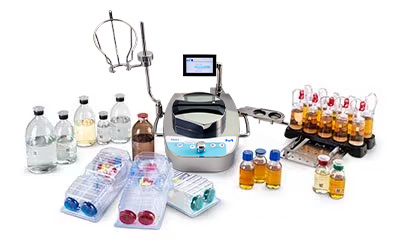
Laboratory instruments and consumables for sterility testing in microbiological quality control: Sterility test media, pumps, hardware and accessories.
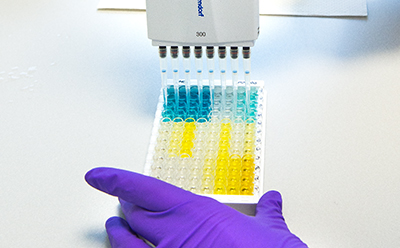
What is a pyrogen?
A pyrogen is a substance that causes a rise in temperature (fever reaction) in a human or animal through the activation of the innate immune system. They constitute a heterogeneous group of contaminants comprising microbial and non-microbial substances. Pyrogens can be classified into two groups: endotoxins and non-endotoxin pyrogens (NEPs).
Endotoxins are substances found in Gram-negative bacteria. Non-endotoxin pyrogens are other microbial substances, including those derived from Gram-positive bacteria, viruses, yeasts and fungi. Non-microbial pyrogenic substances can also originate from rubber particles, microscopic plastic particles, or metal compounds in elastomers.
Several test methods are available for the detection of pyrogens. They can be classified based on the type of contaminant they detect, and the need for animal materials to perform the test as described in the below table:
Rabbit pyrogen testing
The rabbit pyrogen test (RPT) involves measuring the rise in temperature of rabbits following the intravenous injection of the tested product. The RPT gives qualitative results and the sensitivity is quite low. The robustness of the test is also limited, due to development of pyrogen tolerance in rabbits after repeated injections, or stress from the rabbits when performing the assay.
Note: Rabbit Pyrogen Testing (RPT) is now forbidden in Europe, and the Monocyte Activation Test (MAT) is the method of choice for detecting both endotoxin and non-endotoxin pyrogens.
Monocyte Activation Test
The Monocyte Activation Test (MAT) is an alternative to animal-based methods for the detection of both endotoxin and non-endotoxin pyrogens. The monocyte activation test mimics the human immune reaction by incubating monocytes with the tested sample. If pyrogens are present, monocytes are activated and produce inflammatory molecules, cytokines, responsible for the febrile reaction. The cytokines are then detected using an immunological assay (ELISA) involving specific antibodies and an enzymatic color reaction.
Note: As of July 2025, the European Pharmacopoeia (Ph. Eur.) Commission recommends using the Monocyte Activation Test (MAT) as the preferred method for endotoxin and non-endotoxin pyrogen testing. The Rabbit Pyrogen Test (RPT) is now banned in Europe.
Read the article and discuss further with our Experts to move to the MAT detecting endotoxin and non-endotoxin pyrogens and to follow the regulatory trend.
Bacterial endotoxin testing (LAL test)
The most common method for endotoxin testing is the Limulus amoebocyte lysate test (LAL test); an assay based on the lysate of amoebocytes from the horseshoe crab blood. The lysate from horseshoe crab blood cells naturally reacts with bacterial endotoxins in a coagulation reaction. This method has a high sensitivity for the quantification of endotoxins, but it does not detect non-endotoxin pyrogens.
Recombinant BET (r-FC, r-CR) testing
The recombinant Factor C is a genetically engineered protein normally found in the Limulus amebocyte lysate cascade. In this test, Factor C reacts with endotoxin and couples with a marker to produce a quantifiable, fluorescent end product. The recombinant Factor C test uses the same principle as the LAL test, but without the need for animal-derived material.
The recombinant Cascade Reagent (r-CR) is a genetically engineered multi-component reagent that reconstitutes the complete coagulation cascade found in the Limulus amebocyte lysate. In this test, the cascade proteins,Factor C, Factor B, and the proclotting enzyme, react sequentially with endotoxin to produce a quantifiable end product. The r-CR test replicates the full LAL pathway, but without the need for animal-derived material.

Visit our document search for data sheets, certificates and technical documentation.
Related articles
- Interview: Accurate microbiology QC methods for infant formula testing
- Probiotics exhibit an inhibitory effect on pathogens, help prevent chronic intestinal inflammatory diseases or atopic syndromes, and support the immune system.
- Best practices for microbial testing of purified water in the lab. Covers storage, culture and incubation conditions, and contaminants reduction.
- Culture media provides a habitat with suitable nutrients, energy sources, and certain environmental conditions for the growth of microorganisms. The components of the culture media range from simple sugars to peptones, salts, antibiotics, and complex indicators.
- This article will focus on results obtained for MC-Media Pad RAC, MC-Media Pad Coliform, MC-Media Pad E. coli & Coliform & MC-Media Pad Yeast & Mold.
- See all (9)
Related protocols
- General guidance for the detection and enumeration of Enterobacteriaceae in food according to EN-ISO 8523:1991 and EN-ISO 4832:1991, respectively.
- See all (1)
Find more articles and protocols
Related webinars
In this webinar, we discuss how monocyte activation tests performed with the PyroMAT® System detect endotoxin and non-endotoxin pyrogens.
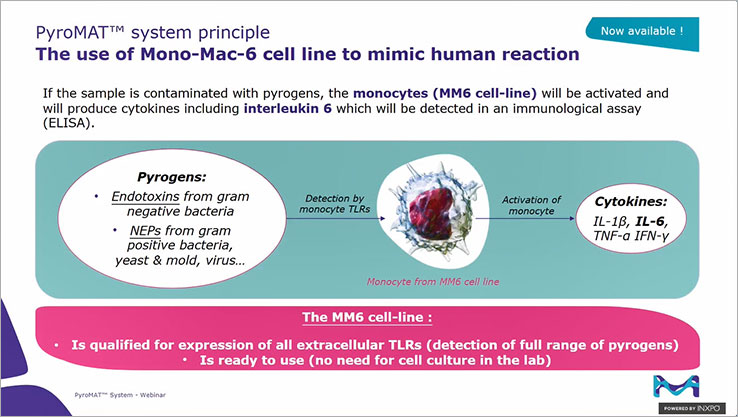
Learn how our PyroMAT® System provides a robust solution for in vitro Pyrogen Test in pharma with a ready-to use kit.
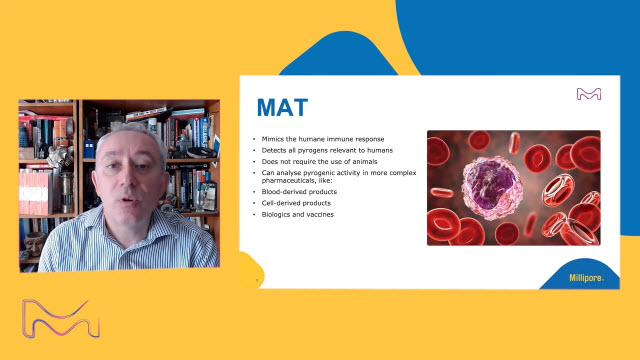
In this lecture, you will learn how to test for pyrogen (including non-endotoxin pyrogens) in your pharmaceutical samples, what are the existing methods in order to have a controlled process.
How can we help
In case of any questions, please submit a customer support request
or talk to our customer service team:
Email custserv@sial.com
or call +1 (800) 244-1173
Additional support
- Chromatogram search
Use the Chromatogram search to identify unknown compounds in your sample.
- Calculators and apps
Web Toolbox - science research tools and resources for analytical chemistry, life science, chemical synthesis and materials science.
- Customer support request
Customer support including help with orders, products, accounts, and website technical issues.
- FAQ
Explore our frequently asked questions for answers to commonly asked questions about our products and services.