Next Generation Virus Filtration Solutions
What are Next-Generation Virus Filters for Antibody Manufacturing?
Monoclonal antibodies (mAbs) are a cornerstone of modern biopharmaceuticals, with well-established templates for purification and drug substance production. For some molecules, virus filtration can be challenging to achieve the throughput for efficient, reliable and cost-effective filtration operations.
The Viresolve® Pro Solution is a well-established virus filtration solution that has provided reliable virus filtration performance for many mAbs for over two decades. This filtration solution offers high flux and filter capacity and effective virus retention across a broad range of operating conditions for both traditional batch and intensified processes1.
Today’s drug products include novel molecular constructs and more hydrophobic structures leading to lower throughput and flux on virus filters resulting in reduced filter capacity and longer processing times2. The Viresolve® Pro-S Solution is a next-generation virus filtration solution designed to improve filterability of difficult-to filter molecules while maintaining effective viral clearance.
This article will describe the components of the Viresolve® Pro-S Solution, explore the types of fluid streams that can benefit from this advanced filtration solution, and provide case studies highlighting the benefits for more challenging antibody workflows.
Section Overview
Virus Filtration for Difficult-to-Filter mAbs
The Viresolve® Pro-S Solution is designed for virus filtration of difficult-to-filter antibodies. This advanced filtration solution comprises the virus filter, Viresolve® Pro-S Device, and the adsorptive prefilters, Viresolve® Pro-S Shield and Viresolve® Pro-S Shield H.
Explore this technical article to learn more about how these prefilters can be used for more efficient and consistent virus filtration operations.
Both the Viresolve® Pro and Viresolve® Pro-S Devices contain two layers of asymmetric polyethersulfone (PES) membrane designed to retain ≥ 4.0 logs of parvovirus. With an optimized surface chemistry that reduces protein binding, the Viresolve® Pro-S Device membrane minimizes protein-membrane interactions and filter fouling by adsorptive species. Reduced adsorption improves flux and throughput for difficult-to-filter molecules such as hydrophobic antibodies or high concentration mAbs.
The Viresolve® Pro-S Solution improves filterability without compromising virus retention performance through:
- New surface chemistry that minimizes protein fouling and increases throughput
- Consistent flux performance, even for hydrophobic molecules
- Same effective size-based viral clearance as the Viresolve® Pro Solution across a broad range of operating conditions
- New non-PFAS material of construction, aligned with sustainability goals
- Ready-to-use gamma-irradiated format
Next-Generation Virus Filters
Bioprocessing is trending towards higher concentration antibody molecules of increasing molecular complexity. Existing virus filters, developed for size-based removal of viral contaminants, do not always provide the throughput performance needed for efficient, cost-effective filtration operations for these new classes of molecules.
The next-generation Viresolve® Pro-S Device contains membrane with an optimized surface chemistry that minimizes adsorption and improves throughput performance. Figure 1 shows the benefits of this novel surface chemistry for increasing throughput.
Protein (IgG) binding to the legacy Viresolve® Pro Device membrane is approximately 40 µg/cm2 while the optimized surface chemistry of the Viresolve® Pro-S Device membrane reduces IgG binding by half to ~ 20 µg/cm2. This reduced protein binding dramatically improves throughput on these membrane filters, Figure 1.
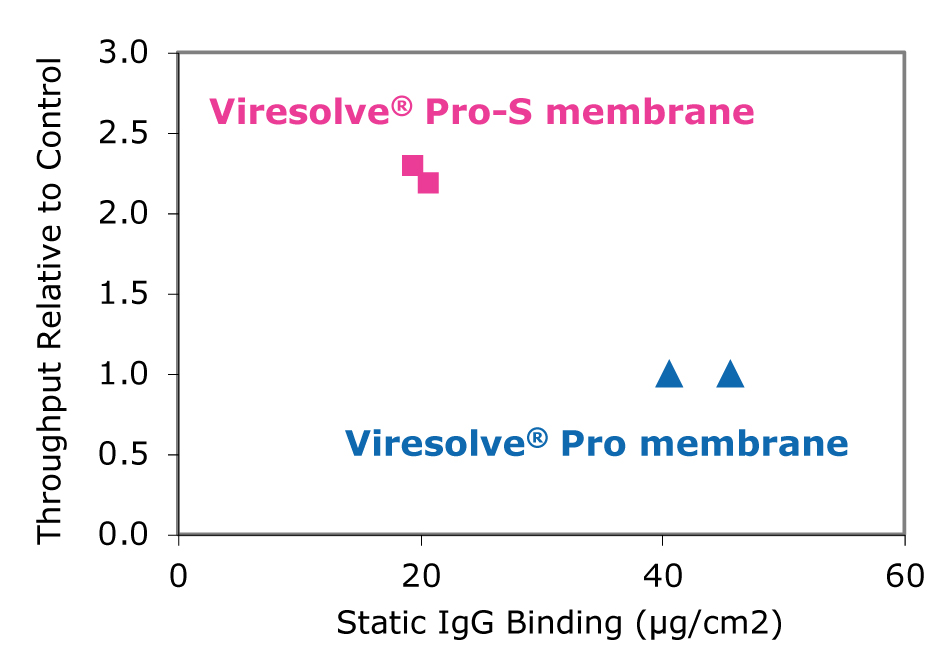
Figure 1.Throughput vs protein binding levels for membranes in Viresolve® Pro Device and Viresolve® Pro-S Device.
Improved Filter Throughput and Flux
For process fluids with high levels of adsorptive components, the Viresolve® Pro-S Solution can dramatically improve virus filter throughput and flux, Figure 2.
The low protein binding chemistry of the Viresolve® Pro-S membrane reduces adsorption of foulants, increasing throughput and enhancing filter capacity, Figure 2A. For this particular mAb (7 g/L), Viresolve® Pro-S Devices provided much higher throughput than both Viresolve® Pro Device and other commercially available virus filters. In addition to increased throughput, reduced adsorption of fouling components improved flux resulting in faster filtration operations, Figure 2B.
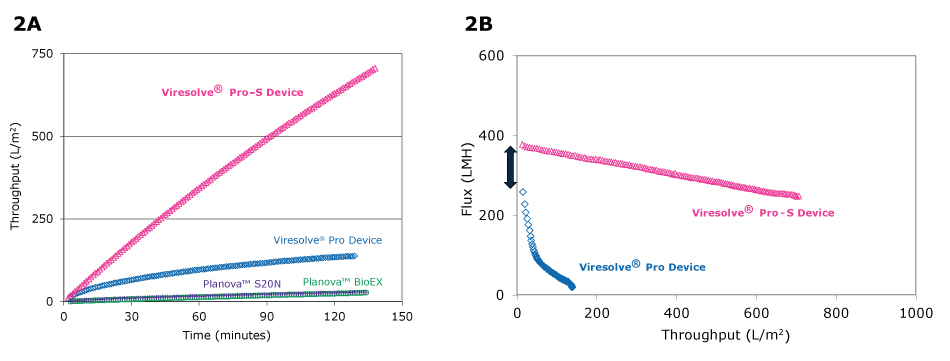
Figure 2.(A) Throughput vs. Time for 7 g/L mAb stream filtered at 30 psi over Viresolve® Pro (blue) and Viresolve® Pro-S (pink) Devices and competitive filters (purple, green). (B) Flux vs. Throughput for same mAb filtered over Viresolve® Pro (blue) and Viresolve® Pro-S (pink) Devices.
The benefit of the Viresolve® Pro-S Solution is shown in Figure where a panel of mAbs was evaluated on both virus filters. These tests were run at 30 psi until 90% flow decay was reached or 4-hour duration.
For many mAbs, throughput on the Viresolve® Pro-S Device was significantly higher than on the Viresolve® Pro Device, reducing filtration area requirements. This performance was maintained for process fluids of concentrations from 5-25 g/L and resulted in higher flux and filter capacity (data not shown). For most of these molecules, the Viresolve® Pro-S Device reduced the need for extensive process development as more than 75% of molecules tested achieved > 500 L/m2.
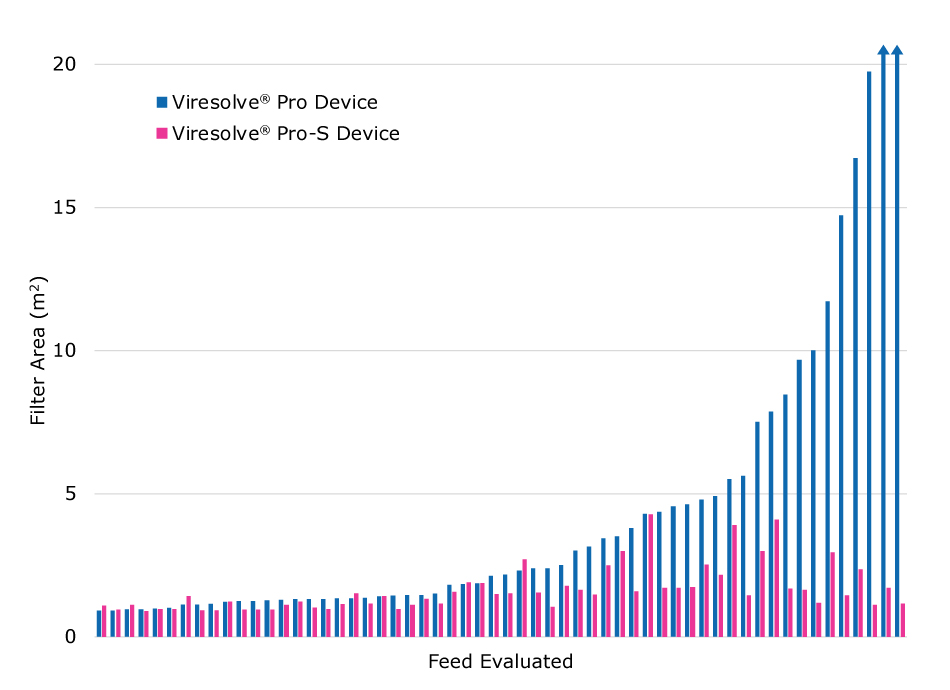
Figure 3.Relative filter areas for a panel of mAbs on Viresolve® Pro-S and Viresolve® Pro Devices.
High Capacity and Effective Virus Retention
Virus filters are implemented in downstream processing to meet viral safety expectations outlined in global regulatory documents 3, 4, 5. The parvovirus, Minute Virus of Mouse (MVM) is considered the 'worst case' virus for filter clearance evaluations due to its small size (~20-26 nm) and high physico-chemical resistance. MVM is classified as a ‘relevant’ virus and “…is of the same species as the viruses that are identified, or likely to contaminate the cell substrate or any other reagents or materials used in the production process”3.
Viresolve® Pro Device and Viresolve® Pro-S Device are designed to meet the viral retention specification of ≥ 4.0 logs MVM retention, although higher clearance is typically observed in clearance studies. Both virus filters contain two layers of the same asymmetric PES membrane, with the Viresolve® Pro-S Device membrane having enhanced surface chemistry to minimize adsorption of foulants.
The virus retention properties of this trusted virus filtration membrane under a broad range of operating conditions are well established - read our application note to learn more.
Figure 4 shows virus retention in Viresolve® Pro and Viresolve® Pro-S Devices, Micro 40 formats challenged with an MVM spiked mAb at 30 psi. Both virus filters provided excellent virus retention with log reduction values (LRVs) at the limit of assay sensitivity, exceeding 5.5 logs. This excellent retention was maintained, even following a 15 min. process pause.
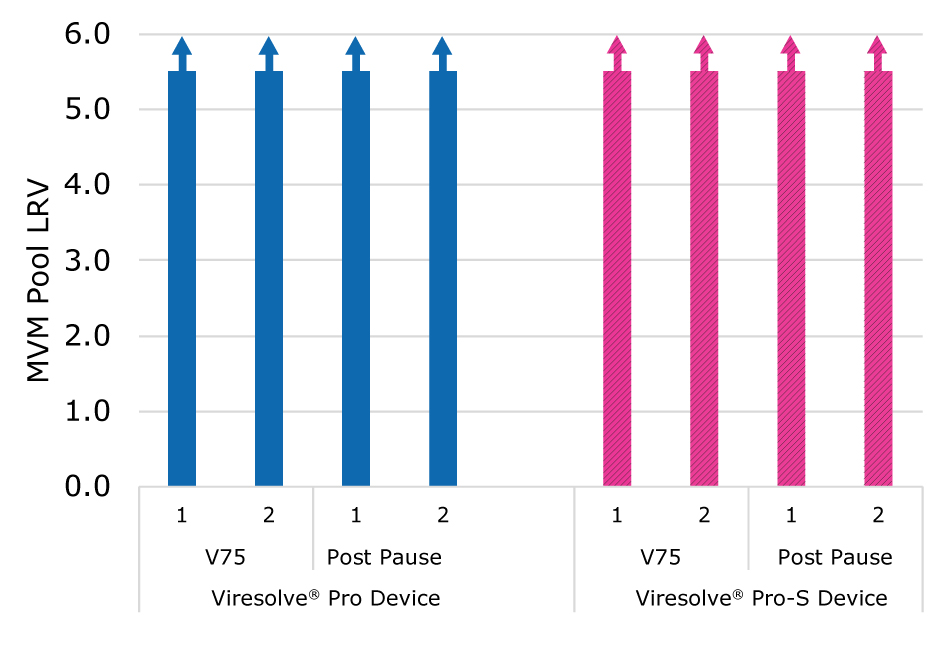
Figure 4.MVM retention in replicate Viresolve® Pro and Viresolve® Pro-S Device filtrate pool samples with mAb 10.
Key Takeaways on the Viresolve® Pro-S Solution
The Viresolve® Pro-S Solution advanced virus filtration technology is tailored for efficient filtration of difficult-to-filter antibodies. By enhancing throughput for these molecules while maintaining effective virus clearance, this next generation solution helps biopharma manufacturers and provides an easy-to-implement, more sustainable, viral safety solution.
The Viresolve® Pro Solution is supported by the Emprove® Program which provides the information you need to accelerate risk assessments, help you maintain compliance and fast track your drug to market.
In addition, to better serve your needs, we have regionalized our production network to ensure your uninterrupted access to high-quality products when they are needed, where they are needed.
Viresolve® Pro-S Solution provides:
- Improved Productivity: Higher throughput and flux reduce filtration area requirements, equipment footprint and cycle times.
- Cost Efficiency: Reduced filter area means lower consumable costs.
- Effective viral clearance: ≥ 4.0 logs of parvovirus
- Sustainability: Non-PFAS materials and gamma irradiated formats for a greener manufacturing process.
- Reliable supply network: Assures uninterrupted manufacturing operations
If you have questions or would like to learn more:
How do I know which Viresolve® Pro Solution is best for my molecule?
For most antibody molecules, Viresolve® Pro-S Solution would be recommended. Our process development engineers and MSAT teams are available to help you evaluate options and optimize your process.
Can I sterilize the Viresolve® Pro-S Devices and Prefilters?
Viresolve® Pro-S Solution is offered in gamma-irradiated formats.
Which filter is best for a high concentration mAb?
We recommend you evaluate Viresolve® Pro-S Solution first. Performance will depend on multiple factors including concentration, hydrophobicity, buffer characteristics, etc. Both filters will provide reliable and effective virus retention.
How is the membrane in Viresolve® Pro-S different from Viresolve® Pro?
The surface of the Viresolve® Pro-S PES membrane is modified to minimize protein binding.
Is Viresolve® Pro-S manufactured without PFAS containing materials?
Yes, Viresolve® Pro-S is manufactured without intentionally added PFAS.
Have we looked at the effect of process interruption on Viresolve® Pro-S Device?
Yes, Viresolve® Pro-S Devices show the same insensitivity to process interruption as Viresolve® Pro Device under most operating conditions.
Do I need to use prefilters for Viresolve® Pro-S Solutions?
Yes, prefilters are recommended for any virus filtration operation to improve capacity and process consistency by reducing the impacts of batch-to-batch variability.
What prefilters should I use for Viresolve® Pro-S virus filter?
Viresolve® Pro-S Shield and Shield H membrane prefilters. These prefilters have different operating ranges so you can select a prefilter based on your process characteristics. Another option is the Millistak+® HC Pro X0SP depth filter, that may be an option for more templated process. More information is available in this technical article.