Millipore Sigma Vibrant Logo

539480 Proteinase K, Tritirachium album

View Products on Sigmaaldrich.com
539480
  
Ricerca del prezzo in corso...
Non è stato possibile trovare il prezzo
La quantità minima deve essere un multiplo di
Maximum Quantity is
Al termine dell'ordine Maggiori informazioni
Lei ha salvato ()
 
Richiedi il prezzo
Disponibilità limitata
A magazzino 
Fuori produzione
Disponibili quantità limitate
La disponibilità deve essere confermata
    Prodotti rimanenti: riceverà un nostro avviso
      Prodotti rimanenti: riceverà un nostro avviso
      Will advise
      Contatti il Servizio Clienti
      Contact Customer Service


      Contatti il Servizio Clienti

      Panoramica

      Replacement Information
      Description
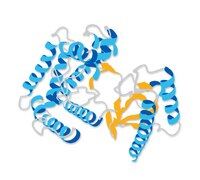
      OverviewSerine protease that exhibits strong proteolytic activity on a wide variety of denatured and native proteins of high molecular weight. Because of its rapid proteolytic inactivation of endogenous nucleases, it can be used for isolation of mRNA and high molecular weight DNA. Preferentially cleaves bonds next to the carbonyl group of N-substituted hydrophobic, aliphatic, and aromatic amino acids. Inhibited by DFP, Hg2+, and PMSF. Not inactivated by metal chelators, sulfhydryl reagents, TLCK, or TPCK.
      Catalogue Number539480
      Brand Family Calbiochem®
      References
      ReferencesWatazu, Y., et al. 1993. J. Lab. Clin. Anal. 7, 81.
      Lebherz, H.G., et al. 1986. Biochem. J. 233, 51.
      Ebeling, W., et al. 1974. Eur. J. Biochem. 47, 91.
      Product Information
      CAS number39450-01-6
      Activity≥30 mAnsonU/mg dry weight
      Unit of DefinitionOne mAnson unit is defined as the amount of enzyme that will liberate 1.0 µmol of Folin-positive amino acids (calculated as tyrosine) per min at 37°C, pH 7.5.
      EC number3.4.21.14
      FormWhite lyophilized solid
      FormulationLyophilized from calcium acetate
      Quality LevelMQ300
      Applications
      Biological Information
      Specific Activity≥40 mAnsonU/mg protein
      Physicochemical Information
      ContaminantsDNase: no detectable nicking activity with pBR322, incubation for 6 h at 37°C; RNase: no ribonuclease activity with MS2 RNA detected after incubation for 6 h at 37°C
      Dimensions
      Materials Information
      Toxicological Information
      Safety Information according to GHS
      Safety Information
      Product Usage Statements
      Storage and Shipping Information
      Ship Code Ambient Temperature Only
      Toxicity Irritant
      Storage +2°C to +8°C
      Do not freeze Ok to freeze
      Special InstructionsFollowing reconstitution, store in the refrigerator (4°C). Stock solutions prepared in 50 mM Tris-HCl, 2 mM calcium acetate, pH 8.0 are stable for up to 1 year at 4°C.
      Packaging Information
      Transport Information
      Supplemental Information
      Specifications
      Global Trade Item Number
      Numero di catalogo GTIN
      539480 0

      Documentation

      Proteinase K, Tritirachium album MSDS

      Titolo

      Scheda di sicurezza (MSDS) 

      Proteinase K, Tritirachium album Certificati d'Analisi

      TitoloNumero di lotto
      539480

      Riferimenti bibliografici

      Panoramica delle referenze
      Watazu, Y., et al. 1993. J. Lab. Clin. Anal. 7, 81.
      Lebherz, H.G., et al. 1986. Biochem. J. 233, 51.
      Ebeling, W., et al. 1974. Eur. J. Biochem. 47, 91.

      Brochure

      Titolo
      Bulk Product Guide
      Scheda tecnica

      Note that this data sheet is not lot-specific and is representative of the current specifications for this product. Please consult the vial label and the certificate of analysis for information on specific lots. Also note that shipping conditions may differ from storage conditions.

      Revision16-November-2016 JSW
      DescriptionSerine protease that exhibits strong proteolytic activity on a wide variety of denatured and native proteins of high molecular weight. Because of its rapid proteolytic inactivation of endogenous nucleases, it can be used for isolation of mRNA and high molecular weight DNA. Preferentially cleaves bonds next to the carbonyl group of N-substituted hydrophobic, aliphatic, and aromatic amino acids. Inhibited by DFP, Hg2+, and PMSF. Not inactivated by metal chelators, sulfhydryl reagents, TLCK, or TPCK.
      FormWhite lyophilized solid
      FormulationLyophilized from calcium acetate
      Recommended reaction conditions

      Anson Enzyme Activity Assay: Materials Required • 5 ml of Hemoglobin (20 mg/ml) in 100 mM phosphate buffer, pH 7.5 (6 M urea, 5 mM NaCl). • 0.6 ml of 20 mM CaCl2 dissolved in distilled water. • 0.1 ml of proteinase K (40 µg/ml) in 20 mM CaCl2 Activity Assay Protocol 1. Mix the 5 ml hemoglobin, 0.6 ml CaCl2, and 0.1 ml proteinase K and make up the volume to 6 ml with 20 mM CaCl2; incubate for 10 min at 25°C. 2. Add 10 ml 300 mM Trichloroacetic acid and incubate at room temperature for 30 min. 3. Centrifuge and transfer 5 ml of the supernatant to a clean tube. Add 10 ml 500 mM NaOH and 3 ml Folin reagent (diluted 1:2 with redistilled water); incubate for 5 min at room temperature. 4. Measure the ΔA at 750 nm. For calibration use tyrosine solutions. 1 mAnson unit liberates 1 µmole of Folin-positive amino acids per min (calculated as tyrosine) under test conditions.
      CAS number39450-01-6
      EC number3.4.21.14
      ContaminantsDNase: no detectable nicking activity with pBR322, incubation for 6 h at 37°C; RNase: no ribonuclease activity with MS2 RNA detected after incubation for 6 h at 37°C
      Specific activity≥40 mAnsonU/mg protein
      Activity≥30 mAnsonU/mg dry weight
      Unit definitionOne mAnson unit is defined as the amount of enzyme that will liberate 1.0 µmol of Folin-positive amino acids (calculated as tyrosine) per min at 37°C, pH 7.5.
      Solubility50 mM Tris-HCl, 2 mM calcium acetate, pH 8.0
      Storage +2°C to +8°C
      Do Not Freeze Ok to freeze
      Special InstructionsFollowing reconstitution, store in the refrigerator (4°C). Stock solutions prepared in 50 mM Tris-HCl, 2 mM calcium acetate, pH 8.0 are stable for up to 1 year at 4°C.
      Toxicity Irritant
      ReferencesWatazu, Y., et al. 1993. J. Lab. Clin. Anal. 7, 81.
      Lebherz, H.G., et al. 1986. Biochem. J. 233, 51.
      Ebeling, W., et al. 1974. Eur. J. Biochem. 47, 91.