
GC-MS/MS determination of 44 pesticides and metabolites in food of plant origin
Abstract
A method for the simultaneous determination of 44 pesticides and their metabolites in leek by gas chromatography-tandem mass spectrometry (GC-MS/MS) was developed. The analytes were selected from those listed in GB 23200.113-2026, Determination of 242 pesticides and their metabolites residues in food of plant origin by gas chromatography-mass spectrometry. Following QuEChERS extraction and cleanup, the samples were analyzed by GC-MS/MS. The coefficients of determination (R²) ranged from 0.9980 to 0.9998, recoveries ranged from 68.5% to 110%, and relative standard deviations (RSDs) ranged from 1.31% to 8.80%. The limits of quantification (LOQs) for all investigated analytes were below 10 µg/kg. The results met the applicable performance criteria specified in the cited GB method, supporting the use of the procedure for determining the 44 investigated pesticides and their metabolites in leek.
Section Overview
Introduction
Pesticide residues in fruits and vegetables can pose health risks, making it crucial to maintain residue levels within established maximum residue levels (MRLs). Regular monitoring is therefore necessary to verify compliance with these limits and support food and customer safety. MRLs for pesticide residues are defined under regional regulations, such as EU regulation (EC) No 1107/2009, or Chinese national standards, such as GB 2763.1-2022.1,2,3
The QuEChERS method (Quick, Easy, Cheap, Effective, Rugged, Safe) was developed in the early 2000s as a sample preparation approach for rapid multiresidue analysis.4 It involves extracting homogenized samples with acetonitrile, followed by cleanup using solid-phase extraction (SPE) sorbents to remove interferences before GC or LC analysis. Its adoption for routine pesticide residue analysis is reflected in standardized methods, including AOAC.2007.01, EN 15662 and GB 23200.113-2018.
China's national food safety standard GB 23200.113-2018, National Food Safety Standard - Determination of Residues of 208 Pesticides and Their Metabolites in Plant-derived Foods by Gas Chromatography-Mass Spectrometry, has been widely used for pesticide residue analysis.5 A draft update to this standard was released in 2026, expanding the analyte list to include 44 additional pesticides and metabolites.6
This application complements an earlier assessment of the 208 compound list and evaluates method performance for the newly added analytes.7 Leek was selected as the representative matrix for method validation against the updated standard.
Experimental
Standard preparation
- Pesticide stock solution I (10.0 µg/mL): A 1 mL aliquot of the pesticide and metabolite standard mixture (100 µg/mL) was transferred to a 10 mL amber glass volumetric flask and diluted to the mark with ethyl acetate. The solution was stored at 0-4 °C, protected from light.
- Pesticide stock solution II (1.0 µg/mL): A 1 mL aliquot of pesticide stock solution I was transferred to a 10 mL amber glass volumetric flask and diluted to the mark with ethyl acetate. The solution was stored at 0-4 °C, protected from light.
- Pesticide standard solutions 1-5: Five matrix-matched standard solutions were prepared by transferring 10, 50, 100, 300, and 500 µL of pesticide stock solution II into separate 1 mL vials and diluting to the final volume with blank leek matrix extract solution. The resulting pesticide and metabolite concentrations were 10.0, 50.0, 100, 300, and 500 µg/L, respectively.
- Internal standard solution I (Heptachloride B I, 1.0 mg/mL): A 10 mg portion of heptachloride B (weighed to the nearest 0.1 mg) was dissolved in ethyl acetate and transferred to a 10 mL amber glass volumetric flask. The solution was diluted to the mark with ethyl acetate to obtain a concentration of 1.0 mg/mL.
- Internal standard solution II (Heptachloride B II, 5.0 µg/mL): A 0.05 mL aliquot of internal standard solution I was transferred to a 10 mL amber glass volumetric flask and diluted to the mark with ethyl acetate. The solution was stored at 0-4 °C, protected from light.
Sample preparation
A 500 g leek sample purchased from a local supermarket was chopped and thoroughly mixed. A representative portion was obtained by quartering and homogenizing using a tissue blender. The homogenized samples were stored at -18 °C for up to 3 months.
Samples were prepared using a citrate-buffered QuEChERS procedure with 1% acetic acid in acetonitrile for extraction.
1. Extraction: A 10 g portion of homogenized leek sample was weighed into a 50 mL plastic centrifuge tube. Then, 10 mL of 1% acetic acid in acetonitrile and the contents of one Supel™ QuE Citrate Extraction Tube (55227-U), containing 4 g magnesium sulfate, 1 g sodium chloride, 1 g trisodium citrate, and 0.5 g disodium hydrogen citrate) were added. The tube was shaken vigorously for 1 min and centrifuged at 4,200 rpm for 5 min.
Overview of QuEChERS extraction steps
- Weigh 10 g of homogenized leek sample into a centrifuge tube.
- Add 10 mL of 1% acetic acid in acetonitrile and the contents of one Supel™ QuE Citrate Extraction Tube.
- Shake vigorously for 1 min.
- Centrifuge at 4200 rpm for 5 min.
2. Clean Up: A 6 mL aliquot of the supernatant was transferred to a Supel™ QuE PSA/ENVI-Carb Tube 1 (55446-U), containing 15 mg Supelclean™ ENVI-Carb, 150 mg Supelclean™ PSA, and 900 mg magnesium sulfate). The tube was vortex-mixed for 1 min and centrifuged at 4,200 rpm for 5 min. A 2 mL aliquot of the supernatant was transferred to a 10 mL test tube and evaporated to near dryness under a stream of nitrogen in a water bath at 40 °C. After evaporation, 20 µL of the Heptachloride B internal standard solution was added to the residue, followed by the addition of 1 mL of ethyl acetate. The solution was filtered through a 0.22 µm membrane filter before GC-MS/MS analysis.
Overview of QuEChERS cleanup and concentration steps
- Transfer 6 mL of supernatant into a Supel™ QuE PSA/ENVI-Carb Cleanup Tube.
- Vortex for 1 min.
- Centrifuge at 4200 rpm for 5 min.
- Transfer 2 mL of supernatant and evaporate to dryness at 40 °C under nitrogen.
- Add 20 µL of internal standard solution and reconstitute with ethyl acetate to a volume of 1 mL.
- Filter through a 0.22 µm microporous membrane.
Spiked sample preparation
Two sets of spiked leek samples were prepared by adding 1,000 µL and 2,000 µL of the 1.0 µg/mL pesticide stock solution II, respectively, to 10.0 g portions of homogenized blank leek sample. The resulting samples had nominal pesticide concentrations of 100 µg/kg and 200 µg/kg, respectively. The 100 µg/kg samples were used to evaluate recovery, while the 200 µg/kg samples were used to evaluate analytical precision, expressed as relative standard deviation (%RSD).
GC-MS/MS method
Results and discussion
Leek samples were prepared using QuEChERS method involving citrate-buffered extraction with a Supel™ QuE Citrate Extraction Tube and cleanup with a Supel™ QuE PSA/ENVI-Carb Tube 1. The extracts were then analyzed by GC-MS/MS in multi-reaction monitoring mode (MRM), and pesticide residues were quantified by an external calibration. The method was applied to the determination of 44 pesticide residues.
Figures 1 to 3 show MRM chromatograms of an unspiked leek sample, a 100 ng/mL pesticide standard solution and a leek sample spiked at 200 µg/kg.
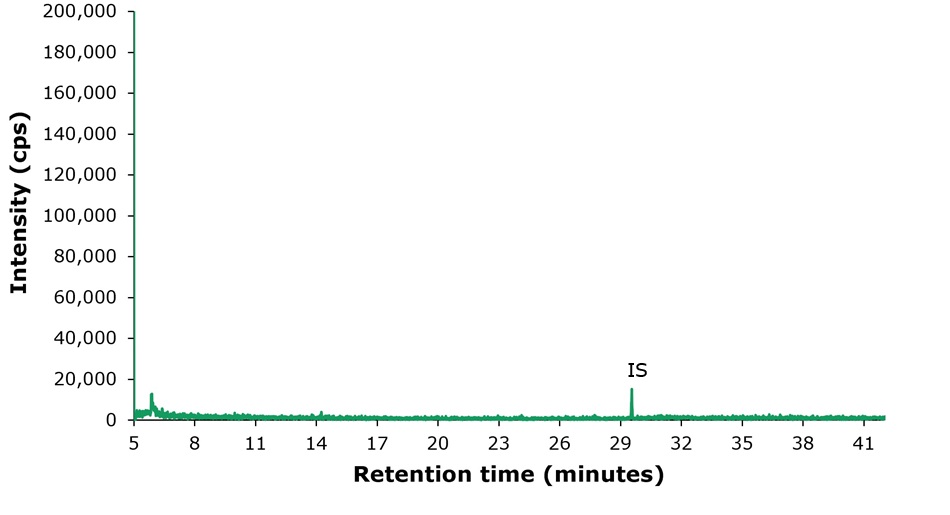
Figure 1.GC-MS/MS chromatogram of an unspiked leek sample.
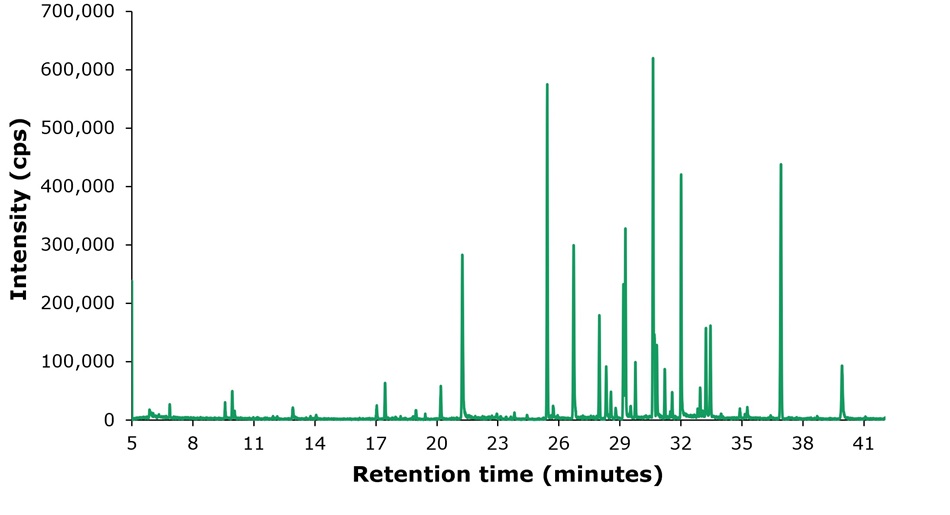
Figure 2.GC-MS/MS chromatogram of matrix-matched pesticide standard solution 3 (100 µg/L).
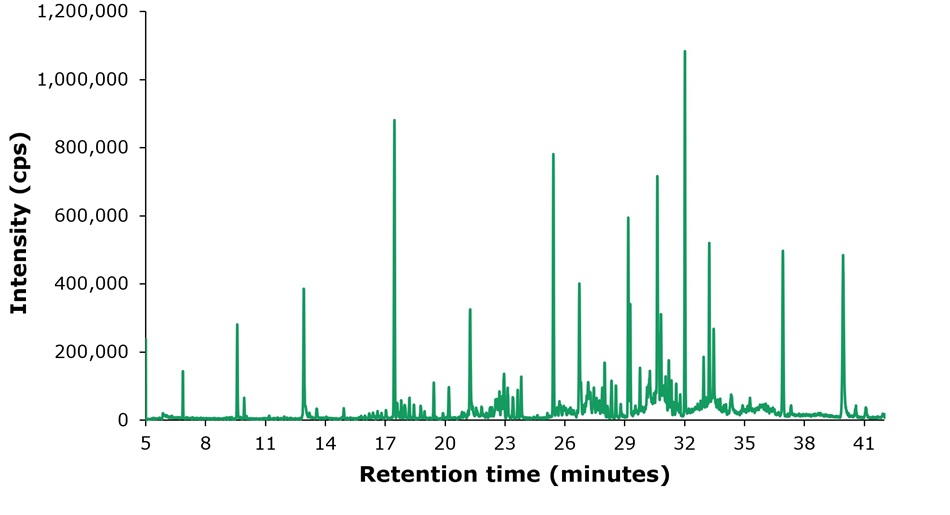
Figure 3.GC-MS/MS chromatogram of a leek sample spiked at 200 µg/kg with each of the 44 pesticide residue.
Calibration and sensitivity
Matrix-matched calibration standards were prepared in an unspiked QuEChERS leek extract over the concentration range of 10-500 ng/mL, with Heptachloride B added as the internal standard. Calibration curves were constructed by plotting the ratio of the pesticide quantifier-ion peak area to the internal-standard peak area against the ratio of the pesticide concentration to the internal-standard concentration. Linear regression was applied to the calibration data. The coefficients of determination (R²) for the 44 pesticides ranged from 0.9980 to 0.9998, exceeding the GB method criterion of >0.9950 (see Appendix). Figure 4 shows a representative calibration curve for heptenophos. The reported limits of quantification (LOQs) and limits of detection (LODs) for all 44 pesticides were below 10 µg/kg (see Appendix). Pesticide residue concentrations were calculated as mass fractions (mg/kg) according to the internal-standard method specified in GB 23200.113-2026 and converted to µg/kg for reporting (1 mg/kg = 1,000 µg/kg).
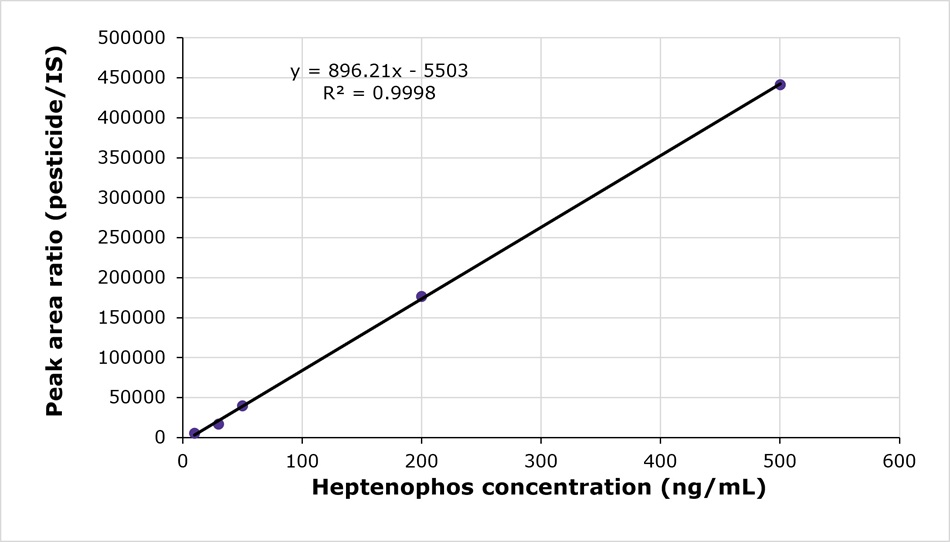
Figure 4.Representative calibration curve for heptenophos over the calibration range 10 - 500 ng/mL.
Data precision and recovery (%)
Analytical precision was evaluated using leek samples spiked at 200 µg/kg. The relative standard deviations (RSDs) for the 44 pesticides ranged from 1.31% to 8.80%, meeting the GB method criterion of <15%. Recovery was evaluated using leek samples spiked at 100 µg/kg. Recoveries ranged from 68.5% to 110%, meeting the GB method criterion of 60-120%. Recovery was calculated after subtracting the pesticide concentrations measured in the unspiked leek samples from those measured in the spiked samples. Tables 4 and 5 present representative precision and recovery results, respectively, for five pesticides. Results for all 44 analytes are provided in the Appendix.
Suitability criteria summary
The linearity, reproducibility, recovery, and limit of quantification (LOQ) results obtained for the 44 pesticide residues are summarized in Table 6 and meet the specified criteria of GB 23200.113-202.
Conclusion
In this work, 44 pesticides and their metabolites were analyzed in a leek sample according to the GB 23200.113-2026 standard using Supel™ QuE QuEChERS mixes. All investigated analytes exhibited coefficients of determination (R²) greater than 0.9980 over the matrix-matched calibration range of 10-500 ng/mL, exceeding the GB method criterion of >0.9950. Recoveries ranged from 68.5% to 110%, and relative standard deviations (RSDs) ranged from 1.31% to 8.80%, meeting the respective GB method criteria. The limits of quantification (LOQs) for all investigated analytes were below 10 µg/kg, meeting the specified criterion. These results demonstrate that the method meets the stated performance criteria for the determination of the 44 investigated pesticides and their metabolites in leek.