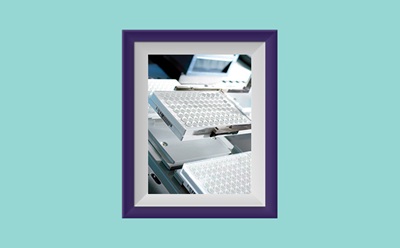
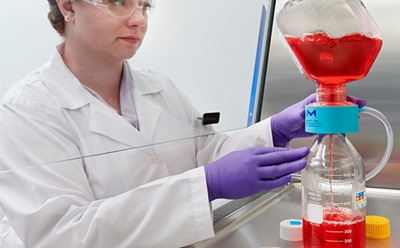
Watch our video from our Cork, Ireland site to see how Millipore® membrane products are manufactured for optimal results.
Get results
Millipore® membranes deliver superior reproducibility, optimal recovery, and highly accurate, dependable results - giving you the confidence to trust every data point, every time. Low-quality filtration devices and membranes can ruin experimental outcomes, wasting precious samples, time, and money.
Find the ideal membrane solution for your sample type, method, and performance needs with our comprehensive portfolio of products. From clarification to screening, count on the gold standard that laboratories worldwide have relied on for generations.
Robust filters. Reliable results.
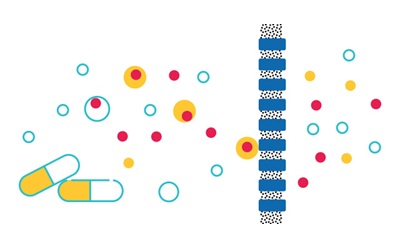
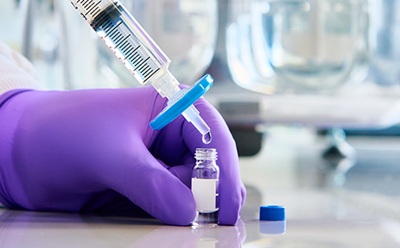
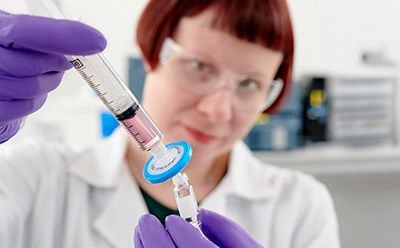
Filtration is key to accurate, reproducible results. Proper filtration removes particulates that can negatively impact experimental outcomes, clog columns and instrumentation, and lead to lab downtime. Protect your samples and cultures from contaminants. We offer small-to-large volume filtration solutions (<1 mL up to 20 L) for easy scaling. Rigorously tested across cell culture, pharma QC, and environmental and industrial testing workflows, we’ll help you find the best filter for your method.
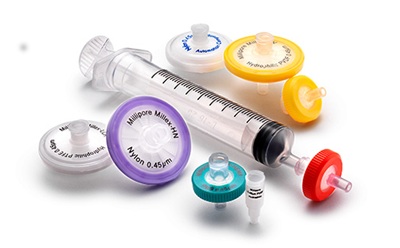
- Millex® syringe filters for sample filtration
- Millipore® filter membranes for buffer, mobile phase, and solvent filtration
- Stericup® sterile vacuum filters for cell culture media preparation
- Sterile filtration devices at any scale
Concentrate on quality
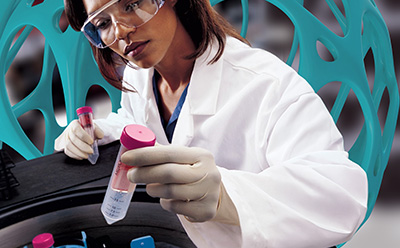
Concentrate your samples; don’t lose them. Achieve fast, efficient concentration and diafiltration with the highest recoveries for even the most sensitive downstream applications across a variety of target molecular weights. Protein concentration and diafiltration can consume tremendous amounts of time while often resulting in significant sample loss. Amicon® ultrafiltration devices and MultiScreen® ultrafiltration plates are made with innovative, low-binding Ultracel® regenerated cellulose membranes that enable significantly higher recoveries and more precise molecular weight cut-offs while supporting rapid protein concentration and diafiltration.
- Amicon® devices for rapid concentration and diafiltration
- MultiScreen® ultrafiltration plates for high-throughput isolation and concentration
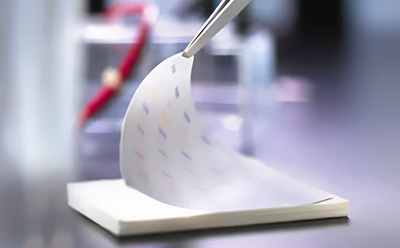
Winning Westerns
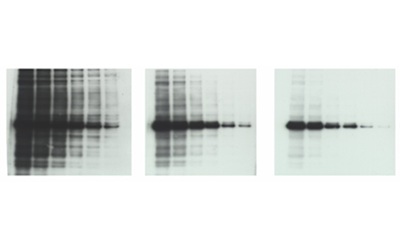
Western blotting requires extensive, multi-parameter optimization and antibody-based detection protocols that consume valuable sample and reagents. Our gold-standard Immobilon® blotting membranes exhibit high protein binding capacity with superior retention across a broad range of protein sizes, including low-abundant proteins - minimizing time and conserving costly reagents while maximizing sensitivity and signal. We offer the widest selection of membrane chemistries and formats for your convenience.
- Immobilon® transfer membranes for maximal recovery and optimal blotting for every detection method
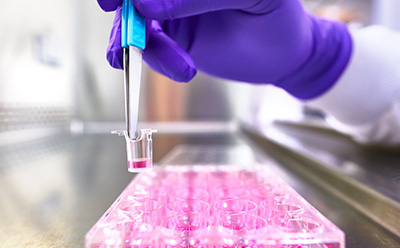
Multiply your success
Maximize biological relevance while streamlining experiments and improving throughput with MultiScreen® filter plates and Millicell® cell culture inserts and plates for every application. Cellular assays can be tedious and complex - consuming precious samples, time, and money. Assay with certainty - select the best membrane for your sample, cell type, model, and application.
- MultiScreen® filter plates for screening, selection, and characterization
- Millicell® cell culture inserts and plates for better insights in research and drug development
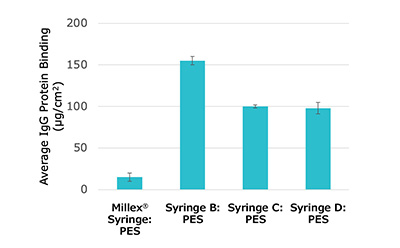
Figure 1.Protein binding of various polyethersulfone (PES) syringe filters used for analytical sample filtration. Millex® PES syringe filters demonstrated the lowest protein depletion/highest recovery of tested filters.
Optimize recovery
Whether you’re performing filtrate or retentate applications, Millipore® membranes are optimized for superior recovery. Because the internal surface area of polymeric microporous membranes is 100 to 600-fold greater than the frontal surface area, a vast surface area is available for binding. We rigorously test our membranes across applications including HPLC, LC-MS, cell culture, protein concentration and diafiltration, Western blotting, and high-throughput screening to maximize your results.
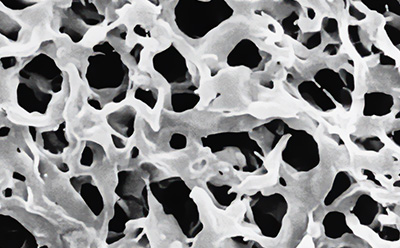
Figure 2.Scanning electron micrograph (SEM) of a polyvinylidene fluoride (PVDF) membrane.
It’s all in the membrane
The remarkable diversity of membranes is tied to the complex and distinct chemistries at work on a microscopic level. Membranes can be used to separate, isolate, or enrich sample components - impacting critical biological and chemical determinations, downstream analysis, and assay performance. Because these components may be ionic, molecular, or particulate, the right membrane choice can make a significant difference in recovery, yield, and reproducibility.
Membrane properties
- Glass fiber filter: produced from borosilicate glass fibers; typically used in prefiltration of large particulate or viscous solutions; fast processing, high flow rate, low background, and good retention of cells and cell membranes
- Nylon: broad compatibility, strength, flexibility, and hydrophilicity with low extractables; routinely used for the filtration of aqueous and organic solutions for use in HPLC and other analytical methods; can exhibit high protein and small molecule binding; not recommended for biological samples
- Polyethersulfone (PES): thermal stability, durability, and resistance to acidic and alkaline solutions; offers fast flow, high filter capacity, and low protein binding; low PFAS extractables
- Polypropylene: solvent-compatibility and thermal stability; ideally suited for general solution clarification and prefiltration applications; provides high particle retention and low PFAS extractables; available in both hydrophilic and hydrophobic chemistries
- Polytetrafluoroethylene (PTFE): high strength and broad chemical compatibility; commonly used to clarify aqueous solutions, organic solvents, corrosives, and aggressive fluids; hydrophilic PTFE is typically used in filtering aqueous solutions, while hydrophobic PTFE is typically used for filtering organic solvents and gases as well as particle monitoring
- Polyvinylidene fluoride (PVDF): high flow rates and throughput, low extractables, and broad chemical compatibility; Durapore® hydrophilic PVDF exhibits very low protein binding and is used to filter protein solutions; Immobilon® hydrophobic PVDF membranes exhibit high protein binding
- Regenerated cellulose: Broad chemical compatibility, low protein binding; Ultracel® regenerated cellulose with polyolefin backing material provides support without impeding flow; used in concentration of protein solutions, separation of low from high molecular weight molecules, protein binding studies, buffer exchange