
Nitrogen and Oxygen Ligands
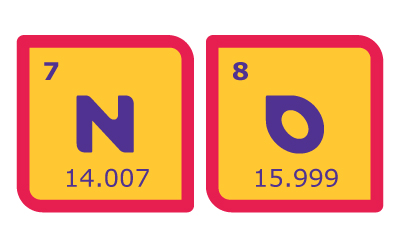
Nitrogen and oxygen ligands are ubiquitous in coordination chemistry and play a central role in defining the structure, reactivity, and properties of metal complexes. The strong donor capabilities and versatile bonding nature enable precise modulation of the electronic and steric environment around metal centers, making them indispensable tools in modern chemical design.
These ligands provide diverse coordination interactions that influence electronic structure, coordination geometry, and overall complex stability. The structural diversity from monodentate ligands to chelating agents enables precise control of metal-ligand interactions across catalysis, synthesis, and materials applications. Subtle variations in ligand architecture can significantly impact catalytic performance by altering activity, selectivity, and stability. This tunability drives the development of more efficient and sustainable chemical processes and aligns with the growing emphasis on green chemistry. Their ability to stabilize reactive intermediates and control reaction pathways makes them key enablers of both established and emerging catalytic technologies.
We offer highly specialized nitrogen and oxygen ligands particularly vital in catalysis, where they enable the design of highly efficient and selective systems for a wide range of transformations. These include polymerization, oxidation, C-C bond formation, hydrogenation, and C-H activation.
Products
Related resources
- Brochure: Cross-Coupling Reaction Manual
A practical guide to catalyst selection, reaction setup, optimization, and troubleshooting tips for Buchwald-Hartwig Amination, Sonogashira, Suzuki-Miyaura and Negishi Couplings.
- Article: C2-symmetric chiral bisoxazolines (BOX) ligands
BOX ligand complex enhances catalytic enantioselective aziridination of styrene, with phenyl substituents proving superior over t-Bu groups.
- Article: PYBOX Ligand - Large binding site and rigid scaffold
The PYBOX ligand, consisting of a pyridine ring flanked by two oxazoline groups, was introduced in 1989 by Nishiyama.
- Article: Macmillan Imidazolidinone Organocatalysts
Discover Professor David MacMillan's groundbreaking metal-free asymmetric catalysis using imidazolidinone-based organocatalysts for versatile transformations.
Related webinars

Watch this webinar to learn about the new bis-amine ligands from the Buchwald lab utilized in Ullmann-type Cu C-N and C-O coupling reactions.
In this webinar, we discuss how palladium precatalysts are being used in transformational screening methods for pharma process chemistry.
Joint symposium between RSC and Merck highlights hot articles in Organic Synthesis from Chemical Science.

In this webinar, you will learn about MPhos, a novel ferrocene-based unsymmetrical ligand, targeting Csp2-Csp3 coupling reactions.