
Fibronectin
What is Fibronectin?
Fibronectin is a multifunctional, extracellular matrix (ECM) glycoprotein. In cell culture, fibronectin is most often used to coat culture surfaces. Numerous studies have shown that fibronectin may enhance cell adhesion, spreading, and differentiation, as well as affect the routes of cell migration both in vivo and in culture by mimicking the natural ECM for primary and stem cells.
For more information on how to coat culture surfaces with fibronectin, visit our protocol here.
What is the Function of Fibronectin?
Fibronectin bins to integrins on cellular membranes, playing a role in cellular morphology, cytoskeletal organization, phagocytosis, hemostasis, embryonic differentiation, and wound repair. It has also been shown that many cells lose most of their surface bound fibronectin upon malignant transformation.
Fibronectin Structure
Fibronectin is composed of two nearly identical disulfide bound polypeptides and has a molecular weight of 220 kDa. Because cellular fibronectin is structurally and antigenically similar to cold insoluble globulin from plasma, polyclonal antibodies to either form usually cross-react. Careful analysis of the fibronectin molecule indicates that it contains several functionally and structurally distinct domains which may bind to cell surfaces, collagen, fibrinogen or fibrin, complement, glycosaminoglycans, proteoglycans and heparin.
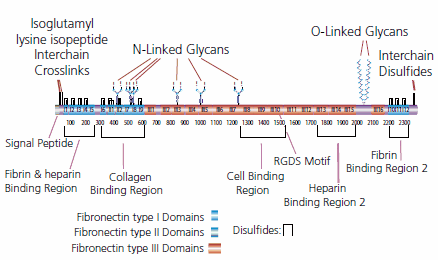
Figure 1.Fibronectin structure.
Where is Fibronectin Found?
Fibronectin is produced by a wide variety of epithelial and mesenchymal cells in vitro, including fibroblasts, chondrocytes, myoblasts, Schwann cells, macrophages, hepatocytes, and intestinal epithelial cells. It is also found in basement membranes and is present in platelet α-granules, as it is expressed on the platelet surface after activation. Cellular fibronectin can be found in many tissues including spleen, lymph node, tonsil, blood vessel walls, liver, kidney, muscle, skin, brain, and peripheral nerves, as well as loose connective tissue stroma.