
Selective Metalation and Additions
Selective metalation, deprotonation, and nucleophilic addition reactions are fundamental transformations in organic synthesis. Traditional approaches to generating reactive organometallic intermediates have long been constrained by significant limitations: incompatibility with sensitive functional groups, stringent temperature requirements, and competing side reactions that compromise selectivity and yield. These constraints have historically restricted the complexity of molecules that can be synthesized through conventional organometallic chemistry.
Knochel and coworkers have reported TurboGrignards, the Knochel-Hauser-Base, and lanthanide-based reagents for selective metalation, deprotonation, and nucleophilic additions. These reagents have transformed the field, allowing for unprecedented selective conversions to reactive intermediates within a molecule which contains sensitive functionalities under mild reactions.
Selective Metalations using TurboGrignards
While halogen-metal exchange reactions are among the most common methods for preparing organometallic reagents, they have significant limitations. Li-halogen exchange reactions require low temperatures and suffer from poor compatibility with sensitive functionalities in the molecule. Conversely, Mg-halogen exchange reactions require higher temperatures, which also limits functional group compatibility. Furthermore, the lower reactivity of organomagnesium reagents can lead to competing reactions, such as elimination of HX from the alkyl halide to form olefins.
Knochel and coworkers discovered that the use of salt additives increased both the rate and the efficiency of the reaction. After some optimizing, it was found the most effective reagent was generated with R-MgCl (R = i-Pr (656984), s-Butyl (703486)) and 1.0 equiv of LiCl.1 Using these reagents, it is possible to convert a variety of functionalized and highly sensitive substrates to their corresponding functionalized organometallic reagents, including both aryl- and heteroarylmagnesium derivatives. The increased reactivity may be due to the breakup of polymeric aggregates known to exist in typical Grignard reagents as well as an increase in reactivity due to a negative charge on magnesium in the formed species i-PrMgCl2-LiCl+ (nucleophilic properties of the i-pr group are augmented). The rate enhancement and promoter effects of the salt has led to these efficient reagents to be termed TurboGrignards.
Advantages of TurboGrignards
- Increased functional group compatibility
- Mild reaction conditions with a convenient temperature range
- Inhibition of side reactions.
- Enables preparation of functionalized heteroaryl organometallics
- Permits large-scale production of Grignard reagents
Representative Applications
Knochel and coworkers examined a variety of aryl substrates (Table 1), including those containing sensitive functionalities, including CO2R, CN, OMe, and halogen groups. In all cases, the substrates were tolerant of the TurboGrignard reagent, readily forming the organometallic, and effectively reacting with a plethora of electrophiles. While rate enhancements are observed with the TurboGrignards, this increased reactivity does not have a negative impact on the overall scope of the reaction, permitting transformations to occur in the presence of a variety of functional groups. Even heteroaryl halides are converted to their corresponding organometallics in the presence of i-PrMgCl•LiCl in excellent yields (Table 2).

Scheme 1.i-PrMgCl•LiCl (TurboGrignard) for Selective Metalations
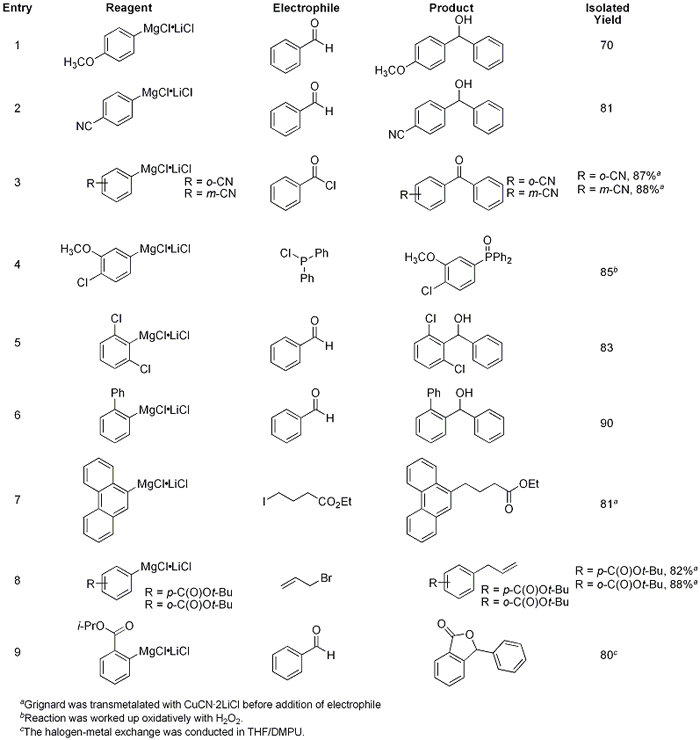
Table 1.Aryl Grignards prepared using i-PrMgCl•LiCl and Subsequent Reaction with Various Electrophiles
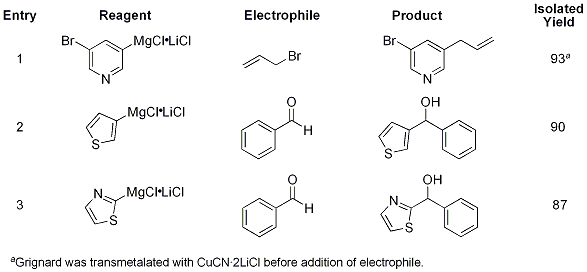
Table 2.Heteroaryl Grignards prepared using iPrMgCl•LiCl and Subsequent Reaction with Various Electrophiles
In the early 2000’s, Knochel and coworkers have demonstrated the utility of the TurboGrignards.2-14
TurboGrignard Reagents in Copper-Catalyzed Coupling With Aziridines
TurboGrignard reagents (i-PrMgCl•LiCl) are utilized for copper-catalyzed coupling between aziridines to generates in situ pyridine Grignard reagents. The iodopyridines undergo regioselective I/Mg exchange with i-PrMgCl•LiCl to generate pyridyl-MgX intermediates that are immediately coupled to aziridines in a one-pot procedure.15
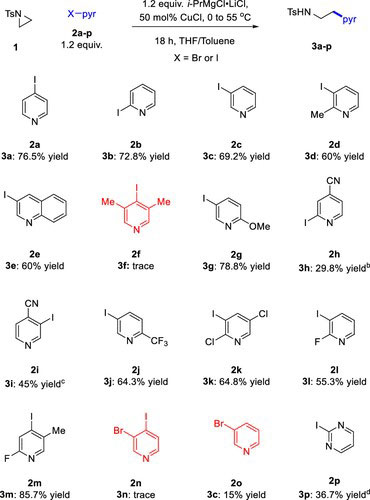
Scheme 2.Reaction Scope of Aziridine Opening with Halopyridines
Selective Deprotonations using Knochel-Hauser-Base
Deprotonation and functionalization of aromatics is a key synthetic transformation. However, common strong organic bases such as alkyllithiums or lithium amides cause competing addition reactions (Chichibabin reactions). Additionally, many amides may be generated in situ due to their low stability in solution, and the low temperatures required when using these bases makes them inconvenient to use. Knochel and coworkers have reported the use of TMPMgCl•LiCl for regioselective deprotonation of arenes and heteroarenes.15 Following electrophile trapping, this method provides regioselective access to functionalized arenes and heteroarenes in excellent yields.
This base has been termed Knochel-Hauser-Base and it offers several significant advantages over conventional deprotonating agents.
Knochel-Hauser-Base Advantages
- High functional group tolerance
- High kinetic activity due to LiCl
- Increased basicity
- Excellent solubility in THF
- Eliminates Chichibabin reactions and reduces side reactions
- Enables regioselective metalation of arenes and heteroarenes
Representative Applications
TMPMgCl•LiCl has proven effective across diverse substrates and conditions, significantly broadening reaction scope and functional group tolerance. The regioselective metalation of arenes and heteroarenes proceeds efficiently in the presence of sensitive functionalities with minimal side reactions, in the presence of sensitive functionalities, and with increased solubility. This enhanced selectivity likely results from the disruption of oligomeric aggregates by TMPMgCl•LiCl presents a selection of heteroaryl substrates successfully functionalized using TMPMgCl•LiCl (Table 4).
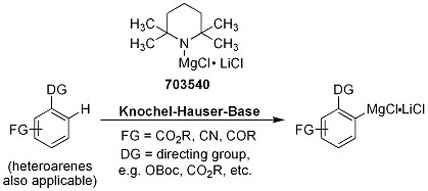
Scheme 3.TMPMgCl•LiCl for Selective Deprotonations
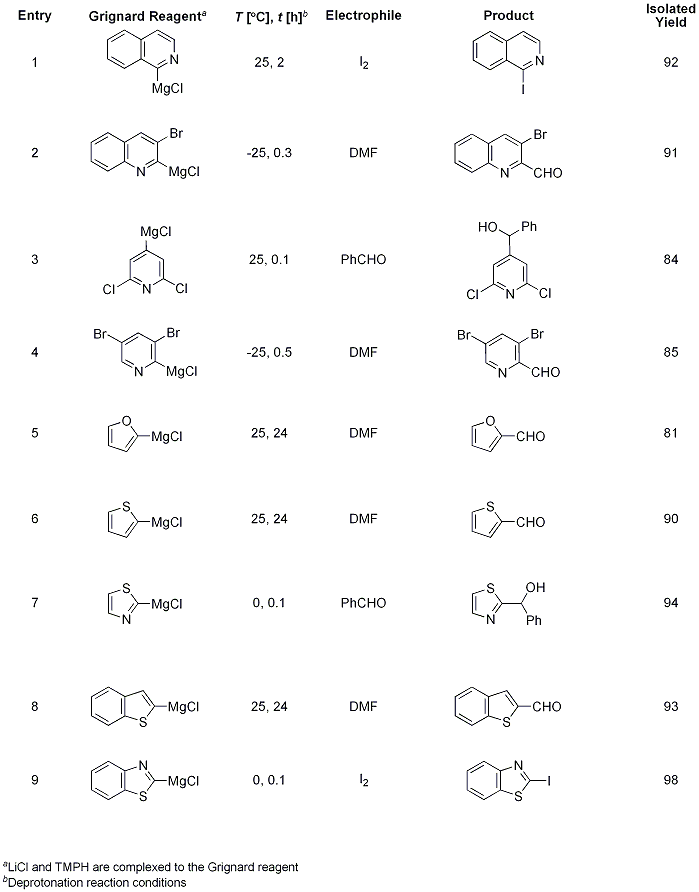
Table 4.Heteroaryl Grignards Prepared using TMPMgCl•LiCl and Subsequent Reaction with Various Electrophiles
Regioselective Transformations
TMPMgCl•LiCl demonstrates exceptional regioselectivity in challenging scenarios. For example, the mixed Mg/Li amide successfully metalates the phenyl ring in 2-phenylpyridine rather than the typically preferred 2-pyridyl position (Scheme 4). Pyrimidine metalation—historically a difficult transformation—also proceeds successfully, affording the metalated Grignard intermediate that can be elaborated by iodination with I₂ (Scheme 5). Optimal results for pyrimidine metalation are achieved using inverse addition conditions, where the pyrimidine substrate is added to a solution of TMPMgCl•LiCl. Furthermore, TMPMgCl•LiCl effectively deprotonates both aryl and heteroaryl compounds bearing base-sensitive functionalities (Scheme 6)).
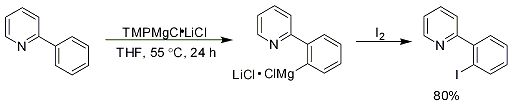
Scheme 4.Metalation of 2-Phenyl Pyridine with TMPMgCl•LiCl and Subsequent Functionalization
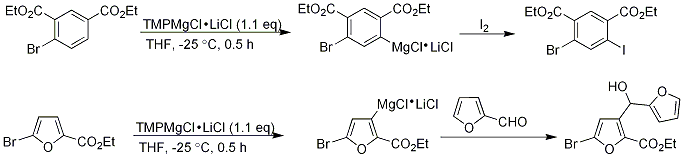
Scheme 6.Reaction of TMPMgCl•LiCl with Aryl and Heteroaryl Substrates Containing Base-Sensitive Functionalities and Subsequent Functionalization

Scheme 5.Metalation of 5-Bromo-Pyrimidine with TMPMgCl•LiCl and Subsequent Functionalization
The scope for the metalation of arene derivatives with TMPMgCl•LiCl was also examined and found to be broad. As shown below, a variety of functionalized aryl Grignards were prepared using TMPMgCl•LiCl, followed by subsequent trapping with various electrophiles.16
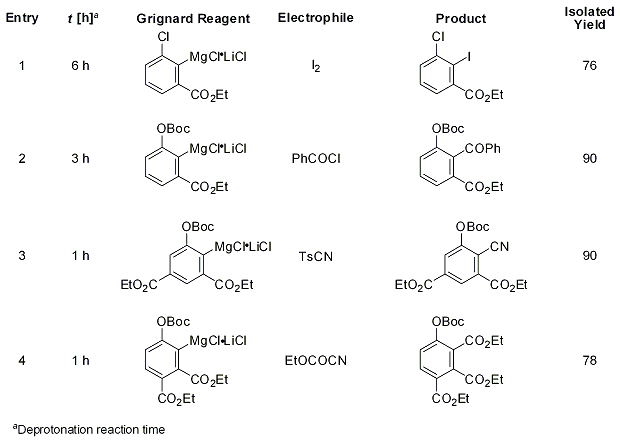
Table 4.Aryl Grignards Prepared using TMPMgCl•LiCl and Subsequent Reaction with Various Electrophiles
Synthesis of Polysubstituted Thiophenes
Knochel and coworkers have reported a fully functionalized synthesis of thiophenes using TMPMgCl•LiCl. The reaction of 2,5-dichlorothiophene with TMPMgCl•LiCl provides the 3-metalated-thiophene. Reaction with an electrophile, followed by a second metalation with TMPMgCl•LiCl, provides the 4-substituted magnesiated species. This intermediate undergoes further elaboration via reaction with a second electrophile. The chlorides on the thiophene can be reduced, or then re-metalated with TMPMgCl•LiCl and quenched with an electrophile, or further functionalized via Mg insertion followed by cross-coupling using ZnCl2.17 Scheme 7 highlights the iterative approach via metalation with TMPMgCl•LiCl which has enabled the synthesis of highly complex aromatic compounds, including a thiophene analog of Atorvastatin (Lipitor), in 36% overall yield.
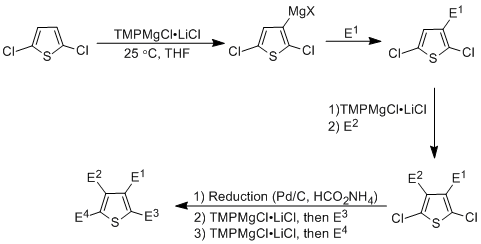
Scheme 7.Preparation of Substituted Thiophenes
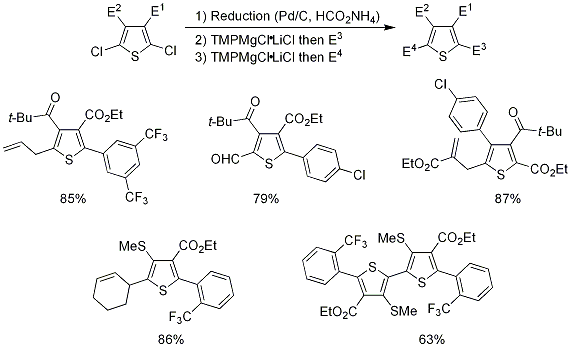
Scheme 8.Preparation of Fully Functionalized Thiophenes
Regioselective Switching via Lewis Acid Activation
TMPMgCl•LiCl enables regioselective C-H deprotonation of wide range of aromatic and heterocyclic substrates (pyridazines, pyridines, quinolines, uracils, naphthyridines, oxadiazoles, etc.). The addition of Lewis acids such as BF₃•OEt₂ or MgCl₂ to the TMPMgCl•LiCl system, regioselectivity can be dramatically switched to achieve deprotonation at alternative ring positions enabling access to multiple regioisomers from the same substrate.18
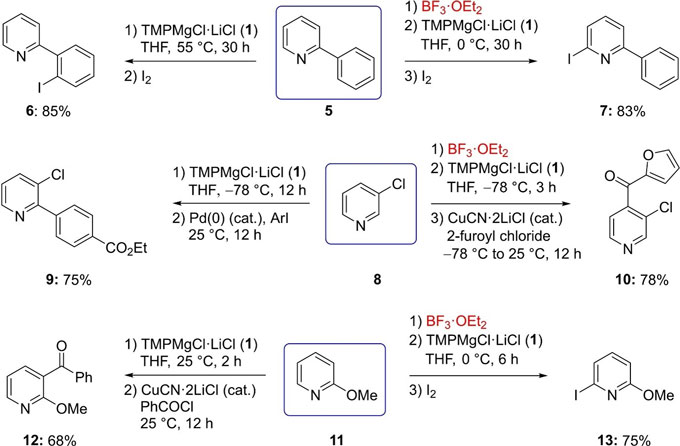
Scheme 9BF3 ⋅ OEt2 triggered magnesiations of pyridines with TMPMgCl ⋅ LiCl.
Selective 1,2-Additions with LaCl3•2LiCl
Lanthanide salts are known to prevent competing reduction and enolization side reactions in the nucleophilic addition to ketones. However, the limited solubility of lanthanide complexes and challenges associated with their drying procedures have historically restricted their synthetic applications. Knochel and coworkers recognized that LiCl additives enhance the reactivity of organometallic reagents and developed LaCl₃•2LiCl, a soluble lanthanide complex that dissolves readily in THF. This advancement has proven transformative: in the presence of LaCl₃•2LiCl, highly challenging substrates including sterically hindered ketones, enolizable ketones, Michael acceptors, and unactivated imines undergo selective 1,2-additions cleanly, providing desired products with exceptional efficiency and regioselectivity. This protocol represents a significant improvement in scope and practicality compared to conventional lanthanide-catalyzed approaches.19
Advantages
- Low water content
- No pretreatment necessary
- Ease of handling
- Homogenous reaction mixtures
- Convenient reaction conditions
Representative Applications
1,2-Addition to Ketones
The oxophilic nature of lanthanum(III) strongly coordinates to carbonyl oxygen atoms, activating ketones toward nucleophilic attack while suppressing competing enolization and reduction pathways. As shown below, the addition of a Grignard reagent to a ketone in the presence of the oxophilic LaCl3•2LiCl promotes selective 1,2-addition (Scheme 10).

Scheme 10.LaCl3•2LiCl Mediated 1,2-Additions
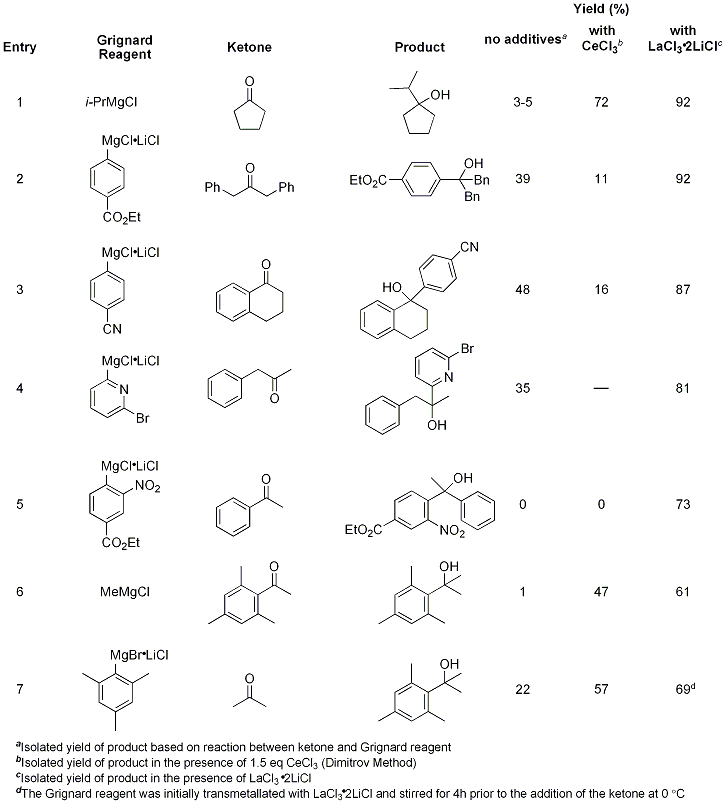
Table 4.LaCl3•2LiCl Mediated Addition to Ketones
Catalytic vs. Stoichiometric Protocols
Subsequent investigations revealed that sub-stoichiometric quantities of LaCl₃•2LiCl are sufficient to promote efficient 1,2-addition reactions. This catalytic variant is compatible with alkyl, aryl, and heteroaryl Grignard reagents.20
1,2-Addition of Alkyllithiums
The addition of n-BuLi to cyclopentanone in the presence of LaCl₃•2LiCl proceeds with complete regioselectivity, providing exclusively the 1,2-addition product in 98% yield (Scheme 11).
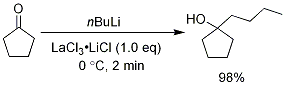
Scheme 11.1,2-Addition of n-BuLi in the Presence of LaCl3•2LiCl
Addition to Unactivated Imines
Additionally, catalytic quantities of LaCl3•2LiCl allowed for addition of Grignard reagents to unactivated imines, providing the amine products in excellent yield. The analogous reaction performed without the lanthanide salt provides the amine product in low yield.
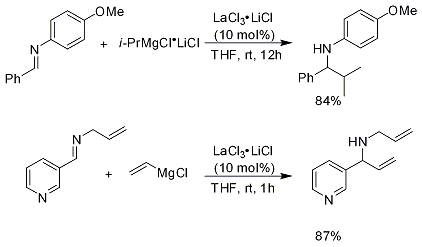
Scheme 12.Nucleophilic Addition of Organomagnesium Reagents to Non-Activated Imines in the Presence of LaCl3•2LiCl