
Nitrosamine scavengers: Innovative strategies to mitigate nitrosamine risk in pharmaceutical drug products
Nitrosamines are a class of chemical compounds that have become a major focus for the pharmaceutical industry and global health authorities due to their potential mutagenic and carcinogenic properties. In recent years, nitrosamines have been detected in a range of marketed drug products, raising patient safety concerns and the focus of regulatory agencies.1
The issue first gained widespread attention following the discovery of nitrosamine impurities in certain sartan products, where the nitrosamine formation was linked to the reaction of intentionally added nitrites with vulnerable amines present in solvents, reagents, or process intermediates during the active pharmaceutical ingredient (API) synthesis. Subsequent investigations revealed that nitrosamines could also form during finished drug product manufacturing and throughout shelf life, even when the API itself was essentially free of nitrosamines.2
These findings placed attention on excipients and formulation conditions as contributors to nitrosamine formation. It is now recognized that trace nitrite levels in commonly used excipients can act as nitrosating agents, particularly in the presence of APIs or related substances containing secondary or tertiary amines. These reactions can result in nitrosamine drug substance-related impurities (NDSRIs), which are structurally related to the API and may present significant toxicological concerns.
This page provides an overview of regulatory guidance related to nitrosamines and strategies to mitigate nitrosamine formation.
Section overview
- Regulatory guidance on nitrosamines
- Three pathways for Nitrosamine Drug Substance-related Impurities (NDSRI) prevention
- Nitrites in excipients: A critical risk factor for nitrosamine formation
- Formulation strategies to mitigate nitrosamine formation
- Mitigate nitrosamine formation with innovative solutions
Regulatory guidance on nitrosamine risk assessment
Nitrosamines can undergo metabolic activation in the body, forming highly reactive intermediates capable of damaging DNA and potentially contributing to the development of cancer. Because of these risks, regulatory agencies have established increasingly stringent expectations for nitrosamine risk assessment, testing, and mitigation.
Both the U.S. Food and Drug Administration (FDA) and the European Medicines Agency (EMA) have issued updated guidance addressing nitrosamine contamination risks. In its 2024 guidance for industry, the FDA specifically notes that nitrites are common nitrosating impurities found in many excipients at parts-per-million levels and warns that these impurities may lead to nitrosamine formation during manufacturing or storage.3 Similarly, the EMA’s nitrosamine Question & Answer guidance highlights that even very low levels of nitrites in excipients can contribute to nitrosamine formation exceeding acceptable intake limits.4
Three pathways for Nitrosamine Drug Substance-related Impurities (NDSRI) prevention
As regulatory expectations continue to evolve, pharmaceutical companies are increasingly focused on comprehensive nitrosamine risk assessments, excipient characterization, formulation strategies, and mitigation approaches to ensure product safety and compliance.
The FDA’s 2024 guidance outlines three primary strategies for reducing or preventing the formation of NDSRIs in pharmaceutical products (Figure 1)2:
- Control nitrite impurities in excipients
Potential nitrite impurities in excipients should be evaluated and minimized, particularly when formulations contain vulnerable secondary or tertiary amines, as lower nitrite levels reduce the risk of NDSRI formation during manufacturing and storage. - Incorporate nitrosamine scavengers
Nitrosamine scavengers are excipients which reduce or neutralize nitrosating agents in the drug formulation before nitrosamines can form. - Modify formulation pH
Nitrite is activated to generate nitrosating agents under slightly acidic conditions, which can subsequently react with vulnerable amines to form nitrosamines. Adjusting formulation pH to create a less favorable environment for the formation of nitrosating agents from nitrites can help reduce the likelihood of NDSRI formation during manufacturing and throughout the product shelf life.

Figure 1.Overview of strategies for reducing or preventing NDSRI formation in drug products.
Nitrites in excipients: A critical risk factor for nitrosamine formation
Nitrosamine formation in pharmaceutical products depends on the presence of both a nitrosating agent, such as nitrites, and a vulnerable amine. If vulnerable amines are not present in a formulation, the risk of nitrosamine formation is significantly reduced, even when trace nitrite impurities exist in excipients.
Because removing nitrites from excipients can be difficult and often impractical, controlling nitrite levels is essential when vulnerable amines are likely to be present in the drug product. Even low levels of nitrites may contribute to nitrosamine formation during manufacturing or throughout shelf life under suitable conditions. The presence of nitrites cannot be reliably predicted based solely on excipient chemical structure, making analytical testing a critical component of nitrosamine risk assessment and control strategies.
If you are interested in learning more about nitrites—the precursor of nitrosamines—their quantification, sources of nitrites in excipients, and how nitrites contribute to the nitrosamine risk, read our dedicated technical article “Managing Nitrite Impurities: A Supplier-Manufacturer Approach to Mitigate Nitrosamine Risk”.
Formulation strategies to mitigate nitrosamine formation
Formulation-based mitigation strategies can be applied to address the nitrosamine risk in the final drug product, including the use of scavengers and pH modifiers. These strategies are designed to either neutralize nitrosating species before they react with vulnerable amines or create formulation environments less favorable for nitrosamine formation.
Identifying effective nitrosamine scavengers
To evaluate potential mitigation approaches, we conducted an extensive screening program to identify excipients and additives capable of preventing nitrosamine formation. More than 40 candidate substances were assessed through literature review, functional group analysis, and experimental screening. Bisoprolol was selected as a model API, along with its corresponding nitrosamine impurity, N-nitroso-bisoprolol. Sensitive LC-MS analytical methods were developed to accurately detect both the parent compound and nitrosamine impurity, enabling rapid assessment of scavenging performance. Initial liquid screening studies compared:
- A control containing only the amine
- A stressed sample containing amine plus sodium nitrite
- Samples containing nitrite plus candidate scavengers
This approach allowed rapid determination of whether a substance could reduce or completely prevent nitrosamine formation under accelerated conditions. In many cases, these compounds significantly reduced or fully prevented nitrosamine formation during accelerated storage conditions. Figure 2 shows exemplary results of ascorbic acid, an antioxidant vitamin and a well-known scavenger, resulting in complete suppression of nitrosamine formation in these early screening experiments.
Bisoprolol
Nitroso-Bisoprolol
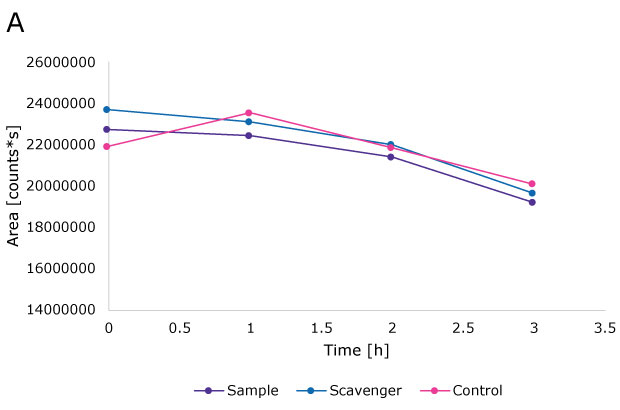
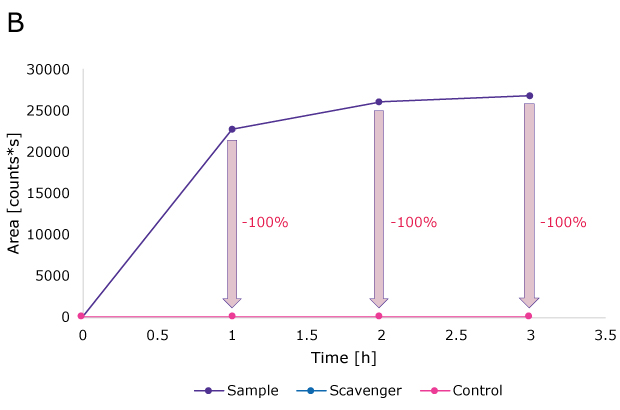
Figure 2. Suppression of nitrosamine formation by ascorbic acid: Reduction of nitrosamine content in bisoprolol sample (left) and effect on nitrosamine impurity control N-nitroso-bisoprolol (right).
Several classes of compounds demonstrated strong nitrosamine inhibition capabilities (Figure 3), including:
- Antioxidative vitamins such as ascorbic acid and vitamin E
- Amino acids and peptides including L-cysteine, glutathione, and tryptophan
- Phenolic compounds such as caffeic acid and ferulic acid
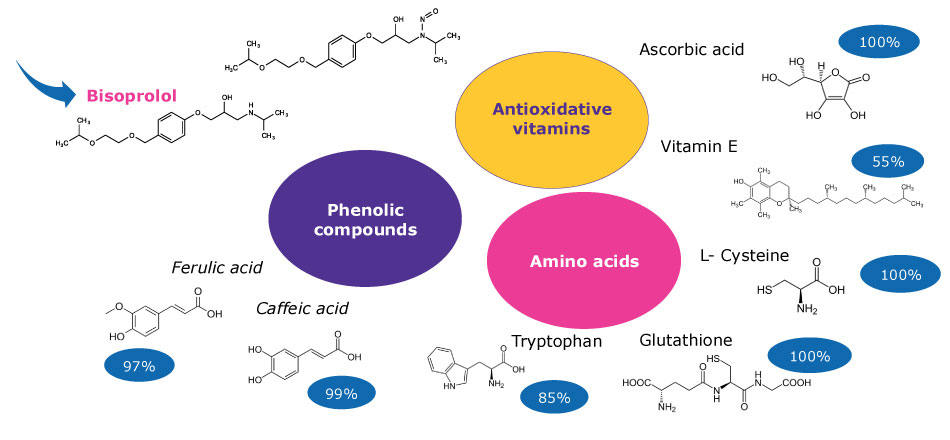
Figure 3.High-performing scavenger compounds identified in nitrosamine scavenger screening experiments.
Evaluation the effect of scavengers on tablet formulations
Following the pre-screening studies, successful scavenger candidates were incorporated into model tablet formulations to evaluate performance under realistic manufacturing and storage conditions. The formulations were designed to simulate a typical immediate-release tablet and intentionally incorporated a nitrite source (magnesium stearate) containing elevated nitrite levels. This enabled evaluation of how nitrosamines might form in a real-world formulation.
Finished tablets were subjected to accelerated stability testing after open storage at 40 °C and 75% relative humidity. These conditions were designed to accelerate nitrosamine formation and differentiate scavenger performance over time. Glutathione, vitamin E, and tryptophan demonstrated strong long-term protection against nitrosamine formation which was more pronounced compared to ascorbic acid and L-cysteine.
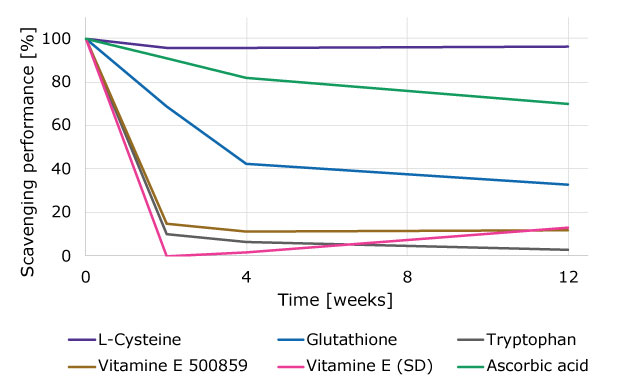
Figure 4.Assessment of scavenging performance of identified nitrosamine scavenger compounds in a tablet formulation (storage stability testing over 12 weeks under stress conditions).
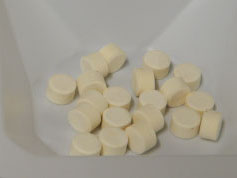
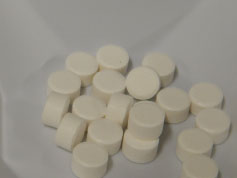
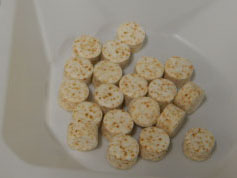
While several scavengers effectively reduced nitrosamine formation, visual and physical stability of the tablets was also important. The use of ascorbic acid and tryptophan resulted in noticeable discoloration of the table after storage at accelerated conditions (Figure 5). Although these compounds remained effective scavengers, such physical changes may create additional formulation or product quality considerations.
L-Cysteine
Vitamin E 500859
Ascorbic acid
Vitamin E standard grade
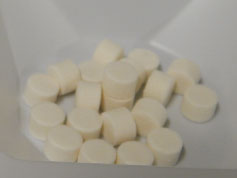
Glutathione
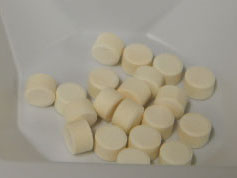
Tryptophan
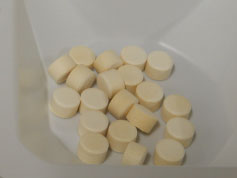
Figure 5. Varying levels of discoloration of tablets observed with different scavengers.
The use of pH modifiers
Nitrosation reactions are highly pH dependent. Increasing local pH conditions can reduce the formation of nitrosating reagents from nitrites and hence suppress nitrosamine formation. To evaluate this effect, various pH modifiers were incorporated into tablet formulations (5% w/w). The pH after dissolution of the tablet in 20 mL demineralized water (pH 6.06) was measured and the prevention of nitrosamine formation was monitored (Figure 6). By using the described model, the study results demonstrated the following:
- Sodium bicarbonate demonstrated particularly strong performance, significantly increasing pH while achieving excellent nitrosamine prevention
- Sodium acetate also showed highly effective nitrosamine suppression, even with a more moderate pH increase
- Sodium hydrogen phosphate provided partial mitigation benefits
- Trisodium citrate showed more limited effectiveness in this model system
Overall, pH modifiers can contribute significantly to the inhibition of nitrosamines.
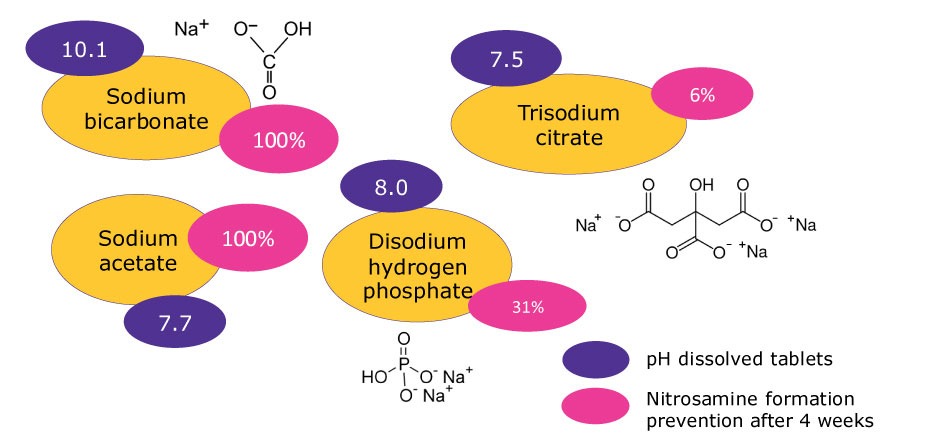
Figure 6.pH modifiers incorporated into tablet formulations with the respective pH value of the formulation and the nitrosamine formation prevention in percent after 4 weeks of storage.
Mitigate nitrosamine formation with innovative solutions
Nitrosamine risk management is a significant formulation and regulatory challenges facing the pharmaceutical industry. Nitrites can be difficult to detect and control at the extremely low levels required by current regulatory expectations, with acceptable limits often measured at the nanogram scale.
At the same time, a large proportion of APIs contain functional groups that may be susceptible to nitrosation, creating potential risk for nitrosamine formation during manufacturing and throughout product shelf life. As a result, companies must proactively evaluate both existing products and development pipelines to identify and mitigate potential vulnerabilities early. Formulation-based mitigation strategies such as incorporation of scavengers and pH modifiers can significantly reduce the risk of nitrosamine formation and help maintain patient safety over the entire product lifecycle.
A broader toolbox of excipients, combined with strong formulation expertise and early-stage risk assessment, enables formulators to make more informed decisions from the start of development. By selecting appropriate mitigation strategies early, developers can streamline formulation development, support regulatory expectations, reduce risk, and develop safer therapeutics. Working with an experienced excipient and formulation partner can further strengthen these efforts by providing deeper analytical insight, nitrite characterization data, regulatory support, and access to proven mitigation approaches that accelerate development and help manufacturers navigate the evolving nitrosamine landscape with greater confidence.
Products
FAQs
Why are nitrosamine impurities a concern to drug product safety?
Nitrosamines are a concern because many are classified as probable human carcinogens with mutagenic potential. These compounds can undergo metabolic activation in the body, forming reactive intermediates capable of damaging DNA.
Nitrosamine impurities have been detected in multiple marketed drug products, prompting increased regulatory scrutiny from agencies including the FDA and EMA. Because nitrosamines may form during manufacturing or storage, even at very low levels, manufacturers are expected to conduct comprehensive risk assessments and implement mitigation strategies to ensure patient safety.
How do nitrite impurities contribute to nitrosamine formation?
Nitrite can form nitrosating agents in pharmaceutical formulations under suitable conditions. These can react with secondary or tertiary amines in APIs or related substances to form nitrosamines under suitable conditions.
Even trace nitrite levels may contribute to nitrosamine formation during manufacturing or throughout product shelf life. This has increased industry focus on excipient characterization, nitrite testing, and formulation risk assessment.
Dive deeper in our dedicated technical article or webinar "Managing Nitrite Impurities: A Supplier-Manufacturer Approach to Mitigate Nitrosamine Risk".
What role does formulation pH play in mitigating nitrosamine risk?
Formulation pH plays an important role because nitrosation reactions are highly pH dependent. Increasing local pH conditions can reduce the formation of nitrosating reagents from nitrites and hence suppress nitrosamine formation.
Research has shown that pH modifiers such as sodium bicarbonate and sodium acetate can significantly reduce nitrosamine formation in model tablet formulations. Adjusting formulation pH may therefore serve as an effective complementary mitigation strategy alongside nitrosamine scavengers and excipient control programs.
Explore our portfolio of buffers and pH adjusters here.
Which excipients are effective nitrosamine scavengers?
Several excipient classes have demonstrated strong nitrosamine scavenging performance, including:
- Ascorbic acid (Vitamin C)
- Vitamin E
- Glutathione
- Cysteine
- Tryptophan
- Caffeic acid
- Ferulic acid
These materials have shown the ability to significantly reduce and possibly prevent nitrosamine formation during accelerated storage conditions. Selection of an appropriate scavenger depends on formulation compatibility, stability, and product performance requirements.
How can drug manufacturers collaborate with suppliers to control nitrite and nitrosamine impurities?
Effective nitrosamine risk management requires close collaboration between drug manufacturers and excipient suppliers. Manufacturers should work with suppliers to better understand raw material nitrite levels, analytical testing capabilities, formulation risks, and available mitigation strategies.
Supplier transparency programs and analytical support can help manufacturers perform more robust risk assessments and make informed formulation decisions earlier in development. Collaboration is especially important because nitrite impurities may vary between excipients, grades, and manufacturing processes.
Nitrite-related Information on our excipients is provided as part of our Emprove® Dossiers. Learn more about our Emprove® Program here.
What regulatory guidance should manufacturers follow regarding nitrosamines and nitrites in pharmaceutical drug products?
Manufacturers should follow current guidance from regulatory agencies including the U.S. Food and Drug Administration (FDA) and the European Medicines Agency (EMA).
The FDA’s 2024 guidance for industry highlights nitrites as common nitrosating impurities found in excipients and notes that these impurities may contribute to nitrosamine formation during manufacturing and storage. The EMA’s nitrosamine Q&A guidance similarly emphasizes that even low nitrite levels in excipients can result in nitrosamine formation exceeding acceptable intake limits.
Current regulatory expectations generally include:
- Nitrosamine risk assessments for APIs and drug products
- Evaluation of nitrite-containing excipients
- Appropriate analytical testing and control strategies, when there is any risk for the presence of nitrosamine impurities.
- Assessment of nitrosamine formation during shelf life
- Implementation of mitigation strategies where needed
Manufacturers are expected to maintain ongoing compliance as scientific understanding and regulatory expectations continue to evolve.