
Sterilizing filters for final sterile filtration

For drugs that can’t be terminally sterilized, aseptic processing provides the framework for manufacturing sterile pharmaceutical products. For liquids, sterilizing-grade membrane filters play a critical role in ensuring product safety by removing bacterial contaminants: they are validated to produce a sterile effluent when challenged with the standard test organism, Brevundimonas diminuta, at 107 cfu/cm2 membrane.1 While sterilizing-grade filters control bioburden throughout processing, the sterile filtration of drug product prior to filling is the critical step for ensuring sterility and is the focus of regulatory and industry attention.2-4
Learn how next-generation sterilizing-grade filtration solutions safeguard sterility, maintain product quality, and support reliable aseptic processing while meeting the demands of modern drug manufacturing.
Sterilizing-grade membranes for drug product filtration
Membrane key attributes for critical sterile filtration steps include low protein binding, low excipient binding, and nonreactivity to avoid compromising the drug product. More recently, concerns regarding per- and poly-fluoroalkyl substances (PFAS) in filter membranes and devices have increased interest in more sustainable filter options for this critical sterile filtration step.
Millipore Express® Ace 0.2 µm filters
Contain an innovative low-protein-binding, single-layer, sterilizing-grade polyethersulfone (PES) membrane optimized for high throughput and capacity. These filters improve sustainability as they are made with no intentionally added PFAS and have a carbon footprint 25% lower than a similar baseline product.5
Durapore® 0.22 µm filters
Contain a single-layer, sterilizing-grade polyvinylidene fluoride (PVDF) membrane. These reliable, robust filters have long been used for sterile filtration due to their nonreactivity and exceptionally low protein and excipient binding.
Millipore Express® SHC and Millipore Express® SHF filters
Millipore Express® SHF filters contain a single-layer 0.2 µm sterilizing-grade PES membrane, while Millipore Express® SHC filters contain this same membrane protected by an integrated 0.5 µm PES prefilter. Millipore Express® SHC filters offer high filter capacity for complex or plugging streams.
Membrane permeability and throughput
Higher flow rates and throughput reduce the number of filters needed which can simplify integrity testing and reduce volume loss in complex sterile filtration operations.
Studies benchmarking the permeability and throughput performance of sterilizing-grade membranes with water and a mAb are summarized in Figure 1; limited quantities of mAb precluded testing with all membranes.
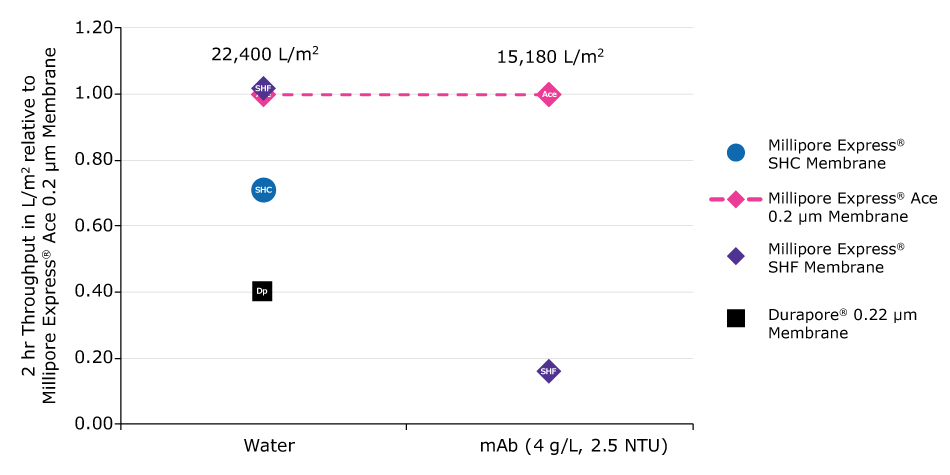
Figure 1.Relative throughput of Millipore Express® Ace 0.2 µm to other sterilizing grade membrane filters with water and a mAb after 2 hours of processing at 10 psi. The actual throughput for Millipore Express® Ace 0.2 µm filters is shown above the data points.
Millipore Express® Ace 0.2 µm filters are designed for high flow performance and have the same high water throughput as Millipore Express® SHF filters. Millipore Express® Ace 0.2 µm outperformed Millipore Express® SHC filters, which are better suited to more fouling process fluids, and Durapore® 0.22 µm filters. With the 4 mg/mL mAb fluid stream, Millipore Express® Ace 0.2 µm filters showed higher throughput than Millipore Express® SHF filters.
Protein and excipient binding
Drug products often contain low levels of excipients, such as polysorbate or poloxamer, which improve their stability, absorption, and shelf life. Durapore® 0.22 µm PVDF membrane filters have long been used for final filtration due to their nonreactivity and exceptionally low binding of proteins and excipients. Any filter used for drug product sterile filtration should have limited protein or excipient binding to minimize product loss to the membrane and maximize yield.
Studies compared protein (IgG) binding in filtration membranes used for drug product sterile filtration; results are summarized in Figure 2. Results show that Millipore Express® Ace 0.2 µm filters have slightly lower levels of protein binding than the benchmark Durapore® 0.22 µm filters.
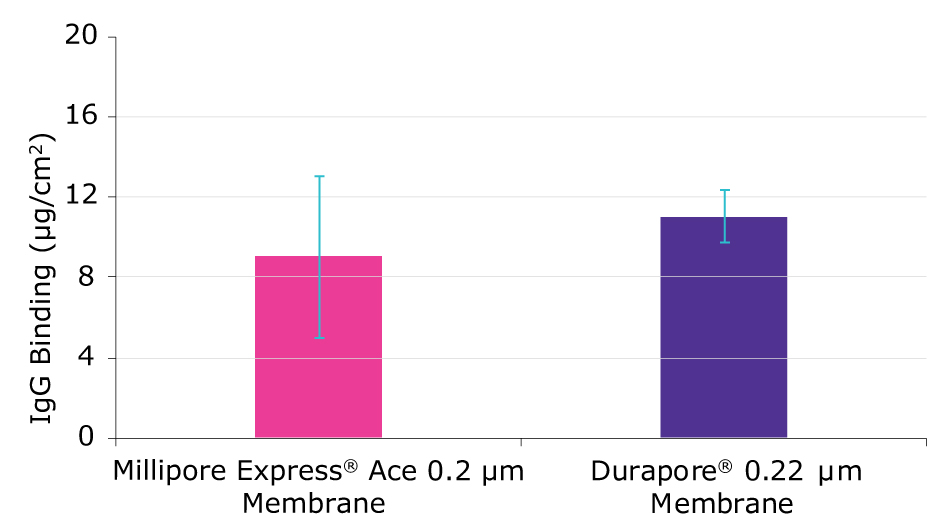
Figure 2.Protein binding for Millipore Express® Ace 0.2 µm and Durapore® 0.22 µm sterilizing-grade membranes.
Figure 3 shows absorption of 0.05% polysorbate 20 to sterilizing-grade membranes. Millipore Express® Ace 0.2 µm showed higher levels of polysorbate 20 binding than Durapore® 0.22 µm filters, and a similar binding profile as Millipore Express® SHC filters; by 4-10 L/m2 polysorbate 20 level in the filtrates matched those of the unfiltered fluids. However, if the increased filtration capacity of Millipore Express® ACE 0.2 µm filters is considered, then this product loss to excipient binding is proportionally less on Millipore Express® ACE 0.2 µm than on Millipore Express® SHC filters.
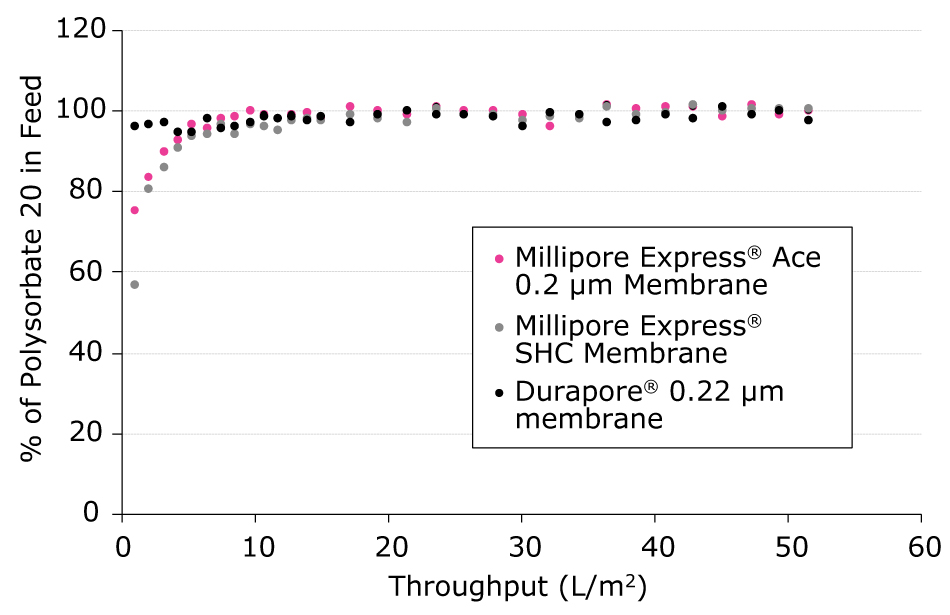
Figure 3.Binding of 0.05% polysorbate 20 to sterilizing-grade membranes.
Figure 4 shows that excipient binding to Millipore Express® Ace 0.2 µm membrane is dependent on both the concentration and type of excipients. Comparing polysorbate absorption at different concentrations to achieve filtrate polysorbate levels matching the feed, higher filter throughput was required at 0.01% polysorbate 20 than at 0.05% polysorbate 20. When binding of different excipients was compared at 0.05%, it’s clear that binding is highly dependent on the excipient: poloxamer 188 showed almost no binding, while polysorbate 80 had lower levels of binding than polysorbate 20.
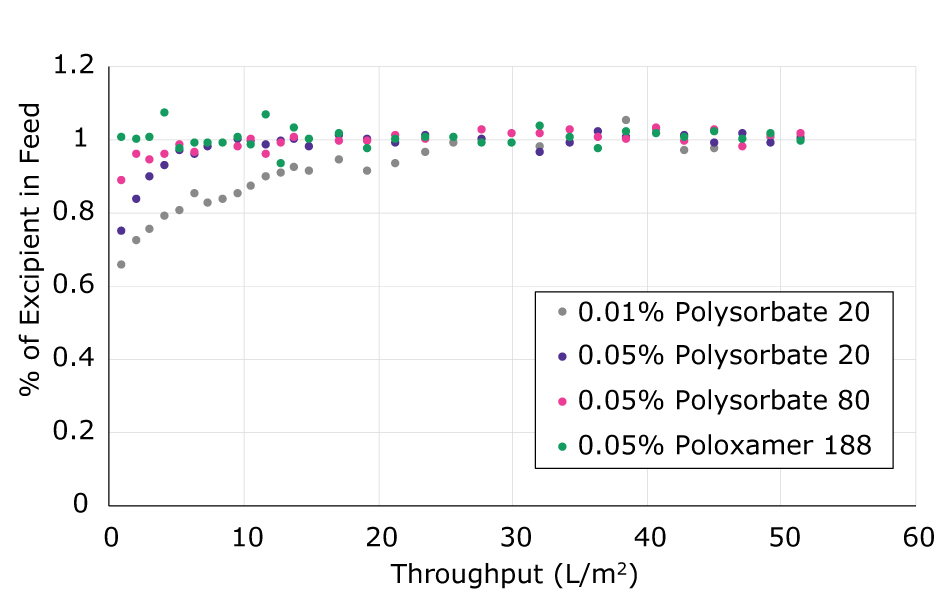
Figure 4. Excipient binding to Millipore Express® Ace 0.2 µm membrane. Binding dependent on both excipient type and concentration.
Any filtered drug product will have narrow quality specifications regarding excipient level and any fraction of the filtered material that is outside this specification is usually discarded before filling. Some of this product loss can be minimized by flushing the membrane with final fill buffer to fill adsorption sites on the membrane before drug product filtration. In addition, as Millipore Express® Ace 0.2 µm filters have higher filtration capacity than other sterilizing-grade filters, the fraction of filtered material lost due to excipient binding will be much smaller than typically expected with other PES filters. For additional information, read our technical article on Advanced Sterilizing-Grade Filters for Bioprocessing.
Filter formats for sterile filtration of drug product
All sterilizing-grade membranes are available in multiple filter formats and are fully scalable from small-scale to pilot and production-scale manufacturing. All filters for drug product filtration are 100% integrity tested during manufacturing and are supported by the Emprove® program which consolidates comprehensive product-specific testing data, quality statements, and regulatory information to simplify your compliance needs.
- Cartridge filter elements are used in traditional, multi-use, stainless-steel operations requiring larger filtration areas or lower operating costs. All cartridge filters are designed to withstand multiple steam-in-place cycles and are available with connection options for different processing needs.
- Capsule filters are commonly used for sterile filtration of drug product and offer increased flexibility, rapid turnaround and minimize the cleaning, assembly and validation associated with stainless steel operations. Capsule filters are compatible with autoclave, gamma or X-ray irradiation, or may be offered pre-sterilized.
Membrane choice, process scale, and anticipated process need guides the selection of filter format.
Specialized capsule filters for high value, small volume filtration
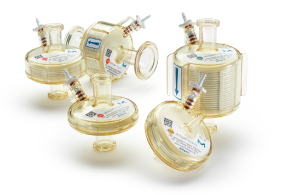
Milipak® Final Fill capsule family
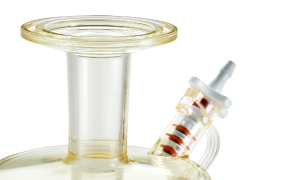
Aseptic multipurpose port on Millipak® Final Fill capsule
Any yield loss during drug product filtration can have significant economic impacts for drug manufacturers, particularly in smaller scale processes with high-value products.
Millipak® Final Fill capsules are designed for reliable filtration of small-volume, high-value products and contain membrane arranged in a stacked disc design to reduce product hold-up and increase recovery. In place of a traditional filter vent, these user-friendly filters feature an aseptic multi-purpose port (AMPP) that simplifies venting, integrity testing and sampling, and is validated to maintain an aseptic flow path even after multiple actuations. Millipak® Final Fill filters are irradiation compatible and are also offered presterilized. Millipak® Final Fill capsules are available with Durapore® 0.22 µm membrane.
Advanced capsule filters for larger volume filtration
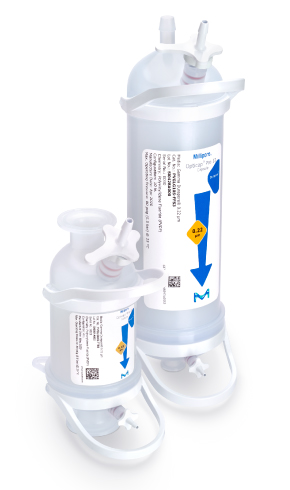
Two Opticap® Pro capsule filters containing Durapore® 0.22 µm membrane
Opticap® Pro capsules are the most recent introduction to our filter formats and are designed to mitigate the risk of process contamination. These gamma and x-ray compatible capsules contain pleated filter elements inside the capsule housing. In these filters, the traditional filter vents have been replaced with AMPPs that create a barrier between the environment and product flow-path, and offer secure aseptic connections for sampling, venting, and integrity testing. The AMPPs have been validated to prevent microbial ingress, even following multiple actuations. Opticap® Pro capsules are easy to integrate into single-use assemblies and can streamline aseptic processing. Opticap® Pro capsules are available with Durapore® 0.22 µm membrane.
Capsule filters for larger volume filtration
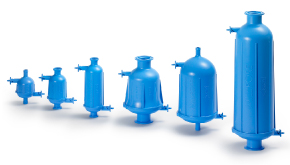
Opticap® capsule filters of different sizes
Opticap® XL capsules provide flexibility, rapid turnaround, and minimize the burden of cleaning, assembly, and validation typical of multi-use operations. Pleated filter elements are inside the autoclave or irradiation-compatible capsule housings. Opticap® XL capsules are offered in different sizes with multiple connection options for integration into different process configurations. Presterilized filters are available with some membranes. Opticap® XL capsules are available with Durapore® 0.22 µm, Millipore Express® Ace 0.2 µm, Millipore Express® SHC, and Millipore Express® SHF membranes.
Want a deeper dive into final sterile filtration?
Watch our on-demand webinar to learn how integrated single-use filtration assemblies can help support contamination control, PUPSIT readiness, and EU GMP Annex 1 compliance while simplifying implementation and reducing operational risk.
Filter formats quick guide
This guide provides information on formats available, filtration areas, and sterilization compatibility. For more comprehensive information, visit our final filtration and filling web page.
Explore the Aseptic Processing Ecosystem
Sterile filtration is one part of a successful aseptic manufacturing strategy. Explore the Aseptic Processing Ecosystem to learn how formulation mixing, single-use assemblies, sterilizing-grade filtration, validation services, and regulatory support work together to help reduce risk throughout the final fill workflow.
Need help with your filtration process?
Contact us for help selecting a filtration device or format.
Frequently asked questions
What is a sterilizing-grade membrane filter?
Sterilizing-grade membrane filters are designed to remove bacteria from liquids during aseptic processing. They are validated to produce sterile effluent under standardized bacterial conditions of final sterile filtration before filling.
Why is sterile filtration important in aseptic drug manufacturing?
For products that cannot be terminally sterilized, sterile filtration is used to sterilize drug products before filling. Selecting the appropriate filter assures sterility, preserves product quality, maximizes recovery, and acceptable process economics.
How do I choose the right sterilizing-grade membrane?
The ideal membrane depends on your process requirements, including throughput, product characteristics, protein and excipient binding, and filtration capacity. Selecting the right membrane can improve process performance while protecting sensitive drug products.
What is the difference between PES and PVDF membrane filters?
Sterilizing-grade polyvinylidene fluoride (PVDF) membranes have long been recognized for low protein and excipient binding while polyethersulfone (PES) membranes offer broad chemical compatibility, high throughput and filtration capacity. The appropriate filter choice depends on your drug product and manufacturing process.
How can membrane selection help protect product quality?
Membranes with low protein and excipient binding help minimize product loss and preserve critical formulation components during sterile filtration. Selecting the appropriate membrane can maximize product recovery while maintaining sterility.
Which sterile filter format is right for my process?
Sterilizing-grade membranes are available in multiple formats, including cartridges and capsules to support processes from development through commercial manufacturing. Capsule filters are offering in autoclave, gamma, or X-ray irradiation compatible formats for different process needs. Filter format selection depends on process scale, manufacturing configuration, and operational requirements.
What should I consider when selecting a sterile filtration solution?
When evaluating sterile filtration technologies, consider membrane performance, product compatibility, throughput, filter capacity, scalability, and the quality of supplier documentation on the filtration product.