
cataCXium® Ligands for Pd Cross‑Coupling Reactions
Section Overview
Introduction
cataCXium® ligands are bulky, electron‑rich phosphines that enhance catalytic efficiency by stabilizing reactive Pd(0) species involved in oxidative addition. This enables effective cross‑coupling of aryl chlorides at reduced palladium loadings (down to ~0.005 mol%) with high turnover numbers. Based on ligand structure and reactivity profile, the cataCXium® family is grouped into three subfamilies:
- cataCXium® A series: diadamantylphosphines; benchmark ligands for ultra-low loading Suzuki–Miyaura, Heck, and α-arylation reactions with aryl chlorides
- cataCXium® P series: phosphino-substituted N-aryl pyrrole and indole ligands; optimized for Suzuki-Miyaura at mild temperatures and Buchwald-Hartwig C-N and C-O bond formation
- cataCXium® F series: 9-fluorenyldicyclohexylphosphines; active in both organic and aqueous media for Suzuki-Miyaura, Sonogashira, and Buchwald-Hartwig couplings, including a water-soluble sulfonated variant (cataCXium® Fsulf)
- cataCXium® C: ortho-tolylphosphino-benzyl palladacycle (Herrmann's catalyst); a stable, isolable dinuclear Pd(II) catalyst suited to Heck and C-C/C-N cross-coupling reactions without the need for separate ligand addition
Together, these families cover the full scope of modern Pd-catalyzed cross-coupling chemistry, providing researchers with a systematic and rationally designed toolkit for challenging substrate classes.
Key advantages
- Broad substrate compatibility: Effective across sterically hindered, electron-rich, and heteroaromatic aryl chlorides
- Versatile cross-coupling scope: Applicable to Suzuki-Miyaura, Heck, Sonogashira, Buchwald-Hartwig (C-N/C-O), α-arylation, and cross-electrophile coupling
- Adaptability to different reaction environments: Includes ligands suitable for both organic and aqueous media, supporting varied process conditions
- Process-oriented ligand variants: Water-soluble and air-stable derivatives enable simplified handling and facilitate scale-up workflows
Applications
CataCxium® A series
The cataCXium® A series consists of diadamantylphosphine ligands that support Pd‑catalyzed cross‑coupling at low loadings, enabling efficient activation of aryl chlorides in Suzuki-Miyaura and related reactions.
The cataCXium® A ligand is also available as pre-formed Buchwald precatalysts across three generations (G2, G3, and G4), removing the need for in-situ ligand and palladium mixing. Each generation offers progressive improvements in activation, with the G4 introducing a methylated biphenylamine backbone that addresses limitations encountered with G3 under certain conditions. All three are air-stable solids with good solubility in common organic solvents. For high-throughput experimentation and automated dispensing, G3 and G4 are also available in ChemBeads format, enabling accurate sub-milligram dosing without surfactants.
Beller and co-workers developed a very bulky ligand based on diadamantylalkylphosphanes.1,2,3 Among the most active ligand synthesized by this group, diadamantyl-n-butylphosphane, proved to be the most efficient. cataCXium® A enables efficient Suzuki-Miyaura coupling of aryl chlorides at Pd loadings as low as 0.005 mol%. High yields (58-100%) are achieved across electron-neutral and electron-withdrawing substrates, with good tolerance for ortho substitution. Reaction performance remains strong under standard conditions (Pd(OAc)₂, K₂CO₃, DMF, 80 °C), with reduced efficiency observed for strongly electron-rich substrates. These results highlight the ability of bulky diadamantylphosphine ligands to promote oxidative addition into challenging C-Cl bonds at low catalyst loadings.

Figure 1.Representative Suzuki–Miyaura cross-coupling of aryl chlorides with phenylboronic acid using a palladium catalyst and a phosphine ligand. The table summarizes the yields and turnover numbers (TONs) obtained for selected aryl chloride substrates under the reaction conditions shown.
Cross-Electrophile Coupling of Aryl Chlorides with Alkyl Chlorides
cataCXium® AHI is a bench-stable hydroiodide salt of cataCXium® A, releasing the active phosphine in situ. It extends beyond Pd catalysis to enable iron-catalyzed cross-electrophile coupling of aryl and alkyl chlorides with broad substrate scope and good yields. The reaction proceeds under mild conditions, delivering alkylated arenes with good functional group tolerance and applicability to complex substrates and gram-scale synthesis.4

Figure 2.Iron-catalyzed cross-coupling of 2-chloropyridine with cyclopentyl chloride using cataCXium® AHI as the ligand.
Four-Component Synthesis of 5-Acylpyrid-2-ones
cataCXium® ABn is effective in Pd-catalyzed alkynylation reactions such as the copper-free Sonogashira coupling of aryl halides with terminal alkynes. The tuned steric and electronic profile of the ligand supports challenging substrates, including sterically hindered aryl chlorides, delivering arylalkyne products under mild conditions. It enables Pd-catalyzed one-pot, four-component synthesis of 5-acylpyrid-2-ones under mild conditions.5 The methodology supports a broad substrate scope with three independent points of diversity. Compared to earlier Pd/Cu systems, it allows near-stoichiometric use of all reaction components, improving overall efficiency.

Figure 3. Palladium-catalyzed multicomponent synthesis of substituted 2-pyridones from acid chlorides, alkynes, amines, and acryloyl chloride using cataCXium® ABn HBr.
Pd-Catalyzed Formylation of Aryl Bromides
cataCXium® A supports Pd‑catalyzed formylation of aryl bromides with CO/H₂, enabling industrial‑scale synthesis (>1000 kg) of aryl aldehydes. Kinetic and computational studies identify migratory insertion and dihydrogen activation as key steps, with higher reactivity observed for electron‑rich substrates. 6

Figure 4. Palladium-catalyzed carbonylation of aryl bromides using carbon monoxide and hydrogen in the presence of cataCXium® A.
Pd-Catalyzed γ′ Arylation of Cyclic Vinylogous Esters
cataCXium® A supports Pd‑catalyzed γ′‑arylation of cyclic vinylogous esters with aryl bromides, enabling regioselective C-C bond formation under HMPA-mediated conditions and providing access to functionalized arylated intermediates.7

Figure 5.Palladium-catalyzed α-arylation of cyclic enol ethers with aryl bromides using cataCXium® A.
Pd-Catalyzed Copper Free Sonogashira Coupling
Pd(CH₃CN)₂Cl₂/cataCXium® A enables copper‑free Sonogashira coupling of aryl halides with terminal alkynes under mild conditions, with oxidative addition identified as the rate‑determining step.8
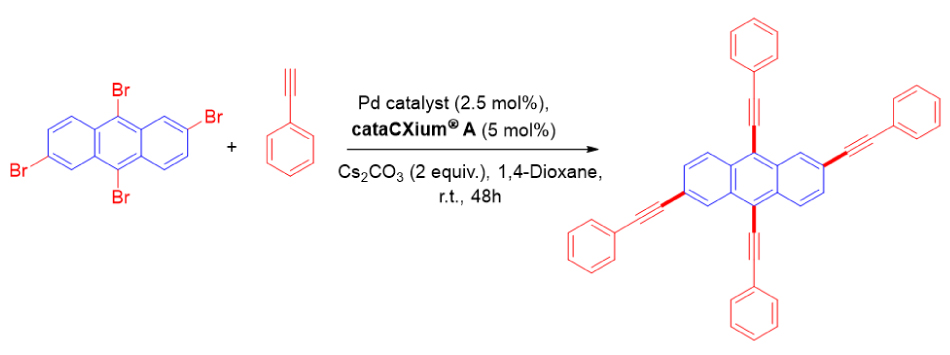
Figure 6.Palladium-catalyzed Sonogashira coupling of a tetrabromoacene derivative with phenylacetylene using cataCXium® A.
cataCXium® P series
The cataCXium® P series represents a second-generation ligand class designed to combine steric shielding with strong electron donation. These ligands feature a phosphino group at the 2‑position of an N‑aryl pyrrole or indole scaffold, where the N‑aryl substituent functions as a pseudo‑biaryl framework around the metal centre. Variation of the phosphine substituents (e.g., dicyclohexyl or di‑tert‑butyl) and the N‑aryl group enables systematic tuning of steric and electronic properties for cross‑coupling applications.
cataCXium® PCy supports Ni‑catalyzed Suzuki-Miyaura cross‑coupling of aryl halides, enabling formation of reactive Ni intermediates for efficient catalytic turnover. Its steric flexibility facilitates key steps including oxidative addition, trans-metalation, and reductive elimination, delivering productive coupling of aryl and heteroaryl substrates.9
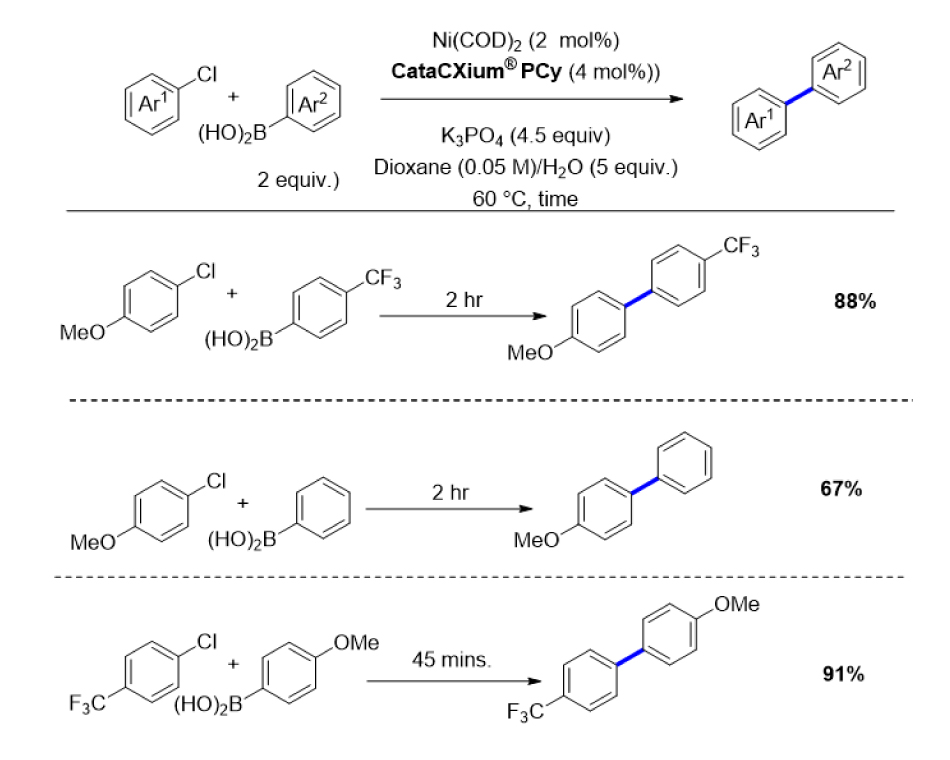
Figure 7.Nickel-catalyzed Suzuki–Miyaura cross-coupling of aryl chlorides with aryl boronic acids using cataCXium® PCy.
Pd-Catalyzed Copper-Free Sonogashira Coupling
cataCXium® PICy enables Pd‑catalyzed gem‑difluoroallylation of aryl halides, delivering up to 88-94% yield with >99:1 regioselectivity at low catalyst loading (0.1 mol%), outperforming other phosphine systems in both efficiency and selectivity.10

Figure 8.Palladium-catalyzed coupling of p-tert-butyl bromobenzene with a difluoroalkenyl boron reagent using cataCXium® PICy.
Pd-Catalyzed C–O Cross-Coupling for Chalcone Synthesis
cataCXium® PIntB enables Pd-catalyzed C-O cross-coupling of ethyl acetohydroxamate with 4-bromo-chalcones, delivering moderate to excellent yields (50-99%). Its strong electron-donating and steric properties support efficient catalytic turnover, facilitating synthesis of novel chalcones. The resulting compounds exhibit promising antiplasmodial activity with favorable selectivity profiles against mammalian cells.11

Figure 9.Palladium-catalyzed O-arylation of bromoaryl ketones using cataCXium® PIntB, yielding aryl oxime ethers (50–90%).
cataCXium® F series
Plenio and co-workers developed a new class of phosphine ligands based on a fluorenylphosphine scaffold.12 The cataCXium® F series consists of structurally distinct phosphine ligands based on a 9‑fluorenyl framework bearing a dicyclohexylphosphino group. The rigid bicyclic structure creates a sterically shielded, electron‑rich phosphorus center, differentiating these ligands from adamantyl (A series) and N‑aryl pyrrole/indole (P series) systems. Substitution at the 9‑position enables modulation of solubility and catalyst handling, while sulfonated derivatives (cataCXium® Fsulf) provide water compatibility for aqueous applications.
Fluorenylphosphine ligands, represented by cataCXium® F‑series systems, enable Pd‑catalyzed cross‑coupling reactions including Suzuki-Miyaura, Sonogashira, and Buchwald-Hartwig transformations. These ligands support efficient coupling of aryl chlorides at low Pd loadings (0.05-0.5 mol%), delivering high conversions across electronically diverse substrates.12 Consistent activity is observed in Sonogashira coupling (44-94% yield) and Buchwald-Hartwig amination, where quantitative conversion is achieved with catalyst loadings as low as 0.1 mol%.
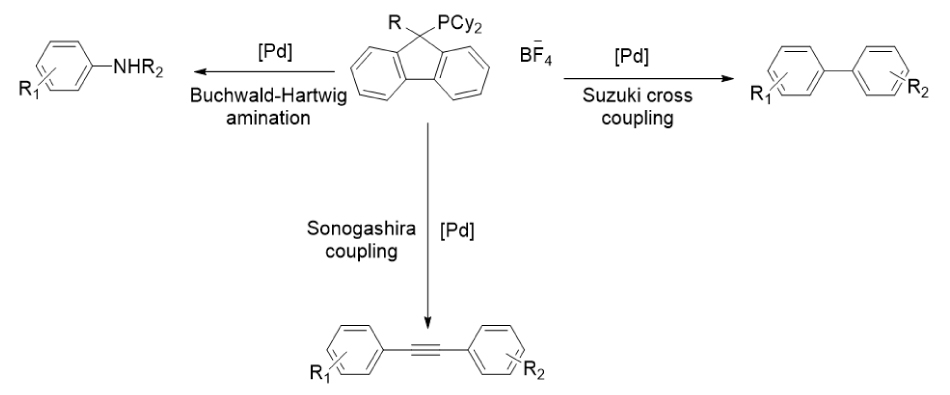
Figure 10.Representative palladium-catalyzed cross-coupling reactions enabled by a cataCXium® phosphine ligand.
Pd-Catalyzed Heck Reactions with Palladacycles
Palladacycle-based Pd catalysts enable efficient Heck cross‑coupling reactions, providing high catalytic turnover (TON > 10,000) under moderate thermal conditions (≤100 °C). These systems support complex bond‑forming sequences, including double coupling reactions used in the synthesis of biologically active molecules, such as cephalostatin derivatives, with high overall yields.13
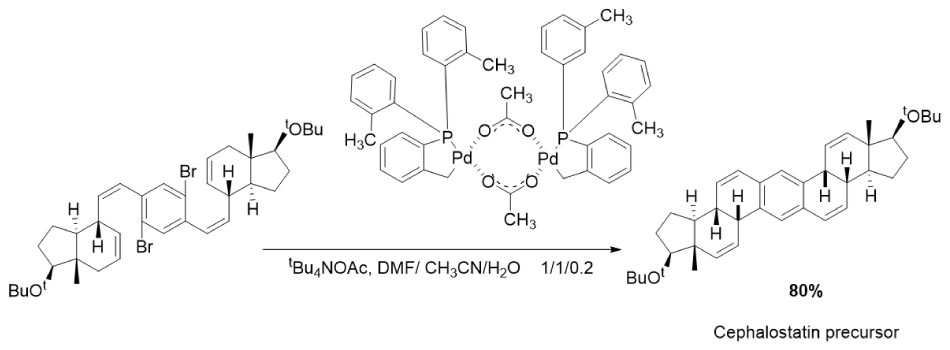
Figure 11.Palladium-catalyzed homocoupling of a brominated steroidal intermediate using a cataCXium® ligand-containing catalyst system.
CataCXium® portfolio
Table 1 lists the full cataCXium® portfolio of ligands, precatalysts, and palladacycle catalyst.
Conclusion
cataCXium® ligands are a class of sterically demanding, electron‑rich phosphines that support Pd‑ and Ni‑catalyzed cross‑coupling across diverse substrates, including aryl chlorides at reduced metal loadings. The A, P, and F ligand families provide complementary reactivity profiles, enabling their use in key transformations such as Suzuki-Miyaura, Heck, Sonogashira, and Buchwald-Hartwig reactions under varied conditions. Overall, these ligands offer a broadly applicable platform for efficient cross‑coupling in synthetic and process‑oriented workflows.