
Skip to Content
Merck

ST1029

PhosphoDetect Anti-Fos (pSer³⁷⁴) Mouse mAb (34E4)

lyophilized, clone 34E4, Calbiochem®

Sign In to View Organizational & Contract Pricing.

Select a Size


About This Item

NACRES:
NA.41
UNSPSC Code:
12352203
Technical Service
Need help? Our team of experienced scientists is here for you.
Let Us Assist
Technical Service
Need help? Our team of experienced scientists is here for you.
Let Us Assist

Product Name

PhosphoDetect Anti-Fos (pSer³⁷⁴) Mouse mAb (34E4), lyophilized, clone 34E4, Calbiochem®

biological source

mouse

antibody form

purified antibody

antibody product type

primary antibodies

clone

34E4, monoclonal

form

lyophilized

contains

≤0.1% sodium azide as preservative (antibody only)

species reactivity

human

manufacturer/tradename

Calbiochem®

storage condition

OK to freeze
avoid repeated freeze/thaw cycles

dilution

(ELISA (0.1 µg/mL)
Immunoblotting (0.5 µg/mL, chemiluminescence))

isotype

IgG1

shipped in

wet ice

storage temp.

−20°C

target post-translational modification

phosphorylation (pSer374)

Quality Level

Analysis Note

Positive Control
HepG2 cells treated with EGF

Application

ELISA (0.1 g/ml)
Immunoblotting (0.5 g/ml, chemiluminescence)

Disclaimer

Toxicity: Irritant (B)

General description

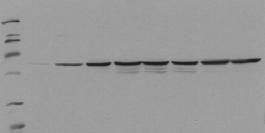
Mouse monoclonal antibody purified from serum-free cell culture supernatant by thiophilic adsorption and size exclusion chromatography. Supplied with a positive control lysate consisting of EGF-treated HepG2 cells. Recognizes the ~55 kDa c-fos protein phosphorylated at Ser374 by MAP kinase.
Recognizes the ~55 kDa c-Fos protein phosphorylated at Ser374. Does not detect the unphosphorylated form.
The early gene product c-Fos is expressed following mitogenic stimulation and functions as a sensor for MAPK signal duration. When MAPK activation is transient, MAPK activity declines before accumulation of the c-Fos protein. When MAPK activation is sustained, c-Fos is phosphorylated by MAPK at Ser374. Phosphorylation stabilizes the Fos protein and primes c-Fos for additional phosphorylation at Thr325.
This PhosphoDetect Anti-Fos (pSer³⁷⁴) Mouse mAb (34E4) is validated for use in ELISA, Immunoblotting for the detection of Fos (pSer³⁷⁴).

Immunogen

Human
a synthetic phosphopeptide corresponding to amino acids surrounding the Ser³⁷⁴ phosphorylation site of human c-Fos

Other Notes

Chen, R-H., et al. 1993. Proc. Natl. Acad. Sci. USA90, 10952.
Does not detect the unphosphorylated form of c-fos. For immunoblotting use 20 µl control lysate per lane (minigel) for chemiluminescent detection. Antibody should be titrated for optimal results in individual systems.

Physical form

100 µg antibody lyophilized from 2X PBS, PEG, sucrose and 200 µl lyophilized control lysate from EGF-treated HEPG2 cells.

Preparation Note

Reconstitute antibody with 1 ml water (15 minutes, room temperature). Following reconstitution, aliquot and freeze in liquid nitrogen. Reconstituted antibody can be stored at -80°C for up to 1 year. Aliquots may be stored at 4°C for up to 3 months and should be thawed at 37°C. Reconstitute control lysate with 200 µl H₂O. After complete solubilization of the proteins add 200 µl SDS-PAGE sample buffer and incubate at 90°C for 5 min. Following reconsitution aliquot and freeze (-20°C). Avoid freeze/thaw cycles.

Legal Information

CALBIOCHEM is a registered trademark of Merck KGaA, Darmstadt, Germany

Not finding the right product?  

Try our Product Selector Tool.

Storage Class

11 - Combustible Solids


Certificates of Analysis (COA)

Search for Certificates of Analysis (COA) by entering the products Lot/Batch Number. Lot and Batch Numbers can be found on a product’s label following the words ‘Lot’ or ‘Batch’.

Already Own This Product?

Find documentation for the products that you have recently purchased in the Document Library.

Visit the Document Library

Michael J Pellegrino et al.
Journal of neurochemistry, 99(6), 1480-1493 (2007-01-17)
The duration of intracellular signaling is thought to be a critical component in effecting specific biological responses. This paradigm is demonstrated by growth factor activation of the extracellular signal-regulated kinase (ERK) signaling cascade in the rat pheochromocytoma cell line (PC12

Global Trade Item Number

SKUGTIN
ST1029-1SETCN04055977208689

Our team of scientists has experience in all areas of research including Life Science, Material Science, Chemical Synthesis, Chromatography, Analytical and many others.

Contact Technical Service