
Photometry & Reflectometry
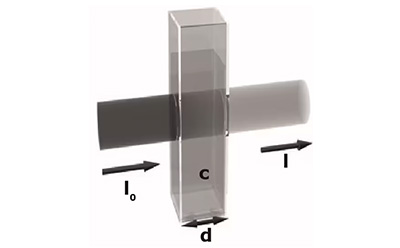
Photometry is the measurement of light absorbed in the ultraviolet (UV) to visible (VIS) to infra-red (IR) range. This measurement is used to determine the amount of an analyte in a solution or liquid. Photometers utilize a specific light source and detectors that convert light passed through a sample solution into a proportional electric signal. These detectors may be for example photodiodes, photoresistors, or photomultipliers. Photometry uses Beer–Lambert’s law to calculate coefficients obtained from the transmittance measurement. A correlation between absorbance and analyte concentration is then established by a test-specific calibration function to achieve highly accurate measurements.
Featured Categories

Spectroquant® instruments, software, accessories, and ready-to-use test kits through innovative solutions and start-to-finish quality assurance ensure precise and rapid results with the easy handling of the system.

Colorimetric and titrimetric test kits with brilliant color cards allow easy and precise analysis for aquaculture, surface water and industrial water testing.
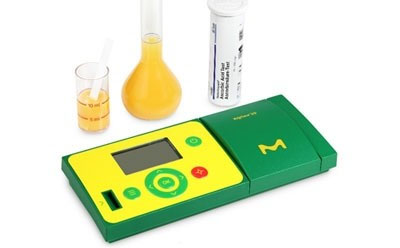
Our selection of MQuant® and Reflectoquant® test strips includes a variety of test strips for fast, precise, and low-cost analysis in-the-field or on-site.

MQuant® and Reflectoquant® pH indicator papers, kits, and non-bleeding pH strips make rapid pH measurement easier than ever.
Photometry
Photometry is a widely used quantitative analysis in research laboratories to determine the amounts of inorganic and organic compounds in solutions and other liquids. Photometry also has broad industrial applications in the determination of contaminants in drinking and wastewater, analysis of nutrients in soil, food and beverage samples, building material composition, and many other areas.
Construction and Working of Photometer
The components of a typical photometer include a light source, monochromator, sample, and detector. Light sources can be tungsten-halogen lamps (generally the source of light used for analyses in the visible light range) or LEDs. For measurements in the UV–Visible range a xenon flash lamp may be used. The monochromator filters the light radiated by the light source to allow only a very narrow spectrum to pass. The light then passes through the cuvette or the sample holding cell. Based on the amount of analyte (or a dye derived from it) that is present in the sample solution, some part of the light is absorbed by the solution and the remaining is transmitted. The transmitted light is directed towards the detectors, which produce an electric current proportional to the light intensity.
Beer–Lambert Law
Beer–Lambert law, also known as Beer’s law, states that the quantity of light absorbed by a sample is directly proportional to the concentration of the analyte present and path length of the light through the sample. “Sample” in this context means either the analyte itself (direct measurement) or a dye derived from the analyte (when using reagents or kits). The relationship is described by the formula:
A = elc |
where |
A = absorbance of the sample |
The spectrophotometer measures the intensity of light before and after passing through a solution and relates it to the transmittance (T) by the following equation: |
Transmittance(T)=It/Io |
It and Io are the intensity of light after and before passing through the solution, respectively. The transmittance is related to the absorbance by the equation: |
Absorbance(A)=−log(T) |
Reflectometry
Reflectometry (also known as remission photometry) is a non-destructive analytical technique that uses the reflection of light by surfaces and interfaces to measure characteristics such as color intensity, film thickness and refractive index.
As with other photometers, the main elements of reflectometers include a light source, usually long-life LEDs of specific wavelengths that are focused onto a sample surface via a lens system and the reflected light is measured by detectors.
Reflectometers are often designed to measure physical characteristics of surfaces like color changes on a test strip. In this approach, a sample can be placed on a test strip and its remission (REM) value can be compared against appropriate controls and standards. As in photometry, the difference in intensity between emitted and reflected light allows a quantitative determination of the concentration of specific analytes.
Reflectometry is commonly used in industrial applications as a rapid, sensitive method for quantitating a wide variety of organic and inorganic parameters in water, food, beverages, and environmental samples as well as other diverse uses such as surface analysis of building materials and skin color quantification.

Visit our document search for data sheets, certificates and technical documentation.
Related Articles
- 빠른 변환을 위한 흡광도에 대한 투과율 표 이 차트를 실험실, 교실, 현장에서 편리하게 참조로 사용하십시오. 온라인 투과율 차트는 다운로드 및 공유 가능합니다.
- 생명과학 분야의 선두주자로서 머크는 많은 분석물질을 측정하기 위한 검사 키트를 생산해 오고 있습니다. Water Online은 화학적산소요구량 측정의 발전에 대해 당사와 담화를 나누었습니다.
- 폐수 내 Ammonium을 Reflectroquant® 시스템 및 검사 스트립을 이용하여 Nessler 시약 또는 indophenol blue법을 통해 단계별로 정확하게 반사광측정법으로 측정.
- COD/Chloride용 표준용액의 조제
- Nitrite로 환원된 후 Griess 시약으로 검출되는 다양한 채소 내 Nitrate 수준의 Reflectoquant® 시스템 및 검사 스트립을 이용한 반사광측정을 기술하는 단계별 방법.
- See All (54)
Related Protocols
- Hydrogen peroxide용 표준용액 조제
- Calcium chloride 용액으로 추출한 뒤 indophenol blue법을 이용하여 광도측정법으로 측정
- 산 무기화 이후 Chromazurole S를 이용한 광도측정법에 의한 측정, DIN 분해
- 산 무기화 이후 Chromazurole S를 이용하여 광도측정법으로 측정
- 융해 용융 이후 Chromazurole S를 이용한 광도측정법에 의한 측정
- See All (128)
Find More Articles and Protocols
Related Webinars
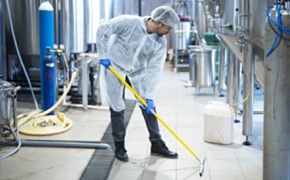
Join our webinar on June 15th to find out how to quickly analyze chemical disinfectant parameters to ensure the safety of your production line after disinfection & the different methods available.
How Can We Help
In case of any questions, please submit a customer support request
or talk to our customer service team:
Email custserv@sial.com
or call +1 (800) 244-1173
Additional Support
- 계산기 및 앱
Web Toolbox - 분석 화학, 생명 과학, 화학 합성 및 재료 과학을 위한 과학 연구 도구 및 자료.
- Customer Support Request
씨그마 알드리치의 주문, 제품, 계정 및 웹사이트에 대해 궁금하신 부분을 확인할 수 있습니다
- FAQ
Explore our Frequently Asked Questions for answers to commonly asked questions about our products and services.