Millipore Sigma Vibrant Logo

NB20 Anti-AnkyrinG Mouse mAb (463)

View Products on Sigmaaldrich.com
NB20
가격 및 재고 조회

개요

Replacement Information

주요 사양표

Species ReactivityHostAntibody Type
Ca, H, M, RMMonoclonal Antibody

가격 및 재고여부

카탈로그 번호 재고 정보패킹 포장 단위 가격(VAT 별도) 수량
NB20-100UGCN
재고 정보 검색...
현재 재고 없음
현재 재고 없음
예상 출고 가능일 
단종품
제한된 수량 가능
재고여부 확인
    Remaining: will advise
      Remaining: will advise
      추천사항
      고객 서비스로 문의
      Contact Customer Service

      Plastic ampoule 100 μg
      가격 검색...
      가격을 검색할 수 없습니다
      Minimum Quantity needs to be mulitiple of
      Maximum Quantity is
      가격 문의 추가 정보
      ()이 할인됨
       
      가격 문의
      Description
      OverviewRecognizes the ~190 kDa ankyrinG protein in brain extracts. Reacts with all spliced forms of ankyrinG.
    • Antibody Target Gene Symbol: ANK3
    • Target Synonym: 2900054D09RIK, AI314020, AnkG, Ankyrin-3, ANKYRIN-G, FLJ45464, MGC14049
    • Entrez Gene Name: ankyrin 3, node of Ranvier (ankyrin G)
    • Hu Entrez ID: 288 (Related Antibodies: AP1034, PC523, PC522, AP1057)
    • Mu Entrez ID: 11735
    • Rat Entrez ID: 361833
    • Catalogue NumberNB20
      Brand Family Calbiochem®
      Application Data
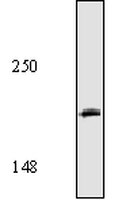
      Detection of mouse AnkyrinG by immunoblotting. Sample: Whole tissue extract from mouse brain. Primary antibody: Anti-AnkyrinG Mouse mAb (463) (Cat. No. NB20) (2 µg/ml) Detection: chemiluminescence.
      References
      ReferencesDavis, J.Q., et al. 1995. Mol. Biol. Cell 6, 177a, supplement.
      Kunimoto, M., et al. 1995. FEBS Lett. 357, 217.
      Lambert, S., et al. 1995. Mol. Biol. Cell 6, 98a supplement.
      Bennett, V. and Gilligan, D.M. 1993. Ann. Rev. Cell Biol. 9, 27.
      Kunimoto, M., et al. 1991. J. Cell Biol. 115, 1319.
      Otto, E., et al. 1991. J. Cell Biol. 114, 241.
      Davis, J., and Bennett, V. 1984. J. Biol. Chem. 259, 13550.
      Product Information
      FormLiquid
      FormulationIn 50 mM sodium phosphate buffer, 0.2% gelatin, pH 7.5.
      Positive controlMouse or rat brain extract or unmyelinated axons
      Preservative≤0.1% sodium azide
      Quality LevelMQ100
      Applications
      Key Applications Frozen Sections
      Immunoblotting (Western Blotting)
      Immunofluorescence
      Application NotesFrozen Sections (1-2 µg/ml)
      Immunoblotting (2-5 µg/ml)
      Immunofluorescence (1-2 µg/ml)
      Application CommentsAnkyrinG is a good immunohistochemical marker for axon initial segments, nodes of Ranvier, and epithelial cell-cell contact sites. Antibody should be titrated for optimal results in individual systems.
      Biological Information
      Immunogena synthetic peptide corresponding to amino acids from the spectrin-binding domain of human ankyrinG
      ImmunogenHuman
      Clone463
      HostMouse
      Purity≥95% by SDS-PAGE
      IsotypeIgG₁
      Species Reactivity
      • Canine
      • Human
      • Mouse
      • Rat
      Antibody TypeMonoclonal Antibody
      Concentration Label Please refer to vial label for lot-specific concentration
      Physicochemical Information
      Dimensions
      Materials Information
      Toxicological Information
      Safety Information according to GHS
      Safety Information
      Product Usage Statements
      Storage and Shipping Information
      Ship Code Blue Ice Only
      Toxicity Standard Handling
      Storage +2°C to +8°C
      Do not freeze Yes
      Packaging Information
      Transport Information
      Supplemental Information
      Specifications
      Global Trade Item Number
      카탈로그 번호 GTIN
      NB20-100UGCN 04055977209808

      Documentation

      Anti-AnkyrinG Mouse mAb (463) MSDS

      타이틀

      물질안전보건자료(MSDS) 

      Anti-AnkyrinG Mouse mAb (463) Certificates of Analysis

      TitleLot Number
      NB20

      References

      참고문헌 보기
      Davis, J.Q., et al. 1995. Mol. Biol. Cell 6, 177a, supplement.
      Kunimoto, M., et al. 1995. FEBS Lett. 357, 217.
      Lambert, S., et al. 1995. Mol. Biol. Cell 6, 98a supplement.
      Bennett, V. and Gilligan, D.M. 1993. Ann. Rev. Cell Biol. 9, 27.
      Kunimoto, M., et al. 1991. J. Cell Biol. 115, 1319.
      Otto, E., et al. 1991. J. Cell Biol. 114, 241.
      Davis, J., and Bennett, V. 1984. J. Biol. Chem. 259, 13550.
      Data Sheet

      Note that this data sheet is not lot-specific and is representative of the current specifications for this product. Please consult the vial label and the certificate of analysis for information on specific lots. Also note that shipping conditions may differ from storage conditions.

      Revision05-September-2007 RFH
      ApplicationFrozen Sections (1-2 µg/ml)
      Immunoblotting (2-5 µg/ml)
      Immunofluorescence (1-2 µg/ml)
      Application Data
      Detection of mouse AnkyrinG by immunoblotting. Sample: Whole tissue extract from mouse brain. Primary antibody: Anti-AnkyrinG Mouse mAb (463) (Cat. No. NB20) (2 µg/ml) Detection: chemiluminescence.
      DescriptionPurified mouse monoclonal antibody generated by immunizing BALB/c mice with the specified immunogen and fusing splenocytes with P3X63/Ag 8.653 mouse myeloma cells. Recognizes the ~190 kDa isoform of AnkyrinG.
      BackgroundAnkyrins are a family of spectrin-binding proteins that couple the spectrin/actin cytoskeletal network to the cytoplasmic domains of integral membrane proteins which include channels such as the anion exchanger, voltage-dependent sodium channel, and the Na/K ATPase, as well as neuronal cell adhesion molecules related to L1. In the nervous system, three different ankyrins are known to exist; ankyrinB, ankyrinG, and ankyrinR. All three ankyrins contain an N-terminal membrane binding domain, an internal domain capable of binding spectrin, and a C-terminal regulatory domain which is the target of alternative splicing. AnkyrinB, the predominant neuronal ankyrin includes two isoforms of ~220 kDa and ~440 kDa. The ~220 kDa alternatively spliced isoform is the major form present in the adult brain, while the ~440 kDa form is preferentially expressed in the developing neonatal brain. Three forms of ankyrinG (~190 kDa, ~270 kDa, ~480 kDa) are localized in axonal initial segments and the nodes of Ranvier of myelinated axons where fluxes of action potential occur and ion channels are enriched. Ankyrins comprise ~0.5%-1% of the total membrane protein in the adult vertebrate brain.
      HostMouse
      Immunogen speciesHuman
      Immunogena synthetic peptide corresponding to amino acids from the spectrin-binding domain of human ankyrinG
      Clone463
      IsotypeIgG₁
      Speciescanine, human, mouse, rat
      Positive controlMouse or rat brain extract or unmyelinated axons
      FormLiquid
      FormulationIn 50 mM sodium phosphate buffer, 0.2% gelatin, pH 7.5.
      Concentration Label Please refer to vial label for lot-specific concentration
      Purity≥95% by SDS-PAGE
      Preservative≤0.1% sodium azide
      CommentsAnkyrinG is a good immunohistochemical marker for axon initial segments, nodes of Ranvier, and epithelial cell-cell contact sites. Antibody should be titrated for optimal results in individual systems.
      Storage +2°C to +8°C
      Do Not Freeze Yes
      Toxicity Standard Handling
      ReferencesDavis, J.Q., et al. 1995. Mol. Biol. Cell 6, 177a, supplement.
      Kunimoto, M., et al. 1995. FEBS Lett. 357, 217.
      Lambert, S., et al. 1995. Mol. Biol. Cell 6, 98a supplement.
      Bennett, V. and Gilligan, D.M. 1993. Ann. Rev. Cell Biol. 9, 27.
      Kunimoto, M., et al. 1991. J. Cell Biol. 115, 1319.
      Otto, E., et al. 1991. J. Cell Biol. 114, 241.
      Davis, J., and Bennett, V. 1984. J. Biol. Chem. 259, 13550.