
Water for Clinical Diagnostics
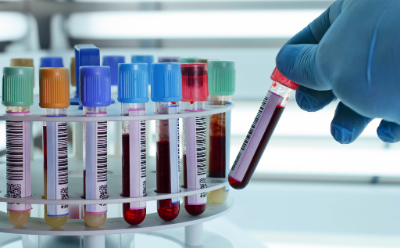
In biomedical laboratories, clinical analyzers are critical instruments that require large quantities of purified water to operate continuously in order to perform timely tests. Any water-related issue, such as a deviation in expected quality or flow rate, could cause analyzer downtime, resulting in decreased laboratory productivity and a delay in delivering results to healthcare professionals and their patients.
The information below is intended to support clinical lab managers and anyone responsible for the water purification systems in a biomedical laboratory. Read to learn how to prevent water contaminants from interfering with the delivery of accurate and reliable chemistry, hematology and immunology assays. You’ll also learn how to maintain maximum water system and analyzer uptime for more efficient clinical lab operations.
Featured Categories
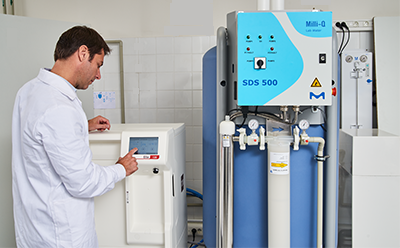
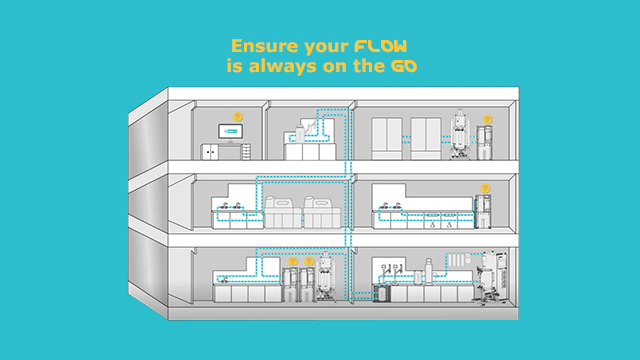
From a single lab to an entire building, Milli-Q® central water purification systems are connected, high-performance instruments that can reliably feed all purified water needs.
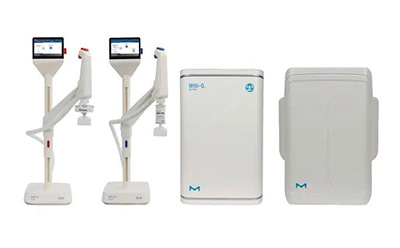
Milli-Q® systems offer innovative water purification technologies engineered to support lab research needs, sustainability goals, and other major requirements.

Find the cartridges, UV lamps, filters and polishers for your water system. Advantages of using genuine Milli-Q consumables: guarantee water quality, sustainability features (new Drain Cap, Hg-free lamps). Designed for perfect fit.

Milli-Q® water system accessories support lab-specific needs, improving safety, water quality, and productivity while conserving bench space.
CLRW-grade water supports accurate biomedical analyses
Purified water is a critical reagent in biomedical laboratories, essential for clinical assays and for rinsing and cleaning automated equipment. Water contaminants, quality fluctuations, or supply interruptions can cause analyzer downtime, potential damage, and reduced laboratory efficiency.
The Clinical and Laboratory Standards Institute (CLSI) defines Clinical Laboratory Reagent Water (CLRW) as the required water quality standard for clinical analyzers.¹ Using CLRW-grade water serves two key purposes:
- Supports accurate and reliable clinical analyses
- Protects analyzers from contamination, clogging, and damage
Impact of water contaminants on clinical assays
Consistent CLRW-quality water is vital for reliable assay results. Key contaminants and their impacts include:
- Inorganic ions (e.g., sodium, calcium, magnesium, chloride) can act as catalysts in organic and biochemical reactions
- Organic molecules may disturb biological experiments
- Bacteria and their by-products (e.g., alkaline phosphatase) can contaminate samples, disrupt instrument operations, and interfere with immunoassays
- Particulates and colloids (e.g., silica, salts) can clog analyzers and shorten their lifespan
Laboratories should treat water as a critical reagent. While most clinical analyzers require CLRW-quality water, some applications (e.g., DNA sequencing, LC-MS, HPLC, ICP-MS) may require ultrapure water. Proper selection and maintenance of purification units reduces downtime and enhances laboratory productivity.

Visit our document search for data sheets, certificates and technical documentation.
Related Articles
- Learn how water purity impacts DNA sequencing outcomes. Find high-quality water solutions for avoiding contamination in genomic applications.
- Explore how high-quality water is essential for accurate clinical chemistry assays and complying with norms and guidelines (e.g. CLSI).
- This study assesses the suitability of ultrapure water from a Milli-Q® water system for sensitive LC-MS analyses of hormones.
- Reliable histology staining requires consistent quality pure water. See examples of GMS and H&E stains performed with various water contaminants and comparing tap vs Type 2 water.
- Best practices for microbial testing of purified water in the lab. Covers storage, culture and incubation conditions, and contaminants reduction.
- See All (12)
Find More Articles and Protocols
Related Videos
Related Webinars

How Can We Help
In case of any questions, please submit a customer support request
or talk to our customer service team:
Email custserv@sial.com
or call +1 (800) 244-1173
Additional Support
- Lab Water Solutions Support
Receive professional assistance in identifying the optimal water solution for your laboratory.
- Calculators & Apps
Web Toolbox - science research tools and resources for analytical chemistry, life science, chemical synthesis and materials science.
- Customer Support Request
Customer support including help with orders, products, accounts, and website technical issues.
- FAQ
Explore our Frequently Asked Questions for answers to commonly asked questions about our products and services.

1. Clinical and Laboratory Standards Institute (CLSI). Preparation and Testing of Reagent Water in the Medical Laboratory. 5th ed. CLSI guideline GP40. (ISBN 978-1-68440-266-3 [Print]; 978-1-68440-267-0 [Electronic]). Clinical and Laboratory Standards Institute, USA, 2024.