
15 years of MXenes: From lab discovery to global impact
Webinar
Since their discovery in 2011, MXenes have emerged as one of the fastest-growing families of two-dimensional materials, attracting significant attention for applications spanning energy storage, sensing, electronics, electromagnetic interference shielding, and advanced coatings. Their unique combination of metallic conductivity, tunable surface chemistry, and solution processability continues to drive innovation across both research and industry.
Join MXene leaders Dr. Yury Gogotsi and Dr. Babak Anasori as they reflect on 15 years of MXene research and development, from the first selective etching of MAX phases to recent advances in synthesis, stability, characterization, scalability, and commercialization. Gain valuable insights into the key milestones that have shaped the field and explore emerging opportunities for MXene-enabled technologies.
Key takeaways
- Understand what defines a MXene and how the family of MXene compositions has evolved over the past 15 years.
- Explore advances in MXene synthesis, processing, characterization, and quality control.
- Learn strategies for improving oxidation resistance, long-term stability, and reproducibility.
- Discover best practices for optimizing MXene dispersions, storage, and handling.
- Gain insights into the commercialization of MXenes and their growing role in energy storage, electronics, and advanced manufacturing.
- Explore future opportunities and challenges in MXene development, scale-up, and industrial adoption.
Who should attend
Materials scientists, nanomaterials researchers, chemists, physicists, chemical engineers, electrochemical energy storage researchers, printable electronics scientists, thin-film engineers, graduate students, and industry professionals interested in two-dimensional materials and advanced functional materials.
Speakers
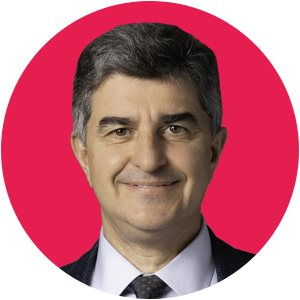
Dr. Yury Gogotsi
A.J. Drexel Nanomaterials Institute
Director, Distinguished University and Charles T. and Ruth M. Bach Professor
Yury Gogotsi is a Distinguished University Professor and the Charles T. and Ruth M. Bach Endowed Chair in the Department of Materials Science and Engineering. He also serves as Director of the A.J. Drexel Nanomaterials Institute. He received his MS (1984) and PhD (1986) from Kyiv Polytechnic and a DSc degree from the National Academy of Sciences of Ukraine (1995). Together with his students and colleagues, he has made principal contributions to the development of materials for electrochemical capacitors and other energy storage devices, discovered MXenes, demonstrated the tuning of structure and porosity of carbide-derived carbons, and developed new processes for the synthesis, surface modification, and purification of nanotubes and nanodiamonds. He also published the first microscopic observation of water inside carbon nanotubes, discovered polygonal nanotubes (graphite polyhedral crystals), and shaped the field of high-pressure surface science. He is recognized as a Highly Cited Researcher in Materials Science and Chemistry and a Citations Laureate in Physics by Clarivate. He has received numerous awards for his research, including the Blaise Pascal Medal from the European Academy of Sciences, the Ceramic Prize from the World Academy of Ceramics, the Materials Research Society (MRS) Medal, the American Chemical Society (ACS) Award in the Chemistry of Materials, etc. He has been elected a Fellow of the National Academy of Inventors, the World Academy of Ceramics, the European Academy of Sciences, Academia Europaea, and many professional societies. He holds honorary doctorates from several European Universities.

Dr. Babak Anasori
Purdue University
Reilly Rising Star Associate Professor of Materials and Mechanical Engineering
Dr. Babak Anasori received his PhD from Drexel University in 2014 in the Department of Materials Science and Engineering, the birthplace of MXenes. After completing his PhD, he served as a Postdoctoral Associate from 2014 to 2016, then became a Research Assistant Professor at the A.J. Drexel Nanomaterials Institute and the Department of Materials Science and Engineering at Drexel University. In 2019, he began his independent career as an Assistant Professor at IUPUI. In 2023, he was hired by Purdue University through Purdue's Moveable Dream Hires as the Reilly Rising Star Associate Professor with tenure, holding joint appointments in the School of Materials Engineering and the School of Mechanical Engineering.
Dr. Anasori is one of the inventors of a family of MXenes, ordered double-transition metal MXenes, resulting from of his postdoctoral research, which was featured as one of the 2015's "biggest moments in chemistry" by the American Chemical Society. His lab is also the inventor of High Entropy MXenes (discovered in 2021), further expanding the possibilities and tunability of this family. Dr. Anasori's current research focuses on the synthesis and characterization of novel MXenes and their metal and ceramic composites. He is among the Global Highly Cited Researchers 2019, 2020, 2021, 2022, and 2023 recognized by the Web of Science. In 2023, ScholarGPS identified Dr. Anasori as the number one scholar in Mechanical Engineering in the past five years in the USA. Dr. Anasori has received several national and international awards, including NSF/Science Visualization Challenge in 2011 and 2013, the Diamond Award in ACerS Graduate Excellence in Materials Science (GEMS) in 2012, the Materials Research Society (MRS) Postdoctoral Award in 2016, Emerging Leaders of 2020 by the Journal of Physics, Condensed Matter, Drexel Forty-under-Forty in 2021, the 2021 WIN Rising Star Award in Nanoscience and Nanotechnology, and the 2024 Abraham M. Max Distinguished Professor Award from Purdue School of Engineering.
Dr. Anasori has originated and organized multiple international student competitions, including NanoArtography and Science in Video (SciVid). He is currently the chair of the Materials Research Society (MRS) Early Career Professionals Subcommittee.
Materials science and engineering
- Microelectronics and nanoelectronics
Duration:1h
Language:English
Session 1:presented October 8, 2026