Turbidimetric determination of Potassium in Soil Following Extraction with CAL Buffer Analogous LUFA
Introduction
Potassium (K), along with phosphorus and nitrogen is an important macronutrient for plants. The element is responsible for the development of a movement system of water, nutrients, and carbohydrates in plant tissues. It also helps in the control of stomata, which regulates the movement of gases1. Research also suggests that potassium has an impact on carbon distribution and nitrogen metabolism2. The intake of potassium by plants is carried out from the soil, and it is therefore important that soil for cultivation must have prescribed concentrations of potassium, which will vary from species to species. A deficiency of potassium affects plant growth and development significantly3.
Testing of soil for the concentration of potassium is hence important to study the nature of the soil and to decide the type of manure or fertilizer to be used for augmenting the growth of a crop.
Experimental
This application note details the turbidimetric determination of Potassium in soils after its extraction analogous LUFA.
Method
In alkaline solution potassium ions react with Kalignost® (sodium tetra-phenyl borate) to form a slightly soluble precipitate. The resulting turbidity is measured in the photometer (turbidimetric method).
Measuring Range
Applicable Sample
Soil samples
Reagents, Instruments and Materials
Potassium Test Kits/Reagents
For the measurement, one of the following Spectroquant® test kits is necessary:
Instrument(s) & Devices
For the measurement, one of the following Spectroquant® photometers is necessary:
- Spectroquant® VIS Spectrophotometer Prove 100 Plus (1.73026)
- Spectroquant® UV/VIS Spectrophotometer Prove 300 Plus (1.73027)
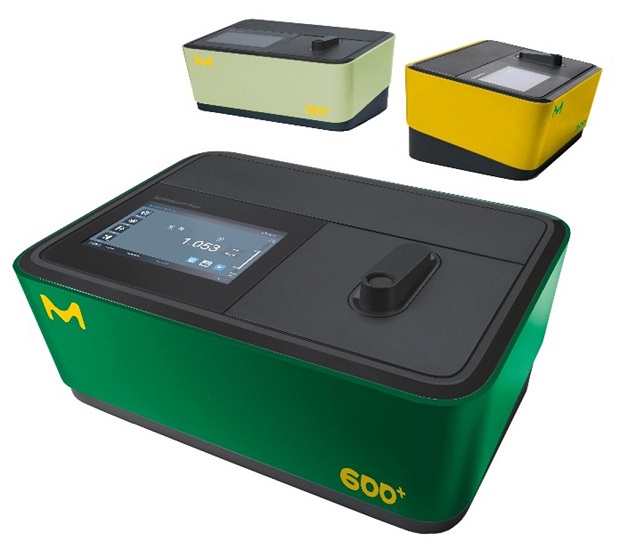
- Spectroquant® UV/VIS Spectrophotometer Prove 600 Plus (1.73028)
- Spectroquant® Colorimeter Move 100 (1.73632)
Note: Also, legacy Spectroquant® instruments are suitable.
Software for Data transfer
- Optional Spectroquant® Prove Connect to LIMS software package (Y.11086) to transfer your data into an existing LIMS system.
Instrument Accessories
- Rectangular cells 10 mm (1.14946)
- Rectangular cells 20 mm (1.14947)
- Rectangular cells 50 mm (1.14944)
Other Reagents and Accessories
- Calcium lactate for soil analysis
- Calcium acetate for soil analysis (1.09325)
- Water for analysis (1.16754)
- Acetic acid 100 % for analysis (1.00063)
- Analytical balance
- Standard laboratory glassware (e.g., glass beakers) and pipettes
- Shaker or stirring plate
- sieve
- Spatula
- Drying kiln
- Charcoal activated for soil test
- Folded filter
Analytical Procedure
For more information on the measurement, see the packaging insert for the test.
Reagent Preparation
Calcium acetate lactate (CAL) extraction solution
- Dissolve 15.4 g calcium lactate for soil analysis and 15.4 g calcium acetate for soil analysis separately in 300 mL of water for analysis whilst warming.
- Combine the two solutions in a 1-L volumetric flask and add 17.9 mL acetic acid 100%.
- Allow to cool, make up to the mark with water for analysis and mix well.
Sample Preparation
- Air-dry the soil sample, subsequent to removing course particles such as stones and plant material.
- Sieve the sample through 2 mm mesh.
- Place 5 g of sample in an Erlenmeyer flask of approx. 300 mL volume and add 100 mL of extraction solution.
- Shake the closed flask for 90 minutes at 175 shakes per minute.
- Filter the extract through a folded filter and dispose of the first 10 mL filtrate.
- Adjust the clear filtrate to pH 5 - 7 with sodium hydroxide solution 32%.
Procedure and Measurement
Determine with the above-mentioned test kits as K. Samples containing more than 35 mg/L K2O (30 mg/L K or 720 mg/kg K2O) should be diluted with extract solution. Measurement should be made against the pure extraction solution. If the sample extract has a yellow color, it should be measured, without the addition of reagent, as a blank and the result subtracted from the sample value.
For more information on the measurement, see the packaging insert for the test.
Using Cat. No. 1.00615: Procedure
- Pipette 0.5 mL Pretreated sample into a reaction cell, close the cell, and mix. The pH must be within the range of 10.0-11.5. Check with MQuant® pH-indicator strips. Adjust the pH, if necessary, with sodium hydroxide solution.
- Add 6 drops Reagent K-1K and mix. Hold the bottle vertically when adding the reagent.
- Add 1 level blue microspoon (In the cap of the K-2K bottle) Reagent K-2K and dissolve by shaking the tightly closed cell.
- Leave to stand for exactly 5 min (reaction time) and without re-shaking the cell measure the sample in the photometer.
Using Cat. No. 1.14562: Procedure
- Pipette 2.0 mL Pretreated sample into a reaction cell, close the cell, and mix. The pH must be within the range of 10.0-11.5. Check with MQuant® pH-indicator strips. Adjust the pH, if necessary, with sodium hydroxide solution.
- Add 6 drops Reagent K-1K and mix. Hold the bottle vertically when adding the reagent.
- Add 1 level blue microspoon (In the cap of the K-2K bottle) Reagent K-2K and dissolve by shaking the tightly closed cell.
- Leave to stand for exactly 5 min (reaction time) and without re-shaking the cell measure the sample in the photometer.
Measurement
- For turbidimetric measurement the cells must be clean. Wipe, if necessary, with a clean dry cloth.
- Measurement of turbid solutions yields false-high readings.
- The turbidity of the measurement solution remains stable for only a short time. (The measurement value increases by 5-7% per minute.)
Hints for Measurement
- It is recommended to zero the method each new working day. To do this, open the method, either by manually selecting the method or by inserting a barcoded cell. Tap the <Settings> button and select the <ZERO ADJUSTMENT> menu item. After prompting, insert the 16 mm zero cell through the corresponding opening. The zero adjustment is performed automatically. Confirm the performance of the zero-adjustment procedure by clicking on <OK>.
- After the zero has been performed, insert the barcoded Spectroquant® round cell through the corresponding opening, ensuring that the white position mark on the cell is aligned with the positioning mark on the spectrophotometer. The measurement starts automatically.
- Read off the result in mg/L from the display.
Hint: The above written measurement description is only valid for the Spectroquant® Prove (plus) series photometer. If a different instrument is used, please consult the corresponding instrument manual for more details on how to perform the measurement.
Analytical Quality Assurance
Analytical quality assurance (AQA) is recommended before each measurement series.
To check the measurement system (test reagents, measurement device, handling) and the mode of working, a diluted potassium standard solution containing 25.0 mg/L K (for Cat. No. 1.14562) or 150 mg/L K (for Cat. No. 1.00615) can be used.
Sample-dependent interferences (matrix effects) can be determined by means of standard addition or dilution.
To view additional notes, visit SigmaAldrich.com/qa-test-kits.
Calculation
Potassium content in mg/kg K2O = (Analysis value in mg/L K x 1.2 x 100)/(Weight of sample in g)