Certified Reference Materials (CRMs) for pharmaceutical microbiology
Certified Reference Materials (CRMs) are well-characterized microorganisms with documented identity, characteristics, purity, and information on quantity and uncertainty. A CRM is recognized as such when it is accompanied by a certificate detailing the uncertainty associated with metrological traceability.
Section overview
- Use of CRMs in pharmaceutical microbiology
- Importance of different culture collections and their equivalence
- Compliance of Vitroids™ and LENTICULE® discs with pharmacopoeia standards
- Differences between Vitroids™ and LENTICULE® discs
- Specific pharmacopoeia applications
- Certificate of Analysis (COA) and traceability
- Advantages of Vitroids™ and LENTICULE® discs
- Related materials
Use of CRMs in pharmaceutical microbiology
In pharmaceutical microbiology, CRMs are essential components of quality control systems and are primarily used for:
Growth Promotion Testing (GPT): CRMs verify the nutritive properties of culture media, ensuring they can support microbial growth as specified by pharmacopoeia standards like USP and Ph. Eur. This testing is crucial for validating that media will properly detect contaminants in pharmaceutical products.
- Sterility Testing: The test is applied to substances, preparations or articles which, according to the Pharmacopoeia, are required to be Sterile in accordance with USP <71> and Ph. Eur. 2.6.1
The tests are designed primarily to determine whether a substance or preparation complies with an established specification for microbiological quality.
Alternative microbiological procedures, including automated methods, may be used, provided that their equivalence to the Pharmacopoeia method has been demonstrated.
Antimicrobial effectiveness testing: As outlined in USP <51>, CRMs are used to evaluate the efficacy of antimicrobial preservatives in pharmaceutical formulations.
Microbiological assay of antibiotics: Following (USP<81>, Ph. Eur. 2.7.2), The potency of an antibiotic is estimated by comparing the growth inhibition of CRMs produced by known concentrations of the antibiotic being examined and a reference substance.
Proficiency testing and ring trials: CRMs provide standardized materials for inter-laboratory comparisons and proficiency testing programs.
Staff training: CRMs are valuable tools for training laboratory personnel in microbiological techniques and quality control procedures.
The equivalency of different culture collections is a critical concept in pharmaceutical microbiology. It allows laboratories to use strains from various sources while maintaining compliance with regulatory standards. Strains listed as equivalent often originate from the same source. For a new species strain to be registered, it must be deposited in multiple collections across different countries. This inter-collection exchange can lead to the same strain appearing under different strain numbers in various collections. While strains may be equivalent, they can mutate over time, potentially leading to genetic differences. For routine tests, such mutations are usually insignificant, but for precise applications like molecular biology, they may affect results.
Microbiological reference materials are sourced from various official culture collections worldwide, each offering equivalent strains with documented histories and traceability. For quality control strains, the choice of collection should be based on convenience, cost, and availability, as long as the strains are equivalent to those specified in relevant standards.
ATCC (American Type Culture Collection)
Founded in 1925 in the United States, is one of the oldest and largest culture collections globally. It is often referenced in USP and Ph. Eur. monographs and serves as a primary source for many reference strains.
NCTC (National Collection of Type Cultures)
Established in 1920 in the United Kingdom and operated by the UK Health Security Agency (UKHSA). NCTC focuses on bacteria of medical, industrial, and veterinary importance. It is also the source for LENTICULE® disc strains.
NCPF (National Collection of Pathogenic Fungi)
The source for fungal strains in LENTICULE® discs, is UK-based collection specializing in fungi and is also operated by the UKHSA.
CECT (Colección Española de Cultivos Tipo)
The Spanish Type Culture Collection was established as a public service in 1960 and serves as a strains used in Vitroids™ discs.
These culture collections are interconnected through the World Data Center for Microorganisms (WDCM), which serves as a central reference point. Strains from different collections with the same WDCM number are considered equivalent for testing purposes. This equivalency is critical because it allows laboratories to use strains from various sources while maintaining compliance with regulatory requirements.
The history of each strain is documented and can be traced back to its original isolation source. This traceability ensures that when pharmacopoeia methods specify ATCC strains, equivalent strains from other collections (like NCTC, NCPF, or CECT) can be used with certainty.
Compliance of Vitroids™ and LENTICULE® discs with pharmacopoeia standards
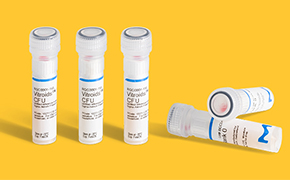
Vitroids™ and LENTICULE® discs are ready-to-use certified reference materials containing precise quantities of viable microorganisms in an innovative solid water-soluble matrix format, produced under ISO 17034 and ISO/IEC 17025 accreditation. These discs can be used in pharmacopoeia testing, even when methods specifically reference ATCC strains, due to established strain equivalency principles.
Regulatory acceptance of equivalent strains:
Both Ph. Eur. and USP recognize that equivalent strains from different culture collections can be used in place of specified ATCC strains. Vitroids™ and LENTICULE® discs come with comprehensive documentation showing their equivalency to ATCC strains. This includes strain history and lineage from the original source. WDCM numbers provide standardized cross-references among different collections.
Compliance with passage requirements:
Pharmacopoeia standards typically require that working cultures be no more than five passages removed from the original master seed-lot. Vitroids™ and LENTICULE® discs typically have no more than two passages (maximum three for some Vitroids™), well within these requirements
Differences between Vitroids™ and LENTICULE® discs
Vitroids™ and LENTICULE® discs are similar in term of product format and performance, and offer significant advantages in microbiological quality control, including enhanced stability, ease of use, and compliance with regulatory standards.
Their difference lies in their source, Vitroids™ discs are derived from traceable cultures obtained from CECT® and LENTICULE® discs are developed by UKHSA and prepared by NCTC and the NCPF, and they are manufactured under strict licensing and control from UKHSA.
Nevertheless, the LENTICULE® discs are specifically designed for quantitative microbiology.
Both products are manufactured under conditions compliant with ISO 17034 and ISO/IEC 17025, ensuring they meet international standards for reference materials. They come with comprehensive certificates of analysis detailing their characteristics, including CFU counts and traceability.
Specific pharmacopoeia applications
Vitroids™ and LENTICULE® discs are specifically designed for use in various pharmacopoeia tests, including:
- USP <51> Antimicrobial Effectiveness Testing
- USP <60>/<61> Microbiological Examination of Non-sterile Products
- USP <62> Tests for Specified Microorganisms
- USP <71> Sterility Tests
- USP <81> Antibiotics—Microbial Assays
- Ph. Eur. 2.6.1 Sterility Tests
- Ph. Eur. 2.6.12 Microbiological Examination of Non-sterile Products
- Ph. Eur. 2.6.13 Test for Specified Micro-organisms
- Ph. Eur. 2.6.31 Microbiological Examination of Herbal Medicinal Products
- Ph. Eur. 2.6.36 Microbiological Examination of Live Biotherapeutic Products
- Ph. Eur. 2.7.2 Microbiological Assay of Antibiotics
Certificate of Analysis (COA) and traceability
Each batch of Vitroids™ and LENTICULE® discs is accompanied by a Certificate of Analysis, providing detailed information on traceability, characterization, homogeneity, and stability. This certificate is issued under ISO 17034 accreditation, ensuring compliance with international standards for reference materials. By offering comprehensive documentation of strain equivalency and maintaining minimal passages from the original reference strains, Vitroids™ and LENTICULE® discs provide a compliant alternative to directly sourced ATCC strains for pharmacopoeia testing.
Advantages of Vitroids™ and LENTICULE® discs
Vitroids™ and LENTICULE® discs offer numerous advantages over traditional methods of preparing and maintaining reference strains.
See how Vitroids™ and LENTICULE® ready-to-use discs reduce time and effort in CRM-based testing for pharmaceutical QC. This brief overview highlights the workflow and efficiency in minutes.
Time saving
- Optimize time by eliminating approximately one hour of hands-on time per test strain.
- No need for preparation of stock cultures, working cultures, or overnight cultures.
- Total process time reduced from over 72 hours to just 24 hours.
- A simple 10-minute rehydration process replaces complex multi-step procedures.
Cost efficiency
- Reduced labor costs due to simplified workflow.
- Fewer consumables required (media, reagents, pipettes, etc.).
- No need for equipment and space to maintain stock culture.
- Energy savings from eliminated incubation steps.
Accuracy and reliability
- CRMs with defined CFU ranges and low standard deviation.
- Produced under ISO 17034 and ISO/IEC 17025 accreditation.
- Comprehensive certificate of analysis with each batch.
- Strain identity verified using advanced techniques.
Ease of use
- Ready-to-use format requires minimal training and expertise.
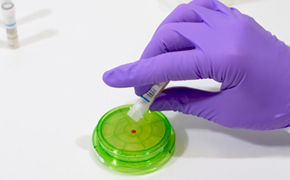
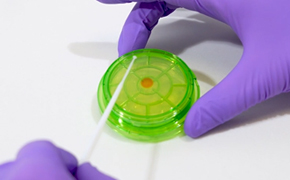
- Simple operating procedure. Simply place the disc on media, rehydrate for 10 minutes, and streak.
- Can be used directly on solid media or rehydrated in liquid media.
- Flexible application for various testing requirements.
Stability and shelf life
- Stable for 15-24 months when stored properly
- No recovery time or lag phase after storage.
- Consistent performance throughout shelf life.
Sustainability benefits
- 82% reduction in overall material mass compared to traditional methods.
- 97% reduction in energy consumption.
- Reduced waste generation.
Minimal passages from original strain
- LENTICULE® discs: maximum two passages from original strain.
- Vitroids™ discs: maximum three passages (typically two) from original strain.
- Well within the pharmacopoeia requirement of no more than five passages.
Comprehensive documentation
- Detailed certificates of analysis.
- Strain history and equivalency documentation.
- Metrological traceability to reference collections.
- Uncertainty calculations and expected range of CFU values.
Competitive advantages over similar products
- More cost-effective per test than many other products.
- Simpler handling procedures than products requiring special rehydration fluids.
- No need for warming or extended rehydration periods.
- Available in various CFU ranges to suit different applications.
These advantages make Vitroids™ and LENTICULE® discs an optimal choice for pharmaceutical laboratories seeking to streamline their microbiological quality control processes while maintaining compliance with regulatory standards.
CRMs most commonly used in accordance with pharmacopoeia standards are listed in the table below. If you have any questions or need additional options, please feel free to contact us.