
Supporting Pharmaceutical Life Cycle Assessments (LCA) Through the Emprove® Program
Section Overview
- Sustainability Assessments and Their Importance in the Pharmaceutical Industry
- Increasing Regulatory Expectations for Life Cycle Assessment
- Moving Beyond the Carbon Footprint: A Comprehensive View on Environmental Impacts by Means of Life Cycle Assessment
- How Life Cycle Assessments Are Conducted
- The Role of Pharmaceutical Suppliers in Product Life Cycle Assessment
- The Emprove® Program Provides Ready-To-Use LCA Data to Accelerate Sustainability Efforts
- Looking Ahead: Meeting Regulatory Expectations and Overcoming Life Cycle Assessment Challenges

Sustainability Assessments and Their Importance in the Pharmaceutical Industry
Sustainability initiatives across the pharmaceutical industry are rapidly expanding as companies seek to demonstrate environmental responsibility through transparent, standardized, and defensible data.
The overarching Life Cycle Sustainability Assessment (LCSA) framework measures sustainability across three complementary dimensions1-4:
- Environmental (LCA) – evaluates resource use, emissions, waste, and other environmental impacts across a product’s life cycle.
- Economic (Life Cycle Costing, LCC) – assesses costs associated with a product’s life cycle, including production, distribution, and disposal.
- Social (Social Life Cycle Assessment, S-LCA) – considers impacts on human health, labor, and community well-being.
While the LCSA framework encompasses three dimensions, this page focuses on the environmental component. Life Cycle Assessments (LCAs) are an essential method for this purpose. LCAs rely on a structured, standardized, science-based methodology to evaluate environmental impacts from raw material extraction and manufacturing through distribution, use, and end-of-life disposal.
By quantifying environmental impacts resulting from resource use, emissions, and waste generation, LCAs can identify opportunities to mitigate impact, improve resource efficiency, and support strategic decision-making.
Increasing Regulatory Expectations for Life Cycle Assessment
In the pharmaceutical industry, LCAs support sustainability improvements and informed decision-making. Regulatory agencies increasingly require sustainability information, making LCAs critical for compliance. Several recent regulatory initiatives reinforce the central role of LCAs:
- In the UK, PAS 2090:2025 establishes the first pharmaceutical-specific LCA standard in November 2025. From April 2028, the National Health Service (NHS) England will introduce new requirements to regulate carbon footprinting for individual products supplied to the NHS.5; 6
- In France, the EcovaMed methodology for calculating the carbon footprint of final drug products will become mandatory for public pharmaceutical tenders from August, 2026.7-9
- At the European level, the Ecodesign for Sustainable Products Regulation (ESPR) and the Digital Product Passport are setting the stage for greater transparency across entire value chains.10
Moving Beyond the Carbon Footprint: A Comprehensive View on Environmental Impacts by Means of Life Cycle Assessment
Sustainability discussions often center on carbon footprint, largely because it is familiar and easy to communicate. However, carbon footprint represents only a small part of a product’s overall environmental profile, as it focuses solely on global warming potential.
A full LCA evaluates several environmental impact categories. The European Commission’s Environmental Footprint (EF) method includes 16 impact categories (Table 1).11 These categories capture a wide range of effects beyond carbon footprint, from acidification to particulate matter, resource depletion, and impacts on human health.
Table 1 showcases the sixteen environmental impact categories encompassed by the EF method.
How Life Cycle Assessments Are Conducted
ISO 14040 and ISO 14044 are international standards that provide guidelines and requirements for conducting LCAs. ISO 14040 outlines the principles and framework for LCA, while ISO 14044 specifies the requirements for conducting an LCA. Usually, LCA adheres to the ISO 14040 and 14044 standards and consists of four main phases (Figure 2)1; 2:
- Goal and scope definition: The purpose of the assessment is established and includes definition of the functional unit, target audience, and system boundaries, such as cradle-to-gate or cradle-to-grave.*
- Life cycle inventory analysis: Involves collecting data on raw materials, energy use, utilities, emissions, waste, packaging, and infrastructure. High-quality primary data is used whenever available, supported by validated databases and production records.
- Life cycle impact assessment: Translates inventory data into environmental impacts in scope.
- Interpretation: Results are evaluated, which includes completeness, consistency, and sensitivity checks to ensure robustness.
This structured approach ensures that results are scientifically sound, meaningful, and actionable.
*Cradle-to-gate encompasses raw material extraction through product manufacturing, while cradle-to-grave extends to include final product use and disposal.
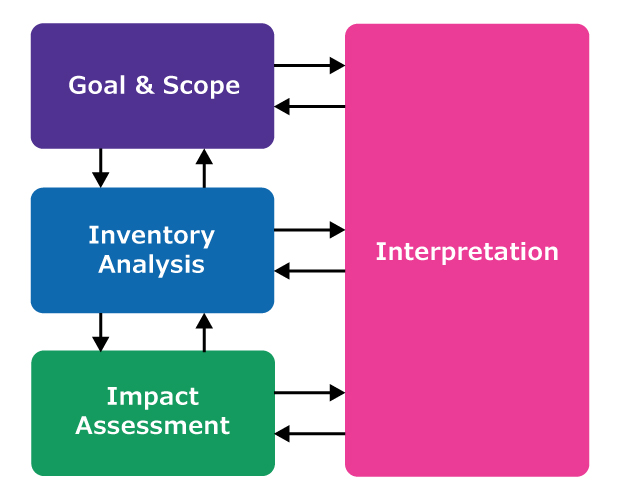
Figure 1.Four phases of an LCA according to DIN EN ISO 14040.1
The Role of Pharmaceutical Suppliers in Product Life Cycle Assessment
To complete an LCA compliant to relevant standards1; 2; 6; 12, pharmaceutical companies must gather environmental data from raw material and component suppliers, often across multiple tiers. This process can be complex and resource-intensive, and gaps or inconsistencies in supplier-provided data can slow down assessments, increase costs, and negatively impact regulatory compliance.
Suppliers should provide LCA data. In case this is not available, key information on materials, energy use, emissions, waste, and packaging should be supplied, which is essential for producing accurate, science-based LCAs.
The Emprove® Program Provides Ready-To-Use Life Cycle Assessment Data to Accelerate Sustainability Efforts
To provide the product-specific cradle-to-gate sustainability information required by pharmaceutical companies, the Emprove® Program is expanding to include product-specific LCA data covering all 16 EF impact categories in Material Qualification and Operational Excellence dossiers, enabling a balanced and holistic approach to sustainability.
LCA results available through Emprove® Dossiers are delivered with a clearly defined scope (cradle-to-gate) and methodology, documented data sources, and impact results across all environmental categories to support informed use. By pairing detailed technical content with transparent explanations, the Emprove® Program ensures that pharmaceutical manufacturers can access LCA results.
Comprehensive Life Cycle Assessment Results
A defining feature of the Emprove® Program is its delivery of comprehensive, structured information tailored to meet regulatory requirements, rather than unstructured data that pharmaceutical manufacturers must model themselves. Ready-to-use LCA results for Emprove®-qualified products can be directly referenced or incorporated into their own product-level or portfolio-level assessments. By providing complete product-specific LCAs that can be used without the need to reconstruct complex environmental datasets, the Emprove® Program supports pharmaceutical manufacturers by eliminating the lengthy process of requesting, validating, and modeling upstream information.
Emprove® Dossiers are readily available for download at any time, enabling sustainability, regulatory, and procurement teams to quickly respond to public tenders, prepare regulatory submissions, or evaluate product alternatives. Overall, the LCA results included in the Emprove® Dossiers help pharmaceutical companies:
- Accelerate sustainability initiatives while reducing complexity.
- Meet regulatory and tender requirements with standardized, defensible environmental information.
- Reduce time and cost associated with supplier data collection and LCA modeling.
- Guide sustainable purchasing and supplier selection decisions.
- Support portfolio strategy and eco-design projects.
- Communicate transparently with regulators and stakeholders.
Addressing Life Cycle Assessment Data Gaps Through Automation and Expert Review
Data gaps are a common challenge in LCAs, particularly when supplier information is incomplete or unavailable. To address this, the Emprove® Program combines automation with expert oversight. Advanced tools are used to close inventory gaps and map data to established LCA databases. When supplier-specific data becomes available, it is incorporated and used as a benchmark. Most importantly, all AI-supported inputs are reviewed by subject matter experts, ensuring that results remain credible and fit for purpose.
This hybrid approach allows LCAs to be produced efficiently and at scale, while maintaining the level of accuracy pharmaceutical manufacturers expect.
Looking Ahead: Meeting Regulatory Expectations and Overcoming Life Cycle Assessment Challenges
As corporate sustainability initiatives and regulatory requirements for environmental reporting expand, pharmaceutical companies face increasing pressure to conduct comprehensive LCAs across their product portfolios. Completing these assessments requires accurate, supplier-specific data, which can be challenging due to incomplete upstream information, multiple supplier tiers, and the complexity of evaluating numerous environmental impact categories, making the process both time- and resource-intensive.
The Emprove® Program is continuously evolving to anticipate and respond to regulatory developments in the pharmaceutical sector, building on decades of regulatory experience and dedicated expert teams. By adding ready-to-use, scientifically robust LCA data to the Emprove® Dossiers, the Emprove® Program empowers pharmaceutical manufacturers to navigate regulatory change, reduce complexity, and advance credible sustainability strategies.
To learn more about how we provide detailed information tailored to LCA requirements as part of our Emprove® Program, watch our webinar “Life Cycle Assessment (LCA): Empowering Sustainable Decisions with the Emprove® Portfolio”.
Are you interested to explore the Emprove® Program? Discover the benefits:
Frequently Asked Questions
What is a Life Cycle Assessment (LCA) and how is it relevant to pharmaceutical and biopharmaceutical manufacturers?
A Life Cycle Assessment (LCA) is a systematic evaluation of the environmental impacts of a product throughout its life cycle, from raw material extraction to production and factory gate (cradle-to-gate), or from raw material extraction to product use and disposal (cradle-to-grave). For pharmaceutical and biopharmaceutical manufacturers, LCAs are crucial for identifying opportunities to improve sustainability, reduce environmental impact, and ensure regulatory compliance. Regulatory trends increasingly highlight the importance of sustainability information and LCAs for obtaining regulatory approval. Authorities in multiple regions foresee to implement requirements in the near future that mandate the inclusion of LCA information in public tenders for pharmaceutical drug products, making access to reliable LCA information critical for pharmaceutical manufacturers.
How does the Emprove® Program support sustainability efforts?
The Emprove® Program supports sustainability initiatives by providing scientifically robust and comprehensive LCA data on Emprove®-qualified products to pharmaceutical manufacturers. This ready-to-use LCA data and explanatory information provided as part of the Emprove® Dossiers helps streamline the process, saving time and reducing complexity. This empowers the final drug product manufacturer to respond effectively to regulatory demands and identify opportunities to improve sustainability of their operations. Learn more about the Emprove® Program here.
Which information is provided in Emprove® Dossiers?
Pharmaceutical manufacturers can access four Emprove® Dossiers: Quality Management Dossier, Material Qualification Dossier, Operational Excellence Dossier, and Advanced Qualification Dossier. The information in these dossiers is tailored to different steps in the pharmaceutical manufacturing process. LCA-relevant information is included in the Material Qualification and Operational Excellence Dossiers, covering all 16 EF impact categories. Detailed methodologies and documented data sources allow pharmaceutical manufacturers to easily access structured sustainability information and streamline their compliance and sustainability efforts. Learn more about Emprove® Dossiers here.
How can I access Emprove® Dossiers and the relevant LCA information?
Emprove® Dossiers are readily available 24/7 for download on demand through our online platform Emprove® Suite. This accessibility enables sustainability, regulatory, and procurement teams to quickly obtain the necessary LCA data for public tenders, regulatory submissions, and product evaluations, accelerating sustainability initiatives and compliance efforts. Access the Emprove® Suite here.