
Highly Potent APIs
Highly potent APIs require more than specialized equipment. Buyers need confidence in containment strategy, industrial hygiene, trained personnel, process fit, cleaning controls, documentation, and the path into clinical manufacturing. Our HPAPI teams bring these elements together to help customers evaluate program requirements, manage potency-related risks, and define an appropriate manufacturing pathway.
How we approach HPAPI manufacturing and containment
HPAPI program planning begins with the compound’s potency, process, stage, scale, and handling requirements. We connect technical assessment, containment strategy, process development, facility fit, quality expectations, and manufacturing readiness into a coordinated pathway designed for the needs of the clinical or commercial program.
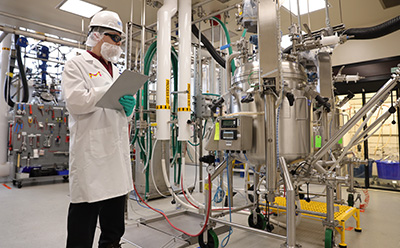

Define the containment strategy
Align engineering controls, closed processing, material flow, industrial-hygiene practices, operator protection, cleaning strategy, and monitoring requirements with the compound and process. The containment approach should be based on program-specific risk rather than a facility label alone.
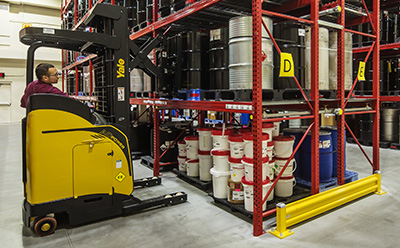
Secure the supply chain
Evaluate raw materials, establish a second-source strategy, and source regulatory starting materials from our own U.S. network — reducing regulatory exposure and supporting reliable continuity from development through commercial supply.
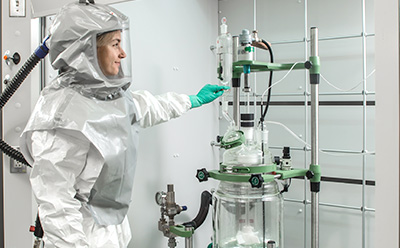
Design the process
Design a containment-integrated process built around the compound's potency, route, unit operations, and target scale. Use PAT/data rich experiments to review and optimize the process for reduced risk and long-term cost savings, with hazardous steps eliminated or substituted wherever feasible.
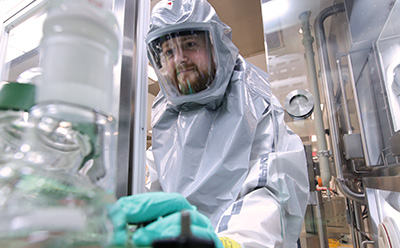
Integrate phase-appropriate quality
Apply quality requirements that scale with the program phase and support process decisions. Connect analytical results with critical process parameters, hazard characterization, containment verification and the attributes most likely to affect scale-up.
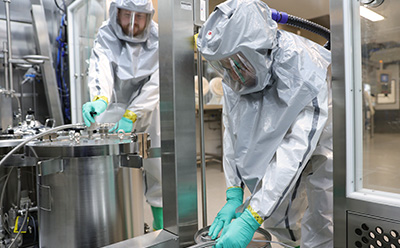
Transfer to GMP manufacturing
A dedicated MSAT team coordinates the transfer and maintains critical process parameters at scale, supporting custom HPAPI manufacturing up to SafeBridge Category 4 / OEB 5 from gram scale to approximately 30 kg.
A track record of success with HPAPIs
35+
Years of experience with HPAPI
Category 4 (OEB 5)
Certification to Handle HPAPIs
Gram to multi-kilogram
Batch sizes
Related resources
- White paper: Handling protocols and key considerations in the highly potent API market
Review key considerations for HPAPI containment, handling, industrial hygiene, and partner evaluation.
- Webinar: Approaching the nanogram limit
Webinar discusses high potent API manufacturing evolution, safety concepts, and overcoming challenges in the industry.
- Flyer: The key to HPAPI manufacturing success
Explore the people, processes, containment strategies, and operating disciplines that support successful HPAPI manufacturing.
Related videos


Frequently asked questions
What does ‘single-digit nanogram containment’ mean in practice?
Single-digit nanogram containment refers to the ability to safely handle compounds with occupational exposure limits (OELs) in the low nanogram-per-cubic-meter range. In practice, this requires specialized engineering controls, validated containment technologies, rigorous operating procedures, and trained personnel to protect employees, product quality, and the surrounding environment throughout development and manufacturing. Actual program fit depends on the compound, process, scale, and facility assessment.
What should we look for in an HPAPI safety/containment program?
Look for a partner with proven containment expertise, validated engineering controls, comprehensive industrial hygiene practices and monitoring, a robust cleaning strategy and verification, evidence of trained operators and governance, project-specific risk assessments, and established standard operating procedures. Experience safely transferring and scaling HPAPI processes is also critical for minimizing risk as programs advance toward commercial manufacturing.
Do you have third-party certification for HPAPI handling?
Our HPAPI capabilities include SafeBridge® Industry Leadership certification for HPAPI handling. Third-party certification provides an additional indicator of containment and industrial-hygiene maturity, but buyers should still evaluate the specific facility, process, program fit, operating controls, and project requirements during technical due diligence.
What information do you need to scope an HPAPI project?
The more information available early, the more accurately we can define the appropriate development strategy, containment requirements, timeline, and manufacturing approach. Typical information includes the compound structure, potency or occupational exposure limit (OEL), development stage, anticipated batch size, synthetic route, analytical methods, project timeline, and any known process or containment challenges. Our technical experts can also work with you to define requirements if some of this information is still being developed.
How should buyers evaluate HPAPI containment claims?
Ask how the claim was established, which facility and operations it applies to, how exposure control is monitored, how cleaning and material flow are managed, and how the containment approach changes by process and scale. A credible assessment should connect equipment, procedures, industrial hygiene, training, analytical capability, quality systems, and program-specific risk.
How do clinical-stage HPAPI needs differ from commercial needs?
Clinical-stage programs often prioritize flexible scale, phase-appropriate documentation, process understanding, and reliable execution for limited material demand. As programs advance, expectations expand to include validation planning, capacity, long-term supply, lifecycle management, and commercial readiness. The right path depends on the molecule, process, potency, timeline, and forecast.