
Complex small molecule API development and manufacturing
Complex small molecules present a variety of manufacturing challenges requiring specialized purification, crystallization, filtration, and particle engineering strategies that conventional approaches cannot deliver.
Complex small molecule APIs can become difficult to manufacture when closely related impurities, challenging crystal forms, poor filterability, inconsistent particle properties, or scale-dependent process behavior affect quality and reproducibility. We help clinical-stage teams define the underlying problem and develop an integrated purification, filtration, crystallization, analytical, and process-development strategy appropriate to the molecule and its stage.
How we approach complex API manufacturability challenges
The right development path begins by identifying whether the principal constraint is chemistry, impurity control, crystallization, filtration, particle behavior, analytical understanding, or scale-dependent process performance. We then connect the relevant disciplines into a molecule-specific strategy designed to support clinical progression and future scale-up.
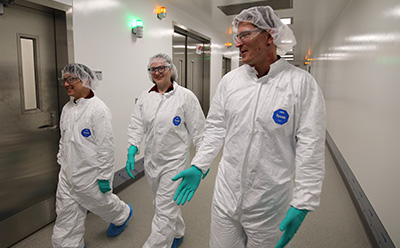
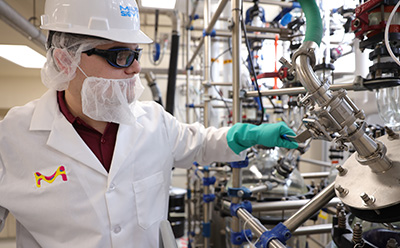
Develop the process strategy
Evaluate route and process options, reaction selectivity, crystallization conditions, purification approaches, filtration behavior, and process safety. Use high-throughput and PAT/data rich experiments where appropriate to compare options and focus on laboratory work.
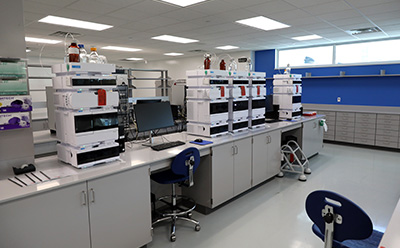
Build analytical understanding
Develop phase-appropriate methods and impurity understanding (Quality by Design) to support process decisions. Connect analytical results with critical process parameters, solid-state behavior, filtration performance, and the attributes most likely to affect scale-up.
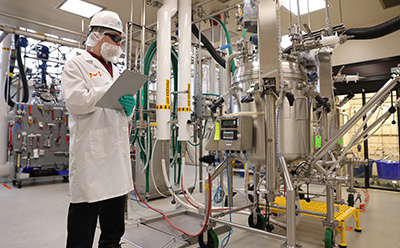
Prepare for clinical scale-up
Translate the selected strategy into a robust clinical manufacturing path. Run in-silico simulations on crystallization and filtration behavior, and scale-up predictability (direct scale-up model available). Define the right manufacturing scale with flexibility from gram to ton and move into GMP manufacturing with confidence.
Validate the process
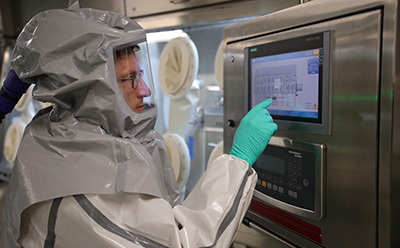
Minimize batch failure risk by identifying critical process parameters and quality attributes, using FMEA and statistical modeling to establish robust, reproducible process limits. Conduct impurity risk assessments, including GTIs and nitrosamines, and compile the relevant regulatory documentation.
Produce commercial-scale batches
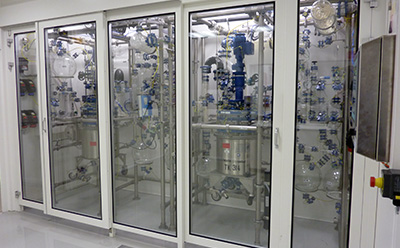
Scale commercial manufacturing to respond flexibly to market demand. Manage the product lifecycle, plan capacity proactively, and provide ongoing regulatory support to maintain a reliable supply as the product progresses from initial commercialization to long-term commercial production – from small-scale to large-scale manufacturing capabilities.
A track record of success with complex molecules
35+
Years of experience in complex small molecules
99.5%
Purity APIs through rigorous process optimization
GreenSpeed™ integration
Environmental and efficiency considerations embedded in every process
Filterability assessment
Predictable scale-up through filtration and crystallization screening as standard best practice
Related resources
- White paper: Difficult-to-purify and difficult-to-filter small molecules: A framework for downstream process development
Solving small molecule purification and filtration challenges via crystallization and predictive modeling.
- Case study: Optimizing particle properties for difficult small molecules: solid-state strategies for improved manufacturability
Using polymorph selection, wet milling, and solvate seeding to improve small molecule filterability.
- Case study: Selecting the right chromatography strategy for difficult-to-purify small molecules
Using digital modeling, fraction mapping, and prep HPLC to purify complex molecules and ADC payloads.
- Article: Orphan drugs
Explore how specialized chemistry, digital tools, and phased quality accelerate orphan drugs.
- Article: Controlled substance manufacturing: Navigating API chemistry and security protocols
Understand licensing, security, and chemistry requirements for selecting a controlled substance CDMO.
Related webinars

Frequently asked questions
What makes an API difficult to purify or difficult to filter?
Complex small molecules often contain closely related impurities, stereoisomers, or challenging crystal forms that conventional manufacturing processes cannot easily resolve. They may also produce unfavorable particle morphologies or broad particle size distributions that slow filtration, complicate drying, and reduce manufacturability. These challenges require specialized downstream process development strategies. The underlying cause must be evaluated molecule by molecule and that no single purification or filtration technology is universally appropriate.
Why is crystallization so important in small molecule process development?
Crystallization is more than an isolation step; it is a critical process engineering tool. A well-designed crystallization process can improve purity, influence particle size and morphology, enhance filtration performance, and optimize downstream manufacturing. It also provides opportunities to control solid-state properties that impact product quality and scalability.
When is chromatography needed instead of or in addition to crystallization?
While crystallization often addresses both purification and particle engineering, some APIs contain impurity profiles that cannot be resolved through crystallization alone. In these cases, chromatographic techniques such as preparative HPLC provide the selectivity needed to remove closely related impurities while balancing purity, recovery, throughput, and manufacturing efficiency. The choice depends on impurity selectivity, recovery, solvent use, throughput, scale, and the economics of the intended manufacturing path.
How do digital tools improve process development for complex small molecules?
Predictive modeling, process analytical technology (PAT), and high throughput experimentation help scientists evaluate process conditions before scaling up. Digital and modeling tools can help focus experimental work, compare development options, and support process understanding, identify optimal operating conditions more quickly, and increase confidence that purification and crystallization processes will perform consistently in commercial manufacturing.
What is the best overall strategy when developing difficult-to-manufacture small molecules?
A strong development strategy connects solid-state science, crystallization, chromatography, filtration, analytical characterization, and process development from the outset. Treating these activities as interconnected rather than sequential helps improve purity, yield, manufacturability, and scalability while reducing development risk and accelerating commercialization.
What information should I provide before an initial discussion?
You don't need a complete data package to get started. Share whatever information is available, such as your development stage, synthetic route, impurities, analytical methods, solid-state or crystallization observations, batch scale, safety considerations, or scale-up challenges. Our technical team will use these inputs to identify the key development risks and determine how we can best support your program.