Accéder au contenu
Merck

38914

Dimethyl ether

puriss., ≥99.9% (GC)

Synonyme(s) :

Methyl ether

Se connecter pour consulter les tarifs organisationnels et contractuels.

Sélectionner une taille de conditionnement


A propos de cet article

Formule linéaire :
(CH3)2O
Numéro CAS:
Poids moléculaire :
46.07
UNSPSC Code:
12142100
NACRES:
NA.22
PubChem Substance ID:
EC Number:
204-065-8
Beilstein/REAXYS Number:
1730743
MDL number:
Assay:
≥99.9% (GC)
Service technique
Besoin d'aide ? Notre équipe de scientifiques expérimentés est là pour vous.
Laissez-nous vous aider
Service technique
Besoin d'aide ? Notre équipe de scientifiques expérimentés est là pour vous.
Laissez-nous vous aider

InChI key

LCGLNKUTAGEVQW-UHFFFAOYSA-N

InChI

1S/C2H6O/c1-3-2/h1-2H3

SMILES string

COC

vapor density

1.62 (vs air)

vapor pressure

>760 mmHg ( 25 °C)

grade

puriss.

assay

≥99.9% (GC)

autoignition temp.

662 °F

expl. lim.

27 %

bp

−24.8 °C (lit.)

mp

−141 °C (lit.)

functional group

ether

Quality Level

Vous recherchez des produits similaires ? Visite Guide de comparaison des produits

Packaging

Cylinder with net ~4 kg
DIN 477 nr.1

Other Notes

Sales restrictions may apply
Z742161 DIN 1 Regulator OR 99112 DIN 1 Valve

pictograms

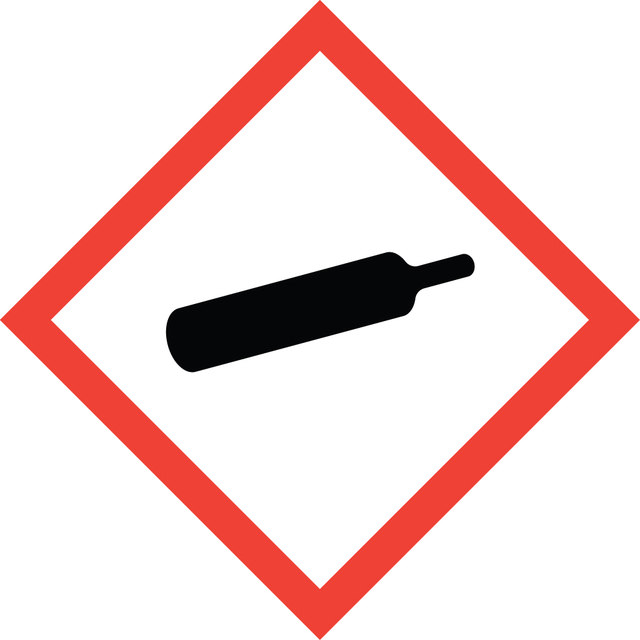
FlameGas cylinder

signalword

Danger

hcodes

Hazard Classifications

Flam. Gas 1A - Press. Gas Liquefied gas

Classe de stockage

2A - Gases

wgk

WGK 1

flash_point_f

-41.8 °F - closed cup

flash_point_c

-41 °C - closed cup

ppe

Eyeshields, Faceshields, Gloves


Faites votre choix parmi les versions les plus récentes :

Certificats d'analyse (COA)

Lot/Batch Number

Vous ne trouvez pas la bonne version ?

Si vous avez besoin d'une version particulière, vous pouvez rechercher un certificat spécifique par le numéro de lot.

Déjà en possession de ce produit ?

Retrouvez la documentation relative aux produits que vous avez récemment achetés dans la Bibliothèque de documents.

Consulter la Bibliothèque de documents

Hideki Kanda et al.
Water environment research : a research publication of the Water Environment Federation, 83(1), 23-25 (2011-02-05)
We proposed a method for the deodorising and dewatering of biosolids. In the proposed method, liquefied dimethyl ether (DME) was used as an extractant for odorous components and water. We developed a bench-scale experiment to almost completely deodorize and dewater
Bruce L Yoder et al.
The Journal of chemical physics, 138(4), 044202-044202 (2013-02-08)
We present a new experimental configuration for the study of size-dependent, angle-resolved photoelectron and photoion spectra of weakly bound ultrafine aerosol particles targeted at particle sizes below ~20 nm. It combines single photon ionization by a tunable, table-top vacuum ultraviolet
Kazuyuki Oshita et al.
Chemosphere, 78(9), 1148-1154 (2010-01-02)
We investigated whether polychlorinated biphenyls (PCBs) and water could be simultaneously removed from river sediment by solvent extraction using liquefied dimethyl ether (DME) as the extractant. DME exists in a gaseous state at normal temperature and pressure and can dissolve
Salma Parveen et al.
The journal of physical chemistry. A, 113(21), 6182-6191 (2009-05-09)
Theoretical calculations have been carried out using ab initio MP2 and B3LYP density functional methods to investigate the interaction between fluorinated dimethyl ethers (nF = 1-5) and water. Depending on the number of F atoms implanted on the dimethyl ethers
M Naqvi et al.
Bioresource technology, 101(3), 937-944 (2009-09-22)
There is great interest in developing black liquor gasification technology over recent years for efficient recovery of bio-based residues in chemical pulp mills. Two potential technologies of producing dimethyl ether (DME) and methane (CH(4)) as alternative fuels from black liquor

Notre équipe de scientifiques dispose d'une expérience dans tous les secteurs de la recherche, notamment en sciences de la vie, science des matériaux, synthèse chimique, chromatographie, analyse et dans de nombreux autres domaines..

Contacter notre Service technique