
Purified Water: Best Practices in the Laboratory
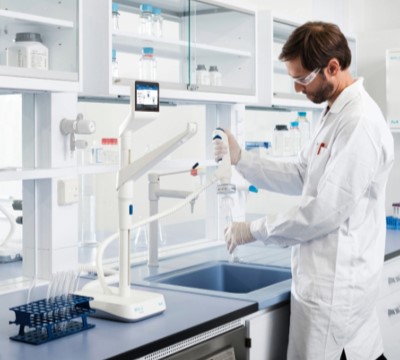
Water is one of the most used reagents in any laboratory. From reagent and buffer preparation to sample and standards dilution, experimental blanks, and routine glassware rinsing, water is everywhere. As analytical techniques become increasingly sensitive, the potential impact of water quality on experimental results cannot be overlooked.
Below, find a few of our top tips and tricks for handling purified water to help you obtain the highest quality water from your laboratory’s water purification system, and avoid common mistakes that could compromise your experiments.
Section overview
Setting up your water system
Start off on the right path by setting up your water system properly. Correct system set up lays the foundation for high-quality water purification.
Choose your system’s location wisely
If you perform trace analyses, prevent contamination by keeping your ultrapure water dispensers away from heavy foot traffic, areas where many chemicals are used, and from windows and air conditioning vents. On the other hand, you may wish to place your source of pure water close to your laboratory’s washing area, or the weighing station where you prepare common reagents. Modern water purification systems give you the flexibility to place pure water dispensers (e.g., E-POD® dispenser) and ultrapure water dispensers (e.g., Q-POD® dispenser) in different locations for greater efficiency.
Avoid using plastic tubing at the outlet of the system
Avoid attaching a piece of plastic tubing at the outlet of your water system for the following reasons:
- Plasticizers may leach into the ultrapure water dispensed by the system
- Water drops remaining inside the tubing may foster bacteria or algae growth, contaminating the next batch of ultrapure water collected
Many modern water purification systems have a point-of-delivery device that can easily be adjusted to fit your glassware. This avoids splashes and eliminates the need for additional tubing.
Protect purified water from extractables and other contaminants
When performing trace or ultra-trace analyses, everyday laboratory items can become a source of contamination. Gloves, paraffin film, marker pens, and even floor cleaning products or new furniture may release contaminants that affect water quality. For sensitive analyses, try to minimize the use of these products and to work under a hood, thereby controlling the air surrounding the water and the samples.
Customizing water filters and containers
Every lab is different so it’s important to make sure you are using equipment and consumables tailored to your lab’s applications. More sensitive applications could require higher quality water using specific final filters, for example.
Optimize the final filter on your water purification system
Before collecting water for your experiments, make sure that the filter placed at the point of use of the system is the most appropriate for your specific needs. Modern water purification systems let you tailor the purified water to specific lab applications. For example, there are final filters designed to deliver water suitable for molecular biology experiments (e.g. Biopak® polisher) or optimize water for LC-MS analyses (LC-Pak® polisher).
If your lab’s water demands vary from user to user, Milli-Q® IQ water purification systems make it possible to have multiple dispensing units, each fitted with a different final filter, feeding out from a single purification unit.
Water system use and care
Ensuring that your water system is functioning at its best is an ongoing process. Fortunately, the steps described below don’t take long and ensure high-quality water with little downtime. Find our top tips for assuring the high performance your lab’s water purification system and output water quality below.

Monitor water quality: Resistivity and TOC
Many water purification systems display a “Resistivity” value, which measures the ionic purity of water. If your ultrapure (Type 1) water system delivers water with a resistivity of 18.2 MOhm.cm, it is free of any ionic impurity — as ultrapure water should be. Any drop in resistivity below 18.2 for ultrapure water and your system may have an issue that needs to be resolved.
Certain systems also provide a TOC (Total Organic Carbon) value which monitors organic contamination in your water. The TOC of ultrapure water is expected to be at or below 5 ppb (or μg/L).
Most water purification systems are equipped with digital touchscreens that make monitoring these water quality parameters and managing your system settings even easier and more intuitive.
To learn how these water quality parameters are measured, read the article Water Quality Monitoring.
Change water purification cartridges on time
It is not good practice to keep using water purification system cartridges beyond the manufacturer’s recommendations — even if the system continues to deliver good quality water. Unfortunately, some water purification technologies, such as ion exchange resins, will suddenly and unpredictably release large amounts of impurities when exhausted. This may occur on the day of a crucial experiment, potentially impacting results, and lead to downtime before the cartridge can be changed. Changing cartridges as recommended by the manufacturer will protect you from variations in water quality.
Dispensing water
Dispensing purified water may seem simple, but the following practices can help reduce contaminants in your water.
Flush the system before collecting water
High purity water can readily absorb chemicals from its surroundings. When a water purification system sits idle overnight or for a few days, volatile molecules from the laboratory air (organic solvents, cleaning products, etc.) may contaminate the water at the system’s point-of-use. Therefore, it’s best to first discard a small volume of water (one or two liters) before collecting high quality, freshly purified water for sensitive experiments.
To see the impact of flushing your water system on bacterial contamination, read the article Assessing the Level of Bacteria in Purified Water.
Do not generate bubbles when dispensing water
When dispensing ultrapure water into a container for trace analyses, it is important to avoid generating air bubbles. Bubbles increase the risk of introducing airborne contaminants into the water by increasing the surface of contact between laboratory air and ultrapure water. Contaminants include potentially volatile organics, or inorganics such as ammonia or chloride, which are ubiquitous in laboratories. To achieve an optimal dispense, tilt the container so that the stream of water slides along the wall of the flask, instead of flowing straight to the bottom and generating bubbles.
Do not store ultrapure water
Stored ultrapure water quickly absorbs carbon dioxide from the air, leading to the formation of carbonic acid, carbonate and bicarbonate. In addition, bacteria and algae may grow in stagnant water, especially near a window or a source of heat. Bacteria release by-products, such as nucleases, endotoxins, and other organics, which can impact experiments. The storage container itself may also contaminate the water, especially large carboys whose inner walls can be difficult to clean. Whenever possible, it is best to dispense freshly purified water from the system just before use.
Optimizing short-term water storage
When preparing eluents or reagents, you may need to collect ultrapure water in a container for temporary storage.
Select the appropriate water container for sensitive applications
When preparing eluents or reagents, you may need to collect ultrapure water in an intermediary container. In these situations, tThe container should be chosen very carefully according to the application the water is intended for.
For organic analyses (e.g., HPLC), borosilicate bottles are preferred since they will not release any organic molecules into the water.
For ionic analyses, polyethylene or polypropylene containers are often recommended as they release fewer ions than glass.
For ICP-MS, fluoropolymers such as PFA are best.
In all cases, remember to cap the container to limit direct contact with laboratory air, particles and bacteria.
Clean containers properly
The containers used to collect high purity water should be very clean to avoid contaminating the water. The cleaning procedure (e.g., using diluted acid, acetone, or another reagent) varies by analysis type. In all cases, it is very important to rinse the containers with ultrapure water several times, and to remember to clean and rinse the caps with the same care as the containers. For trace analyses, avoid detergents and be sure to designate glassware for these experiments that is not mixed with glassware used for other types of lab work.
Beyond carefully selecting a suitable water purification system for your laboratory, it is important to know how to obtain, handle and use that water correctly. Following these best practices will not only help you take full advantage of your water system, but will also allow you to obtain high purity water that fits the requirements of even the most sensitive laboratory techniques.