
Our Sustainability Strategy
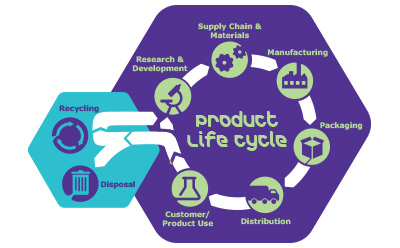
Our sustainability strategy is anchored in reducing our environmental impact across the entire product life cycle. We extend this commitment to enabling sustainability in science for our people, our communities, and the next generation of scientists.
By embedding sustainability across our business, our efforts to achieve our sustainability goals also supports you in your sustainability journey. In 2020, we established a Group-wide Sustainability Strategy, aligned with the United Nations’ Sustainable Development Goals (SDGs), and from this we have made three ambitious commitments:
- Advancing Innovation for Humanity: By 2030, we will deliver more sustainable solutions through our portfolio.
- Partnering for Sustainable Business Impact: By 2030, we will fully integrate sustainability into our value chains.
- Reducing our Ecological Footprint: By 2040, we will achieve climate neutrality and reduce our resource consumption.
In May 2022, we were confirmed to the Science Based Targets initiative. Together, we can multiply our impact to address this urgent, shared global need. Learn more about the actions we’re taking below:
Goal 1: Advancing Innovation for Humanity
By advancing innovation for humanity, we’re focusing on innovations and technologies to advance sustainability for our customers and reduce the environmental impact of our products on health and wellbeing. These initiatives support the SDGs 3, 8, 9, and 17.
Learn more how our Life Science business contributes to Goal 1 of our corporate Sustainability Strategy:

2030 Ambition:
- 10% of portfolio consists of products with significant sustainability features
We already offer thousands of products with sustainability features and aim for approximately 10% of our portfolio to have significant sustainability features by 2030.
We take a holistic, data-driven approach to drive sustainability improvement across the entire product life cycle supported by our Design for Sustainability framework. Learn more how we’re embedding sustainability into product design here.
We also use DOZN™, our online Green Chemistry evaluator tool, to assess the sustainability of various chemicals and target improvements. This tool is also available for free to anyone to use. Learn more here.
2030 Ambition:
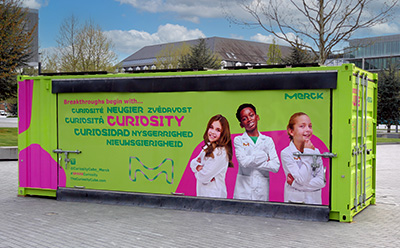
- Curiosity Cubes on six continents, 10 Cubes in total
- 14 Curiosity Labs™ lessons available
We focus on increasing global access to science and hands-on science education based on a diverse and inclusive environment that we accelerate through our Curiosity Cubes and Curiosity Labs™ programs.
2030 Ambition:
- 14.5 million students reached
- 10,300 faculty engaged
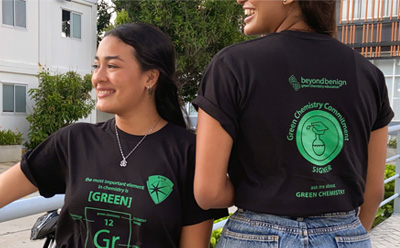
- 500 Green Chemistry Commitment signers globally
In partnership with the nonprofit organization Beyond Benign, we’re helping drive scalable and systemic change to incorporate green chemistry education in 500 higher education institutions globally.
Goal 2: Partnering for Sustainable Business Impact
By partnering for sustainable business impact, we’re focusing on a sustainable and transparent supply chain, sustainability in our ways of working & decision-making, and providing a diverse and inclusive environment for our people and communities. These initiatives support SDGs 5, 8, 12, and 17. Learn more how our Life Science business contributes to Goal 2 of our corporate Sustainability Strategy:
2030 Ambition:
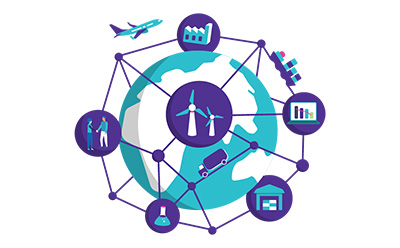
- Fully integrate sustainability into all our value chains
We engage with our suppliers for greater transparency and sustainability data, while also enabling them with sustainability toolkits and best practices to make more sustainable decisions for their own operations.
2030 Ambition:
- Full product carbon footprint for entire portfolio available to customers
We collaborate with our customers to help them reduce their environmental footprint. Through product carbon footprints and customer-specific sustainability data, we’re supporting our customers along their sustainability journey.
Goal 3: Reducing Our Ecological Footprint
- By 2030, we aim to achieve a 50% reduction in Scope 1 & 2 emissions, and a 30% reduction in Scope 3 emissions compared to our 2020 baseline.
- By 2030, we aim to achieve 80% renewable electricity in purchased electricity globally.
- By 2040, we aim to achieve climate neutrality across Scopes 1, 2 and 3.
2025 Progress:
- 198 metric kilotons CO2e Scope 1 & 2 emissions (-37% vs. 2020)
- 1,465 metric kilotons CO2e Scope 3 emissions (-6% vs. 2020)
- 79% renewable electricity (+38% vs. 2020)
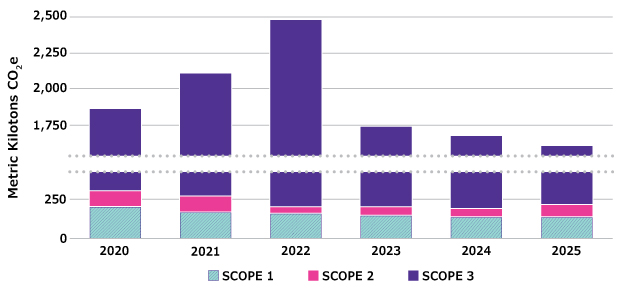
Life Science Scope 1, 2 and 3 greenhouse gas emissions, 2020 to 2025
To reduce our ecological footprint, we’re focusing on climate change and emissions, water intensity and waste circularity. These initiatives support SDGs 9, 12, 13, and 17. Learn more how our Life Science business contributes to Goal 3 of our corporate Sustainability Strategy:
2030 Ambition:
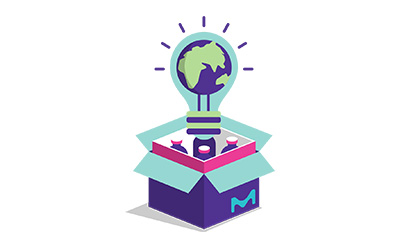
- 10% reduction in packaging weight per unit sales vs. baseline
- 100% of new packaging designed following circularity principles
- 100% of fiber-based packaging deforestation-free
This strategy drives sustainability improvements into both new and existing product packaging. Through this initiative, we set high standards to SHRINK, SECURE, SWITCH and SAVE packaging.
2030 Ambition:
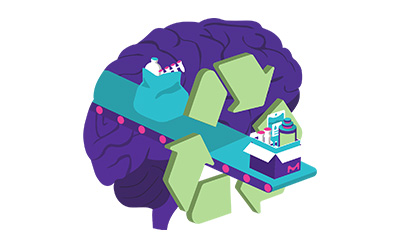
- Neutralize product plastic footprint by developing recycling programs for customers
- At least 10 products containing greener polymers
We're developing circular recycling solutions to reduce the amount of plastic in the value chain and offer cost-effective re-processing of the plastic waste back into products and packaging within our supply chain.
2030 Ambition:
- 80% renewable electricity globally for Life Science business
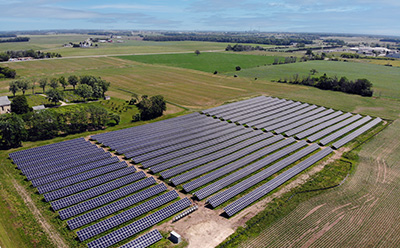
We directly invest in and enable projects that add new renewable energy capacity, both on- and off-site.