
8.14925

Kryptofix® 222
special quality for synthesis

Greener Alternative
Synonym(s):
Kryptofix® 222, 4,7,13,16,21,24-Hexaoxa-1,10-diazabicyclo[8.8.8]hexacosane
Sign In to View Organizational & Contract Pricing.
Select a Size
Change View
About This Item
Empirical Formula (Hill Notation):
C18H36N2O6
CAS Number:
Molecular Weight:
376.49
UNSPSC Code:
12352005
EC Index Number:
245-962-4
NACRES:
NA.22
MDL number:
Form:
powder
Quality Segment
form
powder
potency
300-2000 mg/kg LD50, oral (Rat)
reaction suitability
core: cryptand, reaction type: phase-transfer
sustainability
Sustainability features
mp
70-73 °C
storage temp.
2-8°C
SMILES string
N21CCOCCOCCN(CCOCCOCC2)CCOCCOCC1
InChI
1S/C18H36N2O6/c1-7-21-13-14-24-10-4-20-5-11-25-17-15-22-8-2-19(1)3-9-23-16-18-26-12-6-20/h1-18H2
InChI key
AUFVJZSDSXXFOI-UHFFFAOYSA-N
General description
We are committed to providing greener alternatives that adhere to the 12 Principles of Green Chemistry. This catalyst enables efficient catalytic transformations aligned with green chemistry principles, promoting atom economy and waste reduction. Click here for more information.
Application
- Improved, one-pot synthesis of 6-[(18) F]fluorodopamine and quality control testing for use in patients with neuroblastoma.: This study presents an improved method for synthesizing 6-[(18) F]fluorodopamine using Kryptofix 222. The one-pot synthesis process enhances efficiency and quality control, making it suitable for clinical applications in neuroblastoma patients (Vāvere et al., 2018).
- Efficient radiosynthesis and non-clinical safety tests of the TSPO radioprobe [(18)F]FEDAC: Prerequisites for clinical application.: Kryptofix 222 is utilized in the radiosynthesis of [(18)F]FEDAC, a radioprobe for TSPO imaging. The study highlights the efficiency and safety of the synthesis process, facilitated by Kryptofix 222, and its potential for clinical application (Kawamura et al., 2016).
- Fully automated one-pot radiosynthesis of O-(2-[18F]fluoroethyl)-L-tyrosine on the TracerLab FX(FN) module.: This research demonstrates the automated synthesis of O-(2-[18F]fluoroethyl)-L-tyrosine, employing Kryptofix 222 as a phase transfer catalyst. The automated process significantly improves the synthesis efficiency (Bourdier et al., 2011).
- Electrochemical concentration of no-carrier-added [(18)F]fluoride from [(18)O]water in a disposable microfluidic cell for radiosynthesis of (18)F-labeled radiopharmaceuticals.: Kryptofix 222 plays a crucial role in the electrochemical concentration of [(18)F]fluoride, facilitating the radiosynthesis of various (18)F-labeled radiopharmaceuticals in a microfluidic cell, enhancing the overall efficiency and yield (Saiki et al., 2010).
Analysis Note
Assay (perchloric acid titration): ≥ 99
Purity (GC): ≥ 99
Identity (IR-spectrum): passes test
Melting point: 69 - 72
Biggest singly impurity (GC): ≤ 0.1 %
Acetone (HS-GC): ≤ 5000 ppm
Acetonitrile (HS-GC): ≤ 410 ppm
Dichloromethane (HS-GC): ≤ 600 ppm
n-Hexane (HS-GC): ≤ 290 ppm
Methanol (HS-GC): ≤ 3000 ppm
petroleum ether (HS-GC): ≤ 290 ppm
Pyridine (HS-GC): ≤ 200 ppm
Sulfated ash: ≤ 0.1 %
Water (according to Karl Fischer): ≤ 0.5
E.coli: passes test
Salmonella species: passes test
Staphylococcus aureus: passes test
Pseudomonas aeruginosa: passes test
Colony count (aerobic bacteria): ≤ 5000 CFU/g
Colony count (Yeasts and moulds): ≤ 500 CFU/g
Endotoxins: ≤ 50 I.U./g
Legal Information
Kryptofix is a registered trademark of Merck KGaA, Darmstadt, Germany
Still not finding the right product?
Explore all of our products under Kryptofix® 222

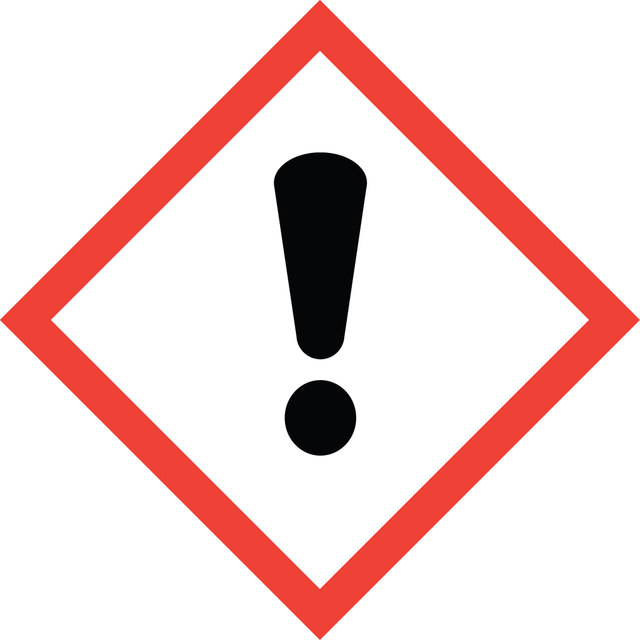
Signal Word
Danger
Precautionary Statements
Hazard Classifications
Acute Tox. 4 Oral - Eye Dam. 1 - Skin Irrit. 2
Storage Class
11 - Combustible Solids
WGK
WGK 3
Hazard Codes
Choose from one of the most recent versions:
Already Own This Product?
Find documentation for the products that you have recently purchased in the Document Library.