
Our Operational Footprint
EDISON – ONSITE ENERGY & WATER MANAGEMENT
Our flagship Energy and Water Efficiency program (EDISON) brings together our targeted reduction activities under one roof including efficiency, electrification, and onsite renewables. Our EDISON governance structure fosters the sharing of best practices across business sectors and facilities worldwide – helping drive a continuous improvement culture.
Through 2030, we’ve allocated approximately 125 million euro to fund EDISON activities. Some of these projects include:
- A state-of-the-art Biomass Central Heat Plant in Jaffrey, New Hampshire. This site offset the consumption of more than 400,000 gallons of oil per year by switching to a renewable feedstock – reducing our emissions by 3,480 metric tons of CO2 annually.
- A heat recovery chiller project in Molsheim, France, reduced gas consumption by capturing heat that was rejected off chillers to create 55 °C hot water. Doing so saved 1,600,000 kWh of natural gas and reduced 280 metric tons of CO2 annually.
- Elimination of single pass cooling on several processes in St. Louis, Missouri that reduced water intake by seven million gallons annually.
EDISON projects are selected for funding based on alignment with the goals of the program, including the impact the project will have toward achieving our energy, greenhouse gas and water reduction ambitions as well as financial attractiveness of the project.
In 2025, EDISON brought 66 high-impact projects to life, saving 31,000 MWh of electricity and 38,000 m3 of water annually.

An EDISON project: Retrofitted boilers with new burners at our facility in Milwaukee, Wisconsin.
Offsite Renewable Energy
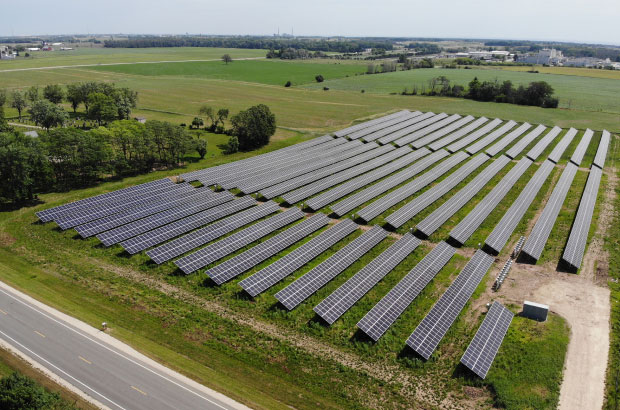
7,000 solar panels installed at our Sheboygan, Wisconsin site. This project added 2.25 megawatts to the grid across 11 acres of land.
As we advance our sustainability strategy, we focus on expanding our renewable energy portfolio both on and off-site.
Our strategy aligns with guidelines outlined by the Science Based Target (SBT) initiative. It also emphasizes the importance of playing an active role in bringing new renewable energy capacity online.
We set a goal and are on track to exceed 80% renewable electricity by 2030. As of 2025, 79% of our global electricity is matched with renewable electricity.
We assess all credible renewable energy options including:
- Direct investment in on-site renewables.
- Power Purchase Agreements (PPAs).
- Virtual Power Purchase Agreements (VPPAs).
- Green Tariffs
- And as a last resort, purchase of unbundled certificates such as RECs, GO’s and iRECs to fill gaps when needed.
In 2021, we announced our first Virtual Power Purchase Agreement for 68MW of new renewable energy capacity in the United States. This project went into operation in 2022 and enables us to match 100% of our U.S. electricity consumption with renewable electricity while adding new renewable energy capacity to the grid. The project reduces our Scope 2 emissions by 118,000 metric tons of CO2e per year.
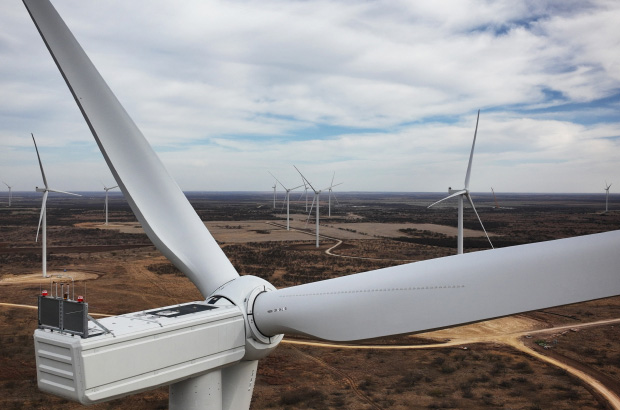
Windmills from the Azure Sky Wind and Storage project, our first VPPA, in Throckmorton, Texas.
In 2023, we announced the signing of VPPAs in Europe which are expected to match 100% of our purchased electric consumption in the EU and Switzerland. As a result, as of February 2026, our Life Science business has reached 90% renewable energy globally.
In 2024, we also announced the signing of a 10-year Power Purchase Agreement in China for renewable electricity. As our first long-term renewable energy procurement in China, this agreement brings our use of green electricity in production and operations at our Nantong and Wuxi manufacturing plants to 60%.
In 2025, we signed a 20-year Power Purchasing Agreement to deliver 16 MW of new renewable electricity capacity for Life Science sites in South Korea (Daejeon and Songdo). This PPA is the company’s longest renewable energy commitment in APAC. When operational in late 2027, the PPA will provide approximately 21,000 MWh of electricity annually, meeting approximately 75% of its Life Science business’s electricity demand in South Korea.
Process Emissions
We’re eliminating the use of process gases in membrane permeability testing, the last remainder of a decades-old process that is still widespread in the industry. In 2025, process gases accounted for 11% of our Scope 1 emissions. We aim to eliminate these process gases by 2030.