Separation of tirzepatide and its closely eluting deletion impurity, des-Ile(12), using a BIOshell™ HPLC column
Abstract
A reversed-phase high-performance liquid chromatography (RP-HPLC) method with UV detection at 214 nm was developed for the separation of tirzepatide and the closely related deletion impurity; Des-Ile(12)-tirzepatide. Separation was achieved on a superficially porous particle (SPP)-packed BIOshell™ A160 Peptide C18 HPLC column (2 µm, 15 cm × 2.1 mm). The method provided baseline resolution (Rs = 2.9) and good peak symmetry, enabling reliable separation of structurally similar peptide species.
Section overview
Introduction
Tirzepatide is a 39-amino acid synthetic peptide that functions as a dual agonist of glucagon-like peptide-1 and glucose-dependent insulinotropic polypeptide receptors, commonly referred to as twincretin. In contrast to classical GLP-1 agonists, which act solely on GLP-1 receptors, tirzepatide additionally activates glucose-dependent insulinotropic polypeptide (GIP) receptors, resulting in enhanced insulin secretion in response to glucose intake and improved glycemic control.1 This dual receptor activity enhances insulin secretion in response to glucose intake, lowers glucagon levels, and improves insulin sensitivity, supporting its therapeutic application in diabetes management.
Structurally, tirzepatide contains two non-proteogenic α-aminoisobutyric acid (Aib) residues, which are not directly encoded by DNA and contribute to increased resistance to enzymatic degradation, and a C20 fatty di-acid side chain. These features enhance its metabolic stability and prolong its half-life, while the fatty acid moiety significantly increases hydrophobicity, which is directly correlated with increased retention in reversed-phase liquid chromatography.2
Des-Ile(12)-tirzepatide is a sequence deletion impurity of tirzepatide characterized by the absence of the isoleucine residue at position 12 of the peptide backbone. The impurity can arise during solid-phase peptide synthesis (SPPS) due to incomplete amino acid coupling or side reactions such as diketopiperazine formation, which interrupt peptide chain elongation and result in truncated, sequence-related variants. If unreacted chains are not effectively capped, they remain reactive and can continue to participate in subsequent coupling steps, resulting in incorporation of downstream amino acids and formation of truncated peptide sequences. Such impurities exhibit high structural similarity to the parent peptide and require efficient chromatographic resolution.3
The Des-Ile(12) analog is an impurity arising from the deletion of the isoleucine residue at position 12 of tirzepatide. Due to its similar size, polarity, and overall hydrophobic/hydrophilic balance, it exhibits very similar physicochemical properties, retention mechanisms, UV response, and ionization behavior to the target peptide. Consequently, achieving the required separation on fully porous particle C18 columns is challenging, as the two species often co-elute or demonstrate poor peak resolution.
For this study a BIOshell™ column was chosen, as it is based on superficially porous particles (SPP); a solid nonporous core with a thin, highly porous outer silica shell covalently bonded with C18 (octadecyl) ligands. This architecture is known to provide efficient mass transfer and enables high resolution separation of peptides by size or structures. It exhibits high efficiency with high theoretical plate count at lower backpressure than traditional, fully porous C18 modified particles with comparable efficiency. These attributes result in sharper, more symmetric peaks and improved separation of closely eluting species across a broad pH range (pH 1-8) and gradient conditions.
Method development study employs reversed-phase high-performance liquid chromatography coupled with ultraviolet detection (RP-HPLC-UV) to monitor tirzepatide and the sequence-related impurity Des-Ile(12)-tirzepatide impurity, both analyzed individually and in combination. Detection was performed at 214 nm, a commonly used wavelength for peptide bond absorbance. Chromatographic separation was achieved using a BIOshell™ A160 Peptide C18 HPLC column (2 µm, 15 cm × 2.1 mm) under optimized gradient conditions, with control of column temperature at 60 °C, to ensure baseline resolution between the impurity and the parent peptide (Table 1).
Experimental
Sample and eluent preparation
Preparation of diluent
A diluent consisting of water and acetonitrile (80:20, v/v) containing 0.1% (v/v) formic acid was prepared by mixing 80 mL water, 20 mL acetonitrile, and 100 µL formic acid.
Preparation of tirzepatide standard solution
A stock solution of tirzepatide was prepared by dissolving 1 mg of reference standard in diluent and diluted to 1 mL to obtain a concentration of 1000 µg/mL.
Preparation of Des-Ile(12)-Tirzepatide impurity standard solution
A stock solution of the Des-Ile(12)-Tirzepatide impurity standard (PHI90009) was prepared by dissolving 1 mg of the standard in diluent to a final volume of 1 mL.
Preparation of mixed standard solution
A mixed standard solution was prepared by accurately weighing 1 mg of tirzepatide reference standard into a 1 mL volumetric flask, adding 5 µL of the Des-Ile(12)-Tirzepatide impurity stock solution (1000 µg/mL), and diluting to volume with diluent. The resulting solution contained 1000 µg/mL tirzepatide and 5 µg/mL impurity. The solution was sonicated for 5 minutes to ensure complete dissolution.
Preparation of buffer
An ammonium formate buffer was prepared by dissolving 1 g ammonium formate in 1000 mL water, followed by the addition of 100 µL formic acid to adjust the pH.
HPLC-UV method
The three prepared standard solutions were analyzed by HPLC-UV using a BIOshell™ A160 Peptide C18 HPLC column (2 µm, 15 cm × 2.1 mm) under conditions shown in Table 2.
Results
Chromatographic separation of tirzepatide and Des-Ile (12)-Tirzepatide was achieved using a superficially porous BIOshell™ A160 Peptide C18 HPLC column (2.0 µm, 150 X 2.1 mm) with UV detection at 214 nm. The chromatogram of the mixed standard solution containing tirzepatide at 1000 µg/mL and Des-Ile (12)-Tirzepatide at 5 µg/mL is shown in Figure 1. An injection volume of 20 µL was assessed and applied to maximize sensitivity for trace peptide analysis without compromising resolution and peak broadening issue that may commonly arise with high volume injections. The corresponding chromatographic data is summarized in Table 3.
Individual injections of Des-Ile(12)-Tirzepatide and tirzepatide standard solutions at 1000 µg/mL are presented in Figures 2 and 3, respectively.
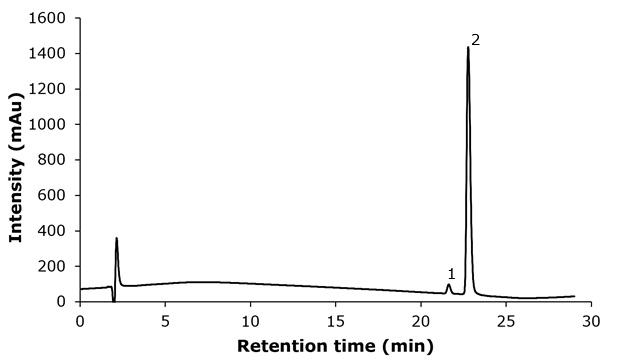
Figure 1.Chromatogram obtained for tirzepatide and Des-Ile(12)-Tirzepatide mixed standard solution. 1. Des-Ile(12)-Tirzepatide (5 µg/mL), 2. Tirzepatide (1000 µg/mL)
Peak verification
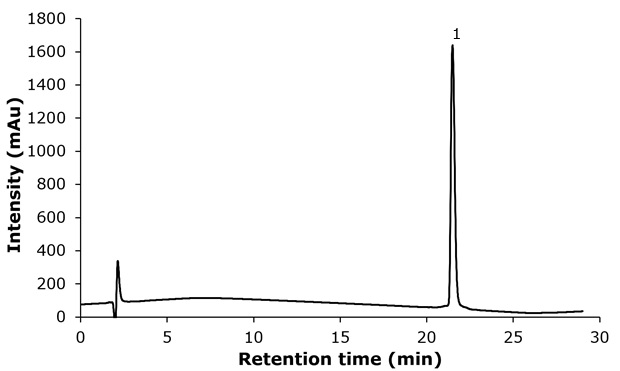
Figure 2.Chromatogram obtained for Des-Ile(12)-Tirzepatide standard solution (1000 µg/mL).
1. Des-Ile(12)-Tirzepatide
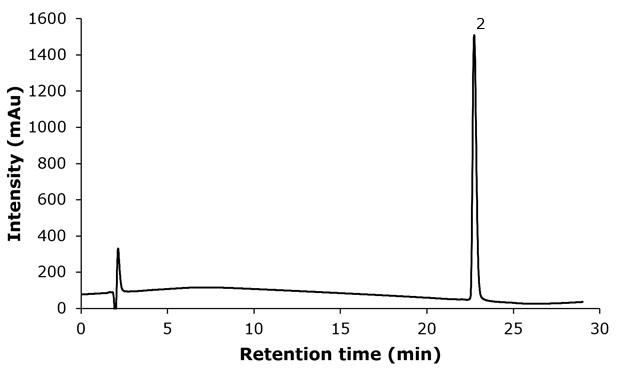
Figure 3.Chromatogram obtained for tirzepatide standard solution (1000 µg/mL). 2. Tirzepatide
Conclusion
The developed method using a BIOshell™ A160 Peptide C18 superficially porous particle (SPP) column (2 µm, 150 x 2.1 mm) enabled effective chromatographic separation of tirzepatide and its sequence-related deletion impurity Des-Ile(12)-Tirzepatide, with retention times of 22.932 and 21.758 min, respectively. The tailing factors of 1.3 for tirzepatide and 1.1 for impurity indicate good peak symmetry and satisfy the Ph. Eur. limit (<1.8). A resolution of 2.9 demonstrates adequate separation between the two components. Previously evaluated fully porous C18 columns of similar particle size showed insufficient separation (data not shown).
This makes the superficially porous particle (SPP) BIOshell™ column with the C18 chemistry, the optimized pore size for peptide analysis, and the pH range of 1-8 the column of choice to provide required selectivity and high resolution to distinguish deletion variants arising from e.g. single amino-acid removals. It qualifies thereby also for similar separations of other peptide APIs and their impurities.