
Patient-derived Organoid Monolayer Screen
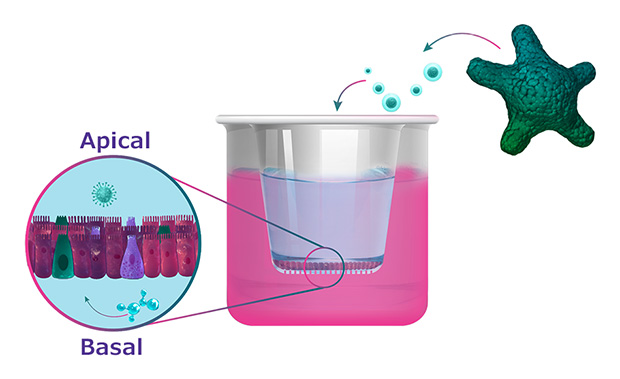
What is a PDO Monolayer?
Recognizing the significant challenge in translating inflammatory bowel disease (IBD) research into effective patient care, we have developed the PDO Monolayer, a patient-derived in vitro platform that closely recapitulates human intestinal biology to evaluate epithelial barrier function. Through meticulous optimization of culture conditions, we have established gut organoid monolayers that faithfully mirror the physiological composition of the gut epithelium in vivo. These monolayers feature all differentiated cell lineages and facilitate access to both the apical and basolateral sides of the epithelium, addressing unmet research needs with innovative solutions.
IntegriGut Screen: PDO Monolayer for IBD drug development
Acknowledging the industry’s demand for rapid and physiologically relevant data, we developed the IntegriGut Screen, a service specifically designed for high-quality human data on epithelial barrier function, cytotoxicity, and cytokine release for IBD drug discovery and development.
IntegriGut Screen advantages
- Patient-derived in vitro model representative of human biology
- Recapitulates in vivo gut physiology with all differentiated cell types
- Derived from a well-characterized IBD biobank
- Faster than in vivo models
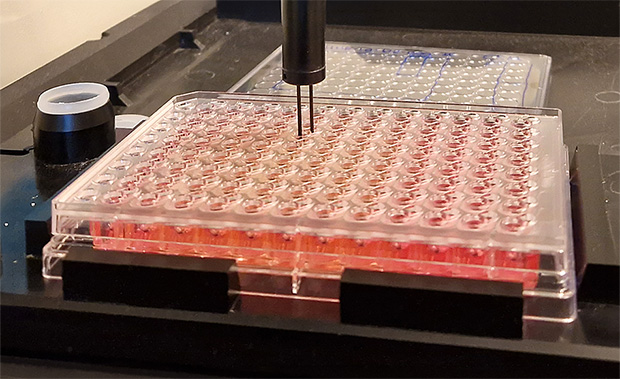
The IntegriGut Screen can be utilized by researchers to assess lead efficacy and the protective effect of your compound against cytokine-induced epithelial damage.
Ideal for lead identification:
- Test up to 10 compounds in 1-2 PDOs
- 3 doses per compound and 2 inflammatory challenge concentrations included
- Standard of care (tofacitinib), vehicle, and staurosporine included
- Supernatant collection and storage for downstream analysis
- Measurements include:
- TEER
- Permeability
- Viability
Other inflammatory bowel disease screens
Inflammatory bowel disease PDO biobank
Elevate your clinical candidate selection using a larger patient cohort and patient-centered insights. Our expertly curated IBD biobank comprises PDO-monolayers from both Ulcerative Colitis (UC) and Crohn’s Disease (CD) patients, spanning various intestinal regions. Our diverse collection amplifies the robustness of your clinical candidate selection by evaluating compounds on a broader IBD population.
Inflammatory bowel disease PDO co-cultures
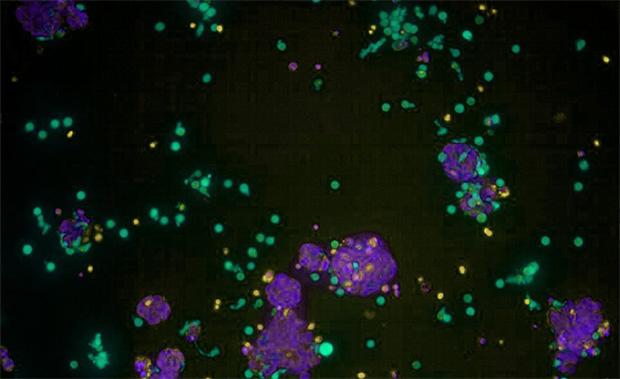
Take the next step to physiological relevance with organoid co-cultures. Effective therapies for IBD require a comprehensive understanding of their impact on multiple cell types, including the epithelium, immune cells, and fibroblasts. Modeling these intricate interactions often compromises scalability, posing a challenge for preclinical drug development. Our unique organoid co-cultures provide a robust platform for evaluating drug candidates’ effects on these interconnected cell systems. We also offer co-cultures with gut microbiome, enabling the identification of preventive therapies for inflammatory bowel disease.
IBD-diarrheic platform
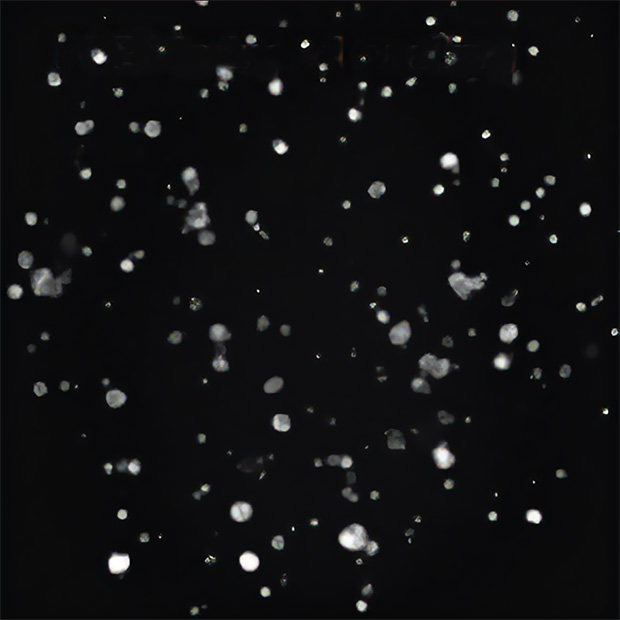
Accelerate compound testing and capture patient-to-patient variability in response to inflammatory or functional challenges with our IBD-diarrheic platform. This screen combines a PDO-based swelling assay, a functional readout of ion imbalance, with a GI toxicity assessment through ATP-based viability. De-risk your lead compounds early for diarrhea liability and GI toxicity while ranking compounds using functional phenotypes beyond viability. We offer a multiparametric patient-relevant platform to predict diarrhea-like phenotypes and gastrointestinal toxicity.