
GC inlet septa selection guide
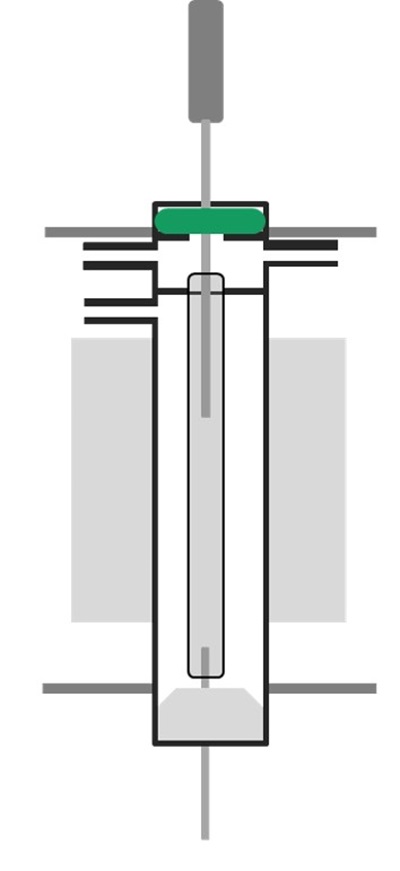
What are GC inlet septa?
GC inlet septa are specialized rubber or silicone components installed in the gas chromatography injection port. They form a critical interface between the external environment and the pressurized carrier gas system while allowing repeated syringe penetration for sample injections.
The primary functions of GC inlet septa include:
- Creating a leak-free seal between the atmosphere and the carrier gas in the injection port
- Allowing sample syringe needles to penetrate for injection while maintaining system pressure
- Resealing after injection to prevent contamination and maintain carrier gas pressure
- Withstanding high temperatures in the GC inlet without degradation
- Maintaining carrier gas purity by minimizing bleed and extractables
GC inlet septa size by instrument
The required septum diameter depends on the GC instrument model. Although injector port designs have become more standardized in recent years, correct sizing remains essential for proper sealing and performance. The table below lists recommended septum sizes by instrument vendor and model.
Key properties of GC inlet septa
Beyond diameter and shape, septa selection for an application should be guided by several performance-critical properties.
1. Temperature resistance
- Low-temperature septa: Made from softer silicone formulations with better resealability. Typical operating range of 225-275 °C
- Medium-temperature septa: Suitable for operation between 275-350 °C
- High-temperature septa: Made from harder silicone formulations and designed for operation up to 350-400 °C (Note: Often too hard for use at lower temperatures)
2. Bleed characteristics
Septum bleed refers to the release of siloxane compounds from the heated septa that can appear as "ghost peaks" in chromatograms.
Common diagnostic ions associated with septa-related contamination include:
- m/z 73: Base peak for septa bleed, characteristic of siloxane bleed, originating from e.g. eicosamethyl-cyclodecasiloxane1
- m/z 149, 167, 279: Typically associated with plasticizer-related contaminants
- m/z 296 and 429: Indicative of septum material breakdown rather than normal bleed2
Low-bleed septa are specifically formulated to minimize these effects and are recommended for trace-level and MS applications.
3. Mechanical properties
- Resealability: Ability to maintain a leak-free seal after repeated injections (puncture tolerance)
- Coring resistance: Resistance to material being cut out to small pieces by the needle, which can contaminate the inlet and lead to more interferences
Softness/Hardness: Influences ease of needle penetration and overall septum lifetime. Typically expressed as Shore A hardness.
4. Chemical compatibility
- Solvent resistance: Ability to withstand exposure to various solvents without swelling, cracking, or excessive bleed
Common types of GC inlet septa
Three main septa types are available, each optimized for different analytical requirements.
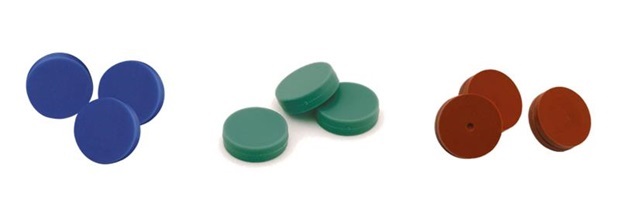
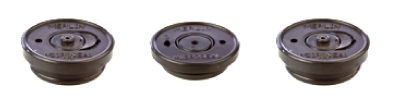
Common type of GC inlet septa (left to right): ThermoBlue, Thermogreen® LB-2, and ThermoRed Max
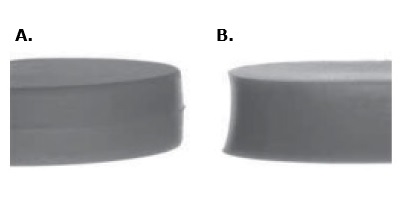
(A) Molded septum, (B) Die-cut septum
Molded septa vs. die-cut septa: Molded septa generally offer easier installation and better sealing, in addition to lower bleed because they lack “cut” surface at the edges.
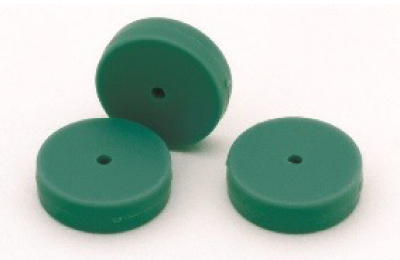
Pre-drilled GC septa
Predrilled/pre-punctured vs. non-punctured: Predrilled septa are recommended for autosamplers and/or SPME applications to reduce penetration resistance. Alternatively, center-guided septa (ThermoRed Max septa) are preferred for high-temperature applications as the septa’s polymer material is stiffer/harder.
Overview of septa
Merlin Microseal™ septa for GC systems
The Merlin Microseal™ system is an alternative to conventional septum and nut for capillary inlet systems. It uses a patented dual sequential-sealing design that significantly extends septum lifetime, depending on sample type, operating conditions, and laboratory environment. Typical lifetimes range from approximately 1,000 to over 10,000 injections.3
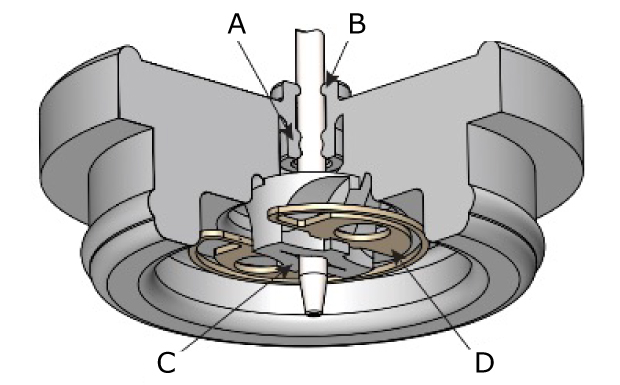
(A) O-rings seal needle during injection, (B) Dust wiper rib, (C) Duckbill opens easily, seals reliably, (D) Spring
Image credit: © Merlin
Key features of Merlin Microseal™ septa
- Eliminates septum coring and crumbling into injection port liner
- Compatibility with 23-gauge blunt or cone-tip syringe (do not use with beveled tips!)
- Ideal suitability for SPME fibers (23-gauge)
- Constructed from high-temperature (up to 400 °C) and wear-resistant fluorocarbon elastomer for exceptional durability
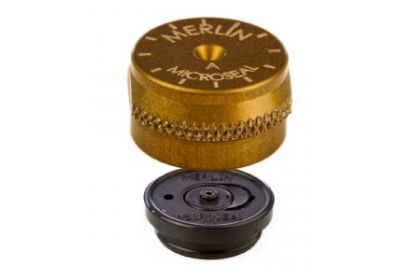
Microseal™ Kit example, 1 nut and 1 septum (fits Agilent, 24815-U)
Other septum related tools
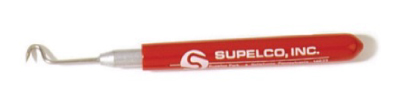
Septum Puller (20352): Tool designed for safe and easy removal of used GC septa from injector ports, minimizing contamination and handling risk.