
Designing flexible biomanufacturing facilities
Flexible manufacturing enables biopharmaceutical companies to adapt to changing products, production volumes, and market demands without extensive facility redesign.
Drug development pipelines are diversifying, supply chains face growing instability, and manufacturing requirements continue to evolve. As a result, flexibility has become essential for reducing risk, supporting future growth, and maximizing the value of manufacturing investments.
There is no one-size-fits-all approach. Depending on the molecule and production requirements, facility constraints, and business objectives, manufacturers may employ several strategies, such as pre-engineered process platforms, modular facility designs, ballroom and closed-processing concepts, hybrid manufacturing models, or intensified or continuous processing.
Single-use technologies are a key enabler of flexible manufacturing because they support multiple products, simplify scale-up and scale-down activities, reduce changeover times, and allow facilities to adapt more easily to future requirements.
Successfully designing a flexible manufacturing facility requires collaboration across process development, manufacturing, engineering, automation, and facility design teams. By bringing together multidisciplinary expertise early in the planning process, organizations can create manufacturing approaches that support both current production requirements and future expansions.
Download our white paper to learn how closed processing accelerates flexible manufacturing.
Key takeaways
|
- What is flexible manufacturing?
- Why is flexibility a strategic priority?
- How single-use technologies enable flexible manufacturing
- What are the most widely used flexible manufacturing approaches?
- Key considerations when designing for flexibility
- The importance of early collaboration
- The role of digital technologies
- Software, automation, and data management for flexible manufacturing at scale
- Turning flexibility into competitive advantage
- Frequently asked questions
What is flexible manufacturing?
Flexible manufacturing refers to the design of facilities, equipment, and processes that can adapt to changing manufacturing requirements, multiple products, changes in demand, and different scales without requiring major facility modifications or lengthy shutdowns.
For some organizations, flexibility means supporting dozens of biosimilars within a single facility. For others, it means preparing for future modalities that may not yet be part of their current pipeline. Contract development and manufacturing organizations (CDMOs) often require flexibility to support multiple customers and products within the same manufacturing footprint.
Regardless of the application, the goal is the same: maintain product quality and reduce risk while maximizing the long-term value of manufacturing investments.
Why is flexibility a strategic priority?
Drug manufacturers face many competing pressures. They must accelerate development timelines, control costs, improve facility utilization, and increase supply chain resilience. At the same time, many organizations are reluctant to commit large amounts of capital to facilities designed around a single product or manufacturing strategy. A flexible manufacturing approach helps address these concerns by enabling organizations to:
- Accommodate diverse and evolving product portfolios
- Scale production volumes up or down based on demand
- Implement manufacturing technologies to enable intensified processing
- Improve facility utilization
- Expand capacity more efficiently
This flexibility can be particularly valuable during early commercialization when long-term demand remains difficult to predict. Rather than building a large, dedicated facility upfront, organizations can implement a phased approach that allows capacity and capabilities to evolve alongside business needs.
How single-use technologies enable flexible manufacturing
Single-use technologies have become one of the primary enablers of flexible manufacturing. Unlike traditional stainless-steel systems, single-use technologies are not permanently fixed within a facility. Equipment can be moved, reconfigured, or repurposed more easily, allowing manufacturers to adapt layouts and process flows as requirements change.
Single-use systems also eliminate many of the cleaning and sterilization requirements associated with stainless steel infrastructure. This reduces turnaround times, minimizes validation burdens, and simplifies the introduction of new products. The result is a manufacturing environment that can respond rapidly to changing business and process requirements while reducing operational complexity.
What are the most widely used flexible manufacturing approaches?
There is no single blueprint for flexible manufacturing. The most effective solution depends on a company's products, production volumes, growth plans, and facility constraints.
Modular facilities
Modular facilities use prefabricated facility components that can be assembled on-site and expanded over time. Compared to traditional construction, modular approaches can significantly reduce deployment timelines while creating opportunities for future expansion. Rather than requiring large upfront investments, additional manufacturing capacity can be added as needed. Modular facilities are particularly attractive for organizations seeking to accelerate facility start-up or implement phased growth strategies.
Ballroom manufacturing concepts
The ballroom concept further increases flexibility. Rather than dividing manufacturing into multiple dedicated suites, ballroom facilities utilize open manufacturing spaces where equipment can be positioned and reconfigured as needed. This involves segregating the product from the environment and personnel with greater degrees of process closure. In a manufacturing setting, this enables organizations to move equipment in and out, support different products, downgrade room classifications, and adapt process layouts without extensive facility modifications. When paired with single-use technologies and closed processing strategies, the ballroom manufacturing approach can significantly improve facility flexibility and utilization.
Pre-engineered process platforms
Standardized process platforms offer another path to flexibility. Pre-engineered single-use systems for bioreactors, clarification, chromatography, viral clearance, tangential flow filtration (TFF), mixing, and fluid handling allow manufacturers to deploy proven technologies quickly while maintaining consistency across facilities. Although these systems are standardized, they can often be configured to meet specific process requirements through changes, for example in tank sizes, sensors, flow paths, or assemblies.
Hybrid manufacturing models
In many cases, the most effective facility solution is neither fully single use nor fully stainless steel. Hybrid facilities combine both approaches, using stainless-steel infrastructure where it delivers the greatest value while leveraging single-use technologies where flexibility is most important. For example, a facility may use stainless-steel chromatography systems alongside single-use mixing technologies, single-use fluid management systems, and single-use downstream processing equipment. These hybrid approaches allow manufacturers to optimize both cost and flexibility while taking advantage of existing infrastructure investments.
Key considerations when designing for flexibility
Successful flexible manufacturing facilities begin with a clear understanding of the desired outcome. Rather than starting with equipment selection, organizations should first define:
- Products to manufacture
- A well-characterized manufacturing process with clearly defined production targets
- Business case including CapEx and OpEX budget, and COGS of 1 g of final product
- Potential changes in production demand
- Future modalities the facility may need to manufacture
- Expansion plans over the next five to ten years
Using these requirements as a starting point, manufacturers can determine the facility size, process technologies, utility needs, and layout requirements necessary to achieve their goals. This approach helps to avoid one of the most common challenges in facility design: creating facilities that meet current requirements but limit future manufacturing needs.
The importance of early collaboration
Facility design decisions often occur before process requirements are fully understood. As a result, manufacturers may discover later that a room is too small, utilities are insufficient, or the facility layout does not support the required movement of materials, people, and equipment. Early collaboration between manufacturers, engineering firms, and process experts helps prevent these issues by aligning facility design with actual manufacturing requirements.
Collaboration becomes particularly important when evaluating fluid management strategies, buffer preparation requirements, equipment layouts, sampling locations, automation architectures, and connections between unit operations.
In many cases, small design decisions made early in a project can have significant long-term implications for flexibility, efficiency, and scalability.
The role of digital technologies
As manufacturing systems become more flexible, automation, and digital technologies become increasingly important. Manufacturers must balance flexibility with process control, data integrity, and regulatory compliance.
Some facilities use a distributed control system (DCS) to integrate multiple unit operations into a single automation environment. Others employ more decentralized approaches where individual systems communicate directly with one another. The optimal approach depends on manufacturing requirements.
Facilities producing large numbers of batches for commercial manufacturing may benefit from centralized automation and extensive data integration. Organizations running multiple products with frequent process changes may prioritize flexibility and simplicity. Emerging technologies which allow modular plant automation will play an important role in enabling flexible manufacturing environments.
Software, automation, and data management for flexible manufacturing at scale
As facilities become more modular, manufacturers are adopting "plug-and-produce" automation strategies that simplify the integration of new equipment and unit operations. Emerging automation architectures allow systems to communicate more easily, reducing the engineering effort required when equipment is added, removed, or reconfigured.
Manufacturing execution systems (MES) provide a bridge between plant-floor equipment and enterprise systems, helping manage electronic batch records, recipes, SOPs, material tracking, equipment utilization, and operator activities within a single environment. By capturing and contextualizing manufacturing data, MES platforms improve visibility across operations while supporting compliance.
For intensified and continuous processes, advanced process analytical technologies (PAT), including inline sensors, Raman spectroscopy, and automated sampling systems, enable real-time monitoring of critical process parameters (CPPs) and critical quality attributes (CQAs). Combined with analytics software, these tools support tighter process control and faster decision-making.
Software also helps simplify compliance with data integrity requirements (ALCOA+ principles) and regulations around the use of electronic records and signatures. Features including secure user authentication, immutable audit trails with time-stamped records of events, and automated data collection support audit readiness while reducing reliance on paper-based records.
Finally, modern data platforms help address the challenge of siloed and non-standardized manufacturing data by aggregating information across equipment, process steps, batches, operators, materials, and facilities. By maintaining the context of that data, manufacturers gain a more complete view of process performance and create a foundation for advanced analytics, continuous improvement, and future AI-enabled manufacturing strategies.
Turning flexibility into competitive advantage
Flexible manufacturing is not simply about selecting single-use technologies or creating open manufacturing spaces. It is about designing facilities that can evolve as products, processes, and business needs change.
Whether supporting a biosimilar portfolio, introducing a new modality, expanding commercial production, or preparing for future technologies, flexible manufacturing provides organizations with the agility needed to navigate uncertainty while maximizing the value of manufacturing investments.
By combining thoughtful facility design, standardized process platforms, modular approaches, hybrid technologies, and modern automation strategies, manufacturers can create facilities capable of meeting existing requirements while remaining adaptable to future manufacturing needs.
Our organization supports every stage of the flexible manufacturing journey, from process design and user requirements specification (URS) development through facility implementation, technology transfer, and commercial manufacturing. Through an integrated ecosystem of bioprocessing products, manufacturing expertise (MSAT), installation, qualification, maintenance and training services, we help manufacturers accelerate the transition from concept to production while building the flexibility needed for long-term success.
We offer:
- Process development, bioprocessing engineering, facility planning, and investment project expertise
- Access to our M Lab™ Collaboration Centers to evaluate technologies, optimize processes, and solve complex manufacturing challenges
- A scalable portfolio of single-use mixers, and single-use downstream systems for clarification, chromatography, UF/DF, and virus filtration supported by automation, analytics, and software solutions
- A comprehensive offering of consumables, including filters, chromatography resins and membranes, and sterilized single-use assemblies
- A global, regionalized supply network designed to enhance supply continuity and manufacturing resilience
Whether you are designing a new facility, expanding capacity, or modernizing existing operations, we can help you develop a flexible manufacturing strategy that meets today's requirements while preparing for tomorrow's opportunities. Contact us now!
Interested in the opportunities that closed processing brings to flexible manufacturing? Download our white paper to explore expert insights on the industry's shift toward closed processing.
Frequently asked questions
What is flexible manufacturing in biopharmaceutical production?
Flexible manufacturing is an approach to facility and process design that enables manufacturers to adapt to changing products, production volumes, and market demands. By leveraging technologies such as single-use systems, modular facility concepts, and advanced automation, organizations can support multiple products, accelerate changeovers, and incorporate future innovations without major facility redesigns.
Why are single-use technologies important for flexible manufacturing?
Because single-use systems are portable and easy to move, enabling rapid reconfiguration of production lines and switching between product campaigns, while traditional stainless-steel equipment is typically fixed to the floor and less able to adapt to new process flows. Single-use technologies support flexibility by eliminating cleaning and sterilization requirements between batches, reducing contamination risks and validation burdens, shortening turnaround times, and simplifying facility operations.
How can flexible manufacturing help future-proof a biomanufacturing facility?
Flexible manufacturing helps future-proof facilities by enabling manufacturers to accommodate new products, process technologies, and production demands without extensive redesign. Modular layouts, scalable equipment, single-use systems, and adaptable automation strategies allow facilities to evolve alongside changing business needs, helping organizations maximize the long-term value of their manufacturing investments.
What should companies consider when designing a flexible manufacturing facility?
When designing a flexible manufacturing facility, companies should consider future production volumes, product portfolios, expansion plans, automation requirements, and facility footprint. Engaging process and manufacturing experts early can help optimize equipment selection, process flow, utility requirements, and layout design while avoiding costly modifications later in the project lifecycle.
When should manufacturers begin planning for flexibility in a new facility?
Flexibility should be considered at the earliest stages of facility planning. Early collaboration between process experts, engineering teams, and equipment providers helps ensure that facility layouts, utility requirements, automation strategies, and process flows can support both current manufacturing goals and future growth. Planning early helps avoid costly redesigns and operational constraints later in the project lifecycle.
Related products
Continue exploring the investment project journey
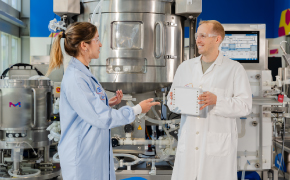
Learn how to create compliant, fit-for-purpose URS that addresses the complexity and interdependence of modern manufacturing.
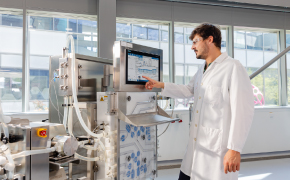
Review CSV requirements and redefine computer validation in biopharma, from documentation effort to risk and intended use approach.
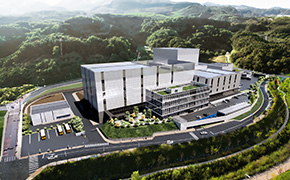
Learn how we’re expanding our single-use manufacturing network to ensure reliable, high-quality regional production.