
GC Inlet Liner Selection Guide
Introduction
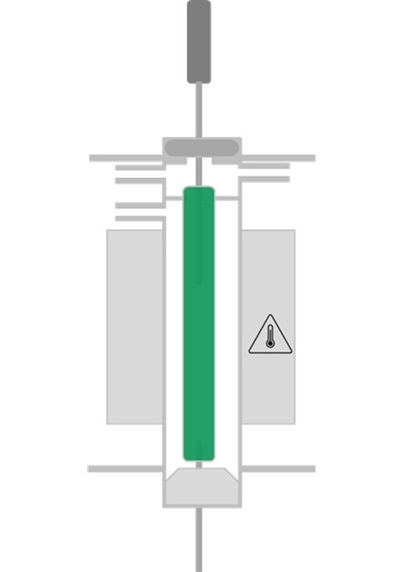
The inlet liner is a removable insert, typically constructed from deactivated borosilicate glass or fused quartz, positioned within the gas chromatography (GC) injector to facilitate sample vaporization prior to transfer onto the analytical column. Available in a range of geometries, internal volumes, and surface characteristics, inlet liners are designed to accommodate different injection techniques, sample matrices, and analyte properties.
Selection of an appropriate inlet liner is an important consideration for achieving efficient sample vaporization and effective transfer of analytes from the injector to the analytical column. Because liner geometry, internal volume, and surface characteristics influence the vaporization process and analyte transport, inlet liner selection should be matched to the injection mode, sample matrix, and physicochemical properties of the analytes. This article reviews the key factors influencing inlet liner selection and provides guidance for selecting liner configurations for common GC applications.
Selecting the appropriate GC inlet liner
Inlet liner deactivation
The surface chemistry of a GC inlet liner plays an important role in determining analyte behavior during sample introduction. Depending on the liner material and surface treatment, chemically active sites may promote undesirable interactions with susceptible analytes, leading to adsorption, catalytic degradation, reduced analyte recovery, peak tailing, poor reproducibility, or the formation of degradation products.
In glass and fused quartz liners, which are the most commonly used materials for capillary GC, activity arises primarily from surface silanol groups and trace metallic impurities. Silanol groups can adsorb polar analytes through hydrogen bonding, whereas metallic impurities may act as Lewis acid sites capable of catalyzing degradation of thermally labile compounds.
Surface deactivation, achieved through approaches such as silanization or the application of inert coatings, reduces the number and activity of surface active sites, thereby limiting unwanted analyte–surface interactions. The benefits are most pronounced for polar, thermally labile, or otherwise reactive compounds, which are particularly susceptible to adsorption and degradation during sample introduction.
GC inlet liner types
We offer two product lines of GC inlet liners: Inert and InertPLUS. Both feature thermally stable deactivation of the liner surface and, where applicable, the glass wool. The InertPLUS product line incorporates an enhanced deactivation treatment designed to further reduce analyte interactions with the liner surface and improve analyte recovery for trace-level and adsorption-sensitive compounds, including chlorinated pesticides, brominated flame retardants, and other persistent organic pollutants (POPs). In addition, InertPLUS liners are supplied with a preinstalled O-ring (Figure 1) and touchless packaging that minimizes the potential for contamination during handling and installation, thereby helping reduce background contamination.
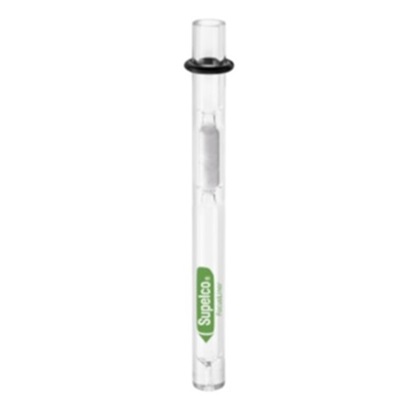
Figure 1.InertPLUS GC inlet liner with a preinstalled O-ring and deactivated glass wool.
The key differences between the Inert and InertPLUS inlet liner product lines are summarized in Figure 2. The arrow indicates the direction of carrier gas flow.
Figure 2.Logos used to identify the (a) Inert and (b) InertPLUS GC inlet liner product lines.
Instrument compatibility for Inert and InertPLUS inlet liners
The GC inlet port has become increasingly standardized across modern instrument platforms, allowing many inlet liner designs to be used interchangeably among different manufacturers. Unless otherwise specified, the Inert and InertPLUS inlet liners described in this guide are compatible with the following GC systems.
- Agilent (Intuvo 9000, 8890, 8860, 7890, 7890B, 7820A, 6890, 6850, 5890 and 4890)
- Thermo Scientific TRACE 1600, 1610 and 1300 series
- Bruker/Varian 1177
- PerkinElmer GC 2400, Clarus 690 and 590
- Lucidity GC-FID, GC-MS
- Scion Instruments 8500 and 8300
- Shimadzu (95 mm versions, part numbers contain an “S”)
Specialized inlet liners
Certain inlet liners are designed for specialized sample introduction techniques rather than conventional split or splitless injections. These include cup liners, which facilitate high-volume injections, and SPME liners, which accommodate direct thermal desorption of SPME fibers. These liners are available as dedicated products and are summarized in Table 4.
GC inlet liner O-rings
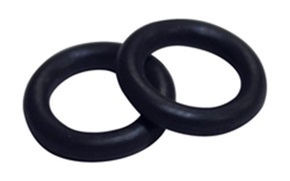
The inlet liner O-ring is installed around the outer surface of the liner to create a gas-tight seal between the liner and the inlet body. This seal isolates the sample flow path from the surrounding inlet hardware, preventing carrier gas leaks, pressure loss, and contamination from external surfaces.
A properly functioning O-ring is essential for maintaining consistent inlet pressure and sample transfer during GC analysis. O-ring failure resulting from wear, thermal degradation, or improper installation can lead to carrier gas leaks, unstable inlet pressure, retention time shifts, reduced reproducibility, and loss of analytical sensitivity. Routine inspection and replacement of the O-ring are therefore recommended as part of regular GC inlet maintenance.
Glass wool or no glass wool?
Glass wool is commonly incorporated into GC inlet liners to improve sample vaporization, promote mixing of the vaporized sample with the carrier gas, and retain non-volatile residues before they reach the analytical column. The presence or absence of glass wool should be selected according to the injection technique, sample matrix, and analyte properties, as it can influence chromatographic performance.
Benefits of glass wool
Improved sample vaporization and transfer
- Promotes efficient mixing of the vaporized sample with the carrier gas.
- Improves vaporization efficiency, especially for volatile and semi-volatile compounds.
- Reduces analyte condensation within the liner and enhances transfer to the analytical column.
- Improves injection-to-injection reproducibility by providing a consistent vaporization environment.
Protection of the GC system
- Retains particulates, septum fragments, and non-volatile sample components within the liner.
- Helps minimize contamination of the analytical column.
- May reduce the frequency of inlet and column maintenance when analyzing complex sample matrices.
When a liner without glass wool may be preferred
Analyte-specific considerations
- Polar compounds (e.g., alcohols, carboxylic acids, and amines): These compounds are susceptible to adsorption on active sites within the glass wool, which may result in analyte loss, peak tailing, or poor peak symmetry.
- Thermally labile analytes (e.g., endrin, DDT, deltamethrin, pentachlorophenol, carbamates, and explosives): These compounds may undergo thermal or surface-catalyzed degradation during sample vaporization, resulting in reduced analyte recovery or the formation of degradation products.
- High-molecular-weight polymers (e.g., polyethylene glycols and related polymers): These compounds may not vaporize efficiently and can accumulate on or within the glass wool, increasing the potential for sample carryover and contamination of the inlet.
Analytical considerations
- Ultra-trace analyses: Adsorption-related analyte loss and reduced sensitivity.
- Adsorption-sensitive methods: Peak tailing, analyte loss, or poor reproducibility.
- Methods requiring minimal analyte–surface interaction: Increased risk of adsorption-related artifacts.
- SPME applications: Potential damage to the SPME fiber upon contact with glass wool.
Puller/inserter tool

The puller/inserter tool (22406) is used for the insertion and removal of glass wool or foam plugs from GC inlet liners. It is also suitable for handling packing materials in packed GC columns, solvent desorption tubes, thermal desorption tubes, and purge-and-trap devices.
Additional inlet related products
Design and performance
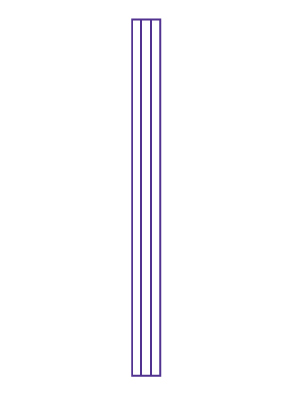
Straight liners consist of a simple cylindrical tube that provides a direct flow path with minimal pressure drop. Available in a range of internal diameters (typically 0.5–5 mm), they are well suited for applications requiring high split-ratio injections and efficient carrier gas flow. When packed with deactivated glass wool, straight liners promote sample mixing and vaporization while helping to retain septum fragments, particulates, and non-volatile sample residues, thereby reducing contamination of the analytical column.
When to use
- Headspace and gaseous sample analysis
- High split-ratio injections
- Fast GC methods
Application examples
- Headspace analysis of volatile organic compounds (VOCs)
- Purge-and-trap analysis
- Volatile compound screening
- GC method development and optimization
Design and performance
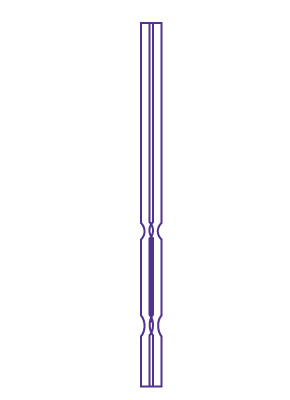
FocusLiner® inlet liners incorporate a plug of deactivated glass wool that is secured between internal glass shoulders, maintaining a consistent wool position during use. The fixed wool placement promotes reproducible sample vaporization, improves sample transfer from the syringe needle, and enhances injection-to-injection reproducibility. The design can also reduce discrimination against high-boiling and high-molecular-weight compounds by improving vaporization and analyte transfer.
When to use
- Routine quality control (QC) analyses with high sample throughput
- Pesticide residue analysis
- High-boiling and high-molecular-weight compounds
- Methods requiring improved injection reproducibility
Application examples
- Food safety testing
- Pesticide residue analysis
- High-throughput quality control
- Analysis of high-molecular-weight compounds
Design and performance
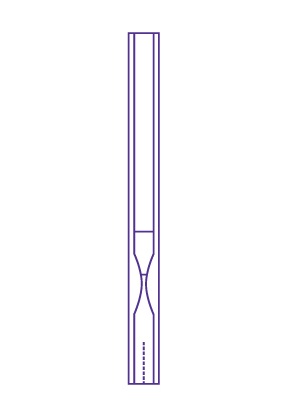
Gooseneck taper liners feature a tapered lower section and a curved mid-section that helps retain the expanding vapor cloud within the liner during injection. The tapered outlet focuses analytes toward the analytical column, improving sample transfer and reducing discrimination, particularly for higher-boiling compounds. When packed with deactivated glass wool, these liners also promote efficient vaporization and help retain non-volatile sample residues, reducing contamination of the analytical column.
When to use
- Complex sample matrices
- Semi-volatile organic compounds (SVOCs)
- Samples susceptible to vapor cloud expansion or flashback
- High-sensitivity GC and GC-MS analyses
Application examples
- EPA Method 8270
- Polycyclic aromatic hydrocarbon (PAH) analysis
- Pesticide residue analysis
- High-sensitivity GC-MS
Design and performance
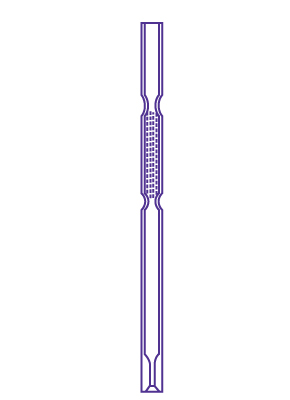
Taper FocusLiner® inlet liners combine the fixed glass wool positioning of the FocusLiner® with a tapered outlet that directs analytes toward the analytical column. The internal glass shoulders maintain the deactivated glass wool in a consistent position, promoting reproducible sample vaporization, while the tapered outlet improves analyte transfer and reduces discrimination, particularly for high-boiling compounds. This design is well suited for splitless injections and analyses involving compounds with a wide boiling point range or thermally labile analytes.
When to use
- Splitless injections
- Broad boiling point mixtures (e.g., C3–C40)
- Trace-level pharmaceutical analysis
- Complex or dirty sample matrices
Application examples
- Environmental semi-volatile organic compound (SVOC) analysis
- Pharmaceutical stability studies
- Analysis of compounds spanning a wide boiling point range
- Ultra-trace analysis
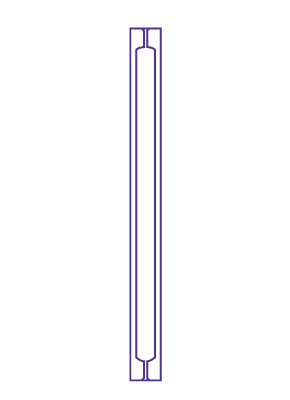
Design and performance
Double taper liners feature tapered openings at both the inlet and outlet, reducing the internal volume while directing analytes toward the analytical column. The reduced internal volume helps retain the expanding vapor cloud within the liner, minimizing the potential for flashback during injection. By reducing analyte residence time within the heated inlet, the design may also reduce adsorption and thermal degradation of reactive or thermally labile compounds, improving analyte recovery during splitless injections.
When to use
- Trace-level splitless analysis
- Low-boiling compounds
- Reactive or thermally labile analytes
- High-sensitivity GC and GC-MS methods
Application examples
- Ultra-trace environmental analysis
- Volatile organic compound (VOC) analysis
- Active pharmaceutical ingredient (API) analysis
- Mixed boiling point compound screening
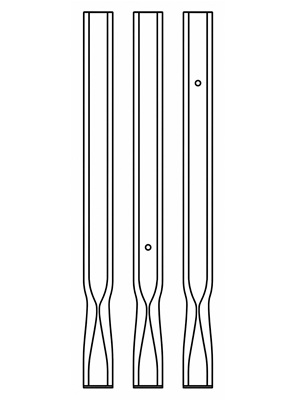
Design and performance
ConnecTite® inlet liners incorporate one or more precision-machined gas ports that provide an alternative carrier gas flow path in GC systems equipped with electronic pressure control (EPC). This design helps maintain carrier gas flow while accommodating the increased vapor volume associated with aqueous or high-volume injections.
ConnecTite® liners are available with gas ports positioned near either the top or the bottom of the liner. Liners with a bottom port are recommended when early-eluting compounds may be affected by solvent tailing. Liners with a top port are better suited for aqueous injections and applications in which the compounds of interest elute after the solvent peak.
When to use
- Direct aqueous injections
- High vapor-volume or aqueous samples
- Reactive compounds
- High-throughput GC analyses
Application examples
- Direct aqueous injection
- Analysis of early-eluting volatile compounds
- Trace-level analysis
- Analysis of active or adsorption-sensitive compounds
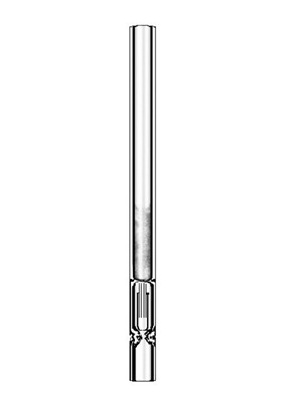
Design and performance
Cup (Jennings cup) inlet liners incorporate an enlarged internal cup with an approximate volume of 800 µL that provides an expanded vaporization chamber during sample introduction. The cup geometry promotes efficient mixing of the vaporized sample with carrier gas and can reduce analyte discrimination during split injections, particularly for high-boiling compounds. These liners are commonly used with deactivated glass wool to further improve sample vaporization and retain non-volatile sample residues.
When to use
- High-volume split injections
- Concentrated samples
- Methods requiring reduced analyte discrimination
- High-boiling compounds
Application examples
- Routine split injections
- Concentrated solvent extracts
- High-molecular-weight compound analysis
- Hydrocarbon and petrochemical analysis
- General-purpose quality control (QC) screening
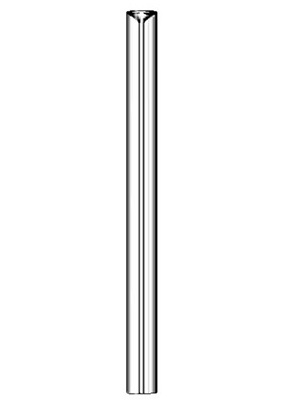
Design and performance
SPME liners are narrow-bore, straight inlet liners, typically with an internal diameter of 0.75 mm, designed specifically for thermal desorption of solid-phase microextraction (SPME) fibers. Because SPME introduces analytes without a solvent, the small internal volume minimizes analyte dispersion during desorption, reducing band broadening and improving chromatographic efficiency, particularly for highly volatile compounds. SPME liners are typically unpacked to prevent contact between the fiber and glass wool during insertion and desorption.
When to use
- Solid-phase microextraction (SPME) fiber desorption
- Solvent-free sample introduction
- Analysis of highly volatile compounds
- Trace-level analyses
Application examples
- Flavor and fragrance profiling
- Environmental volatile organic compound (VOC) monitoring
- Food and beverage headspace analysis
- Forensic trace analysis
Learn more about Solid Phase Microextraction.
Tips and tricks for inlet liner selection
Q. How do I choose the right liner I.D.?
A. Start by considering the solvent expansion volume during injection. The liner should have enough internal volume to contain the expanding vapor cloud. If the vapor cloud expands beyond the liner, solvent flashback can occur, resulting in sample loss, reduced reproducibility, and analyte discrimination. Comparing the liner volume with the expected solvent expansion volume is a practical way to select an appropriate liner. Table 8 summarizes the internal volumes of commonly used splitless inlet liners.
Q. How do I calculate the solvent expansion volume?
A. The solvent expansion volume depends on the solvent, inlet temperature, and inlet pressure. Table 9 lists the expansion volumes of commonly used GC solvents for a 1 µL injection at different inlet temperatures and head pressures. Compare these values with the liner volumes in the previous table to ensure the selected liner has sufficient internal volume to accommodate the expanding vapor cloud.
The liner I.D. is also important for SPME applications. Because SPME is a solvent-free sampling technique, solvent expansion is not a consideration. Instead, a smaller liner I.D. minimizes analyte dispersion during thermal desorption. This is particularly beneficial for highly volatile compounds that do not readily refocus at the head of the analytical column, resulting in narrower peaks, improved sensitivity, and better chromatographic efficiency.
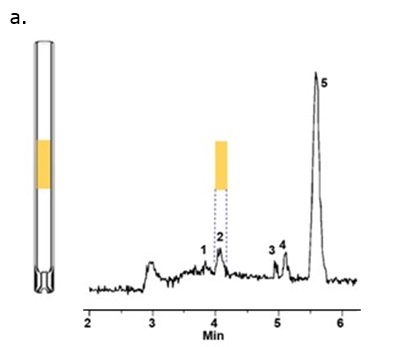
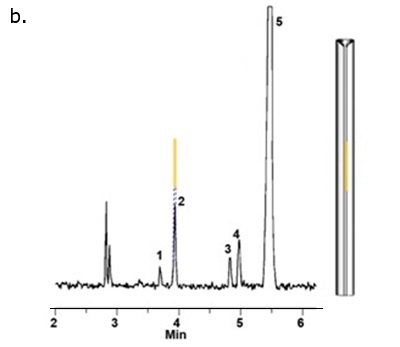
Figure 3. Comparison of chromatograms obtained using (a) a standard 2 mm I.D. splitless inlet liner and (b) a 0.75 mm I.D. SPME inlet liner for the analysis of volatile compounds (50 ppb). Peak identities: (1) chloromethane, (2) vinyl chloride, (3) bromomethane, (4) chloroethane, and (5) Freon 11.
GC column installation into the inlet liner
Proper positioning of the GC column within the inlet liner is essential for efficient analyte transfer and optimum chromatographic performance. Incorrect insertion depth can adversely affect peak shape and sensitivity. Figure 4 illustrates the recommended and incorrect column positions, while Table 10 summarizes their chromatographic effects.
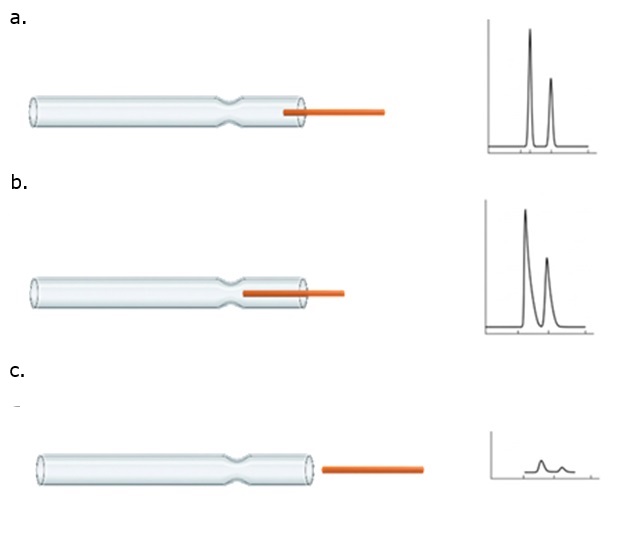
Figure 4.Effect of GC column insertion depth within the inlet liner on chromatographic performance: (a) correct insertion depth produces symmetrical peaks; (b) excessive insertion results in peak tailing; and (c) insufficient insertion reduces peak response.
Post-installation blank
After replacing an inlet liner, a blank injection should be performed to verify that no contamination was introduced during installation and to confirm a clean sample flow path. If elevated background signals or unexpected peaks are observed, the liner should be conditioned in the heated inlet, and the blank injection repeated. This process should be continued until the blank chromatogram is free of contamination before sample analysis is performed.