


802680 3-Chloropropionyl chloride
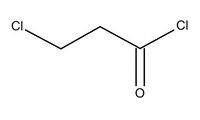

3-Chloropropionyl chloride for synthesis. CAS No. 625-36-5, EC Number 210-890-4.
More>> 3-Chloropropionyl chloride for synthesis. CAS No. 625-36-5, EC Number 210-890-4. Less<<3-Chloropropionyl chloride MSDS (material safety data sheet) or SDS, CoA and CoQ, dossiers, brochures and other available documents.
Synonyms: 3-Chloropropionic acid chloride
Overview
| Replacement Information |
|---|
Key Spec Table
| CAS # | EC Number | Hill Formula | Chemical Formula | Molar Mass |
|---|---|---|---|---|
| 625-36-5 | 210-890-4 | C₃H₄Cl₂O | ClCH₂CH₂COCl | 126.97 g/mol |
| Description | |
|---|---|
| Catalogue Number | 802680 |
| Synonyms | 3-Chloropropionic acid chloride |
| References |
|---|
| Product Information | |
|---|---|
| CAS number | 625-36-5 |
| EC number | 210-890-4 |
| Hill Formula | C₃H₄Cl₂O |
| Chemical formula | ClCH₂CH₂COCl |
| Molar Mass | 126.97 g/mol |
| Structure formula Image | |
| Quality Level | MQ200 |
| Applications | |
|---|---|
| Application | 3-Chloropropionyl chloride for synthesis. CAS No. 625-36-5, EC Number 210-890-4. |
| Biological Information |
|---|
| Physicochemical Information | |
|---|---|
| Density | 1.321 g/cm3 (20 °C) |
| Explosion limit | 8.8 - 20.2 %(V) |
| Flash point | 49 °C |
| Ignition temperature | 460 °C |
| Melting Point | -32 °C |
| pH value | <7 (H₂O) |
| Vapor pressure | 10 hPa (20 °C) |
| Dimensions |
|---|
| Materials Information |
|---|
| Toxicological Information | |
|---|---|
| LD 50 oral | LD50 Rat 1130 mg/kg |


| Safety Information | |
|---|---|
| Categories of danger | flammable, very toxic, corrosive |
| Product Usage Statements |
|---|
| Storage and Shipping Information | |
|---|---|
| Storage | Store at <= 20°C. |
| Packaging Information |
|---|
| Supplemental Information |
|---|
| Specifications | |
|---|---|
| Assay (GC, area%) | ≥ 96.0 % (a/a) |
| Density (d 20 °C/ 4 °C) | 1.318 - 1.323 |
| Identity (IR) | passes test |