Saltar al contenido
Merck

OP180

Anti-Noxa Mouse mAb (114C307)

liquid, clone 114C307, Calbiochem®

Sinónimos:

Anti-Noxa Antibody, Mouse Anti-Noxa, Noxa Detection Antibody

Iniciar sesión para ver los precios por organización y contrato.

Seleccione un Tamaño


Acerca de este artículo

NACRES:
NA.41
UNSPSC Code:
12352203
Clone:
114C307, monoclonal
Species reactivity:
human
Application:
Citations:
76
Servicio técnico
¿Necesita ayuda? Nuestro equipo de científicos experimentados está aquí para ayudarle.
Permítanos ayudarle
Servicio técnico
¿Necesita ayuda? Nuestro equipo de científicos experimentados está aquí para ayudarle.
Permítanos ayudarle

biological source

mouse

antibody form

purified antibody

antibody product type

primary antibodies

clone

114C307, monoclonal

form

liquid

contains

≤0.1% sodium azide as preservative

species reactivity

human

manufacturer/tradename

Calbiochem®

storage condition

OK to freeze, avoid repeated freeze/thaw cycles

dilution

(Immunoblotting (1-2 µg/mL, chemiluminescence))

isotype

IgG1

shipped in

wet ice

storage temp.

−20°C

target post-translational modification

unmodified

Quality Level

Gene Information

human ... PMAIP1(5366)

General description

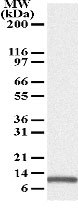
Purified mouse monoclonal antibody. Recognizes the ~11 kDa Noxa protein.
Recognizes the ~11 kDa Noxa protein in RL-7 cells.
This Anti-Noxa Mouse mAb (114C307) is validated for use in Immunoblotting for the detection of Noxa.

Immunogen

Human
a recombinant protein consisting of human Noxa fused to GST

Application


Immunoblotting (1-2 g/ml, chemiluminescence)

Packaging

Please refer to vial label for lot-specific concentration.

Physical form

In PBS, 0.05% BSA.

Preparation Note

Following initial thaw, aliquot and freeze (-20°C;)

Analysis Note

Negative Control
Normal mouse serum
Positive Control
RL-7 cell lysate

Other Notes

Antibody should be titrated for optimal results in individual system.
Oda, E., et al. 2000. Science288, 1053.

Legal Information

CALBIOCHEM is a registered trademark of Merck KGaA, Darmstadt, Germany

Disclaimer

Toxicity: Standard Handling (A)

¿No encuentra el producto adecuado?  

Pruebe nuestro Herramienta de selección de productos.

Clase de almacenamiento

11 - Combustible Solids

wgk

WGK 1

flash_point_f

Not applicable

flash_point_c

Not applicable


Certificados de análisis (COA)

Busque Certificados de análisis (COA) introduciendo el número de lote del producto. Los números de lote se encuentran en la etiqueta del producto después de las palabras «Lot» o «Batch»

¿Ya tiene este producto?

Encuentre la documentación para los productos que ha comprado recientemente en la Biblioteca de documentos.

Visite la Librería de documentos

Mateus Milani et al.
Cell death discovery, 5, 117-117 (2019-07-26)
Maintenance of mitochondrial integrity is critical for normal cellular homoeostasis. Most cells respond to stress stimuli and undergo apoptosis by perturbing mitochondrial structure and function to release proteins, such as cytochrome c, which are essential for the execution of the
Min Ji Seo et al.
Cell death & disease, 10(3), 187-187 (2019-02-24)
Gambogic acid (GA), a xanthonoid extracted from the resin of the tree, Garcinia hanburyi, was recently shown to exert anticancer activity in multiple studies, but the underlying action mechanism remains unclear. Here, we show that GA induces cancer cell death
Nabanita Mukherjee et al.
Cancers, 12(8) (2020-08-09)
There is an urgent need to develop treatments for patients with melanoma who are refractory to or ineligible for immune checkpoint blockade, including patients who lack BRAF-V600E/K mutations. This is often the case in patients diagnosed with rare melanoma subtypes
Santi Rello-Varona et al.
Scientific reports, 9(1), 3816-3816 (2019-03-09)
Soft-tissue sarcomas (STS) are an uncommon and heterogeneous group of malignancies that result in high mortality. Metastatic STS have very bad prognosis due to the lack of effective treatments. Dinaciclib is a model drug for the family of CDK inhibitors.
Tao Hu et al.
Molecular carcinogenesis, 58(1), 42-54 (2018-09-06)
Increasing evidence suggests that deubiquitinase USP7 participates in tumor progression by various mechanisms and serves as a potential therapeutic target. However, its expression and role in esophageal cancer remains elusive; the anti-cancer effect by targeting USP7 still needs to be

Nuestro equipo de científicos tiene experiencia en todas las áreas de investigación: Ciencias de la vida, Ciencia de los materiales, Síntesis química, Cromatografía, Analítica y muchas otras.

Póngase en contacto con el Servicio técnico