Wenn Sie das Fenster schließen, wird Ihre Konfiguration nicht gespeichert, es sei denn, Sie haben Ihren Artikel in die Bestellung aufgenommen oder zu Ihren Favoriten hinzugefügt.
Klicken Sie auf OK, um das MILLIPLEX® MAP-Tool zu schließen oder auf Abbrechen, um zu Ihrer Auswahl zurückzukehren.
Wählen Sie konfigurierbare Panels & Premixed-Kits - ODER - Kits für die zelluläre Signaltransduktion & MAPmates™
Konfigurieren Sie Ihre MILLIPLEX® MAP-Kits und lassen sich den Preis anzeigen.
Konfigurierbare Panels & Premixed-Kits
Unser breites Angebot enthält Multiplex-Panels, für die Sie die Analyten auswählen können, die am besten für Ihre Anwendung geeignet sind. Unter einem separaten Register können Sie das Premixed-Cytokin-Format oder ein Singleplex-Kit wählen.
Kits für die zelluläre Signaltransduktion & MAPmates™
Wählen Sie gebrauchsfertige Kits zur Erforschung gesamter Signalwege oder Prozesse. Oder konfigurieren Sie Ihre eigenen Kits mit Singleplex MAPmates™.
Die folgenden MAPmates™ sollten nicht zusammen analysiert werden: -MAPmates™, die einen unterschiedlichen Assaypuffer erfordern. -Phosphospezifische und MAPmate™ Gesamtkombinationen wie Gesamt-GSK3β und Gesamt-GSK3β (Ser 9). -PanTyr und locusspezifische MAPmates™, z.B. Phospho-EGF-Rezeptor und Phospho-STAT1 (Tyr701). -Mehr als 1 Phospho-MAPmate™ für ein einziges Target (Akt, STAT3). -GAPDH und β-Tubulin können nicht mit Kits oder MAPmates™, die panTyr enthalten, analysiert werden.
.
Bestellnummer
Bestellinformationen
St./Pkg.
Liste
Dieser Artikel wurde zu Ihren Favoriten hinzugefügt.
Wählen Sie bitte Spezies, Panelart, Kit oder Probenart
Um Ihr MILLIPLEX® MAP-Kit zu konfigurieren, wählen Sie zunächst eine Spezies, eine Panelart und/oder ein Kit.
Custom Premix Selecting "Custom Premix" option means that all of the beads you have chosen will be premixed in manufacturing before the kit is sent to you.
Catalogue Number
Ordering Description
Qty/Pack
List
Dieser Artikel wurde zu Ihren Favoriten hinzugefügt.
Spezies
Panelart
Gewähltes Kit
Menge
Bestellnummer
Bestellinformationen
St./Pkg.
Listenpreis
96-Well Plate
Menge
Bestellnummer
Bestellinformationen
St./Pkg.
Listenpreis
Weitere Reagenzien hinzufügen (MAPmates erfordern die Verwendung eines Puffer- und Detektionskits)
Menge
Bestellnummer
Bestellinformationen
St./Pkg.
Listenpreis
48-602MAG
Buffer Detection Kit for Magnetic Beads
1 Kit
Platzsparende Option Kunden, die mehrere Kits kaufen, können ihre Multiplex-Assaykomponenten in Kunststoffbeuteln anstelle von Packungen erhalten, um eine kompaktere Lagerung zu ermöglichen.
Dieser Artikel wurde zu Ihren Favoriten hinzugefügt.
Das Produkt wurde in Ihre Bestellung aufgenommen
Sie können nun ein weiteres Kit konfigurieren, ein Premixed-Kit wählen, zur Kasse gehen oder das Bestell-Tool schließen.
Anti-GOLM1, clone 6A2, Cat. No. MABC1117, is a mouse monoclonal antibody that detects Golgi membrane protein 1 and has been tested for use in ELISA, Immunohistochemistry (Paraffin), Immunoprecipitation, and Wrstern Blotting.
More>>Anti-GOLM1, clone 6A2, Cat. No. MABC1117, is a mouse monoclonal antibody that detects Golgi membrane protein 1 and has been tested for use in ELISA, Immunohistochemistry (Paraffin), Immunoprecipitation, and Wrstern Blotting. Less<<
Golgi membrane protein 1 (UniProt: Q8NBJ4; also known as Golgi membrane protein GP73, Golgi phosphoprotein 2) is encoded by the GOLM1 (also known as C9orf155, GOLPH2, PSEC0242, UNQ686/PRO1326) gene (Gene ID: 51280) in human. GP73 is a single-pass type II membrane protein that cycles via the cell surface and endosomes upon lumenal pH disruption. It is constitutively expressed in cells of epithelial lineage. It is highly expressed in colon, prostate, trachea, and stomach. In normal liver it is expressed at low level, but the expression is significantly increased in response to viral (HBV, HCV) infections, but not in diseases of non-viral origin. Its levels are also shown to be elevated in hepatocellular carcinoma (HCC) and in invasive breast cancer. GP73 is reported to promote HCC invasion by activation of matrix metalloproteinase-13 (MMP-13). Two isoforms of GP73 have been described that are produced by alternative initiation. (Ref.: Zhanga, A., and Caob, B. (2012). J. Biomed. Res. 26(6); 467-473; Donizy, P., et al. (2016). Int. J. Mol. Sci. 17(10); 1619.
References
Product Information
Format
Purified
Presentation
Purified mouse monoclonal antibody IgG1 in buffer containing 0.1 M Tris-Glycine (pH 7.4), 150 mM NaCl with 0.05% sodium azide.
Applications
Application
Anti-GOLM1, clone 6A2, Cat. No. MABC1117, is a mouse monoclonal antibody that detects Golgi membrane protein 1 and has been tested for use in ELISA, Immunohistochemistry (Paraffin), Immunoprecipitation, and Wrstern Blotting.
Key Applications
ELISA
Immunohistochemistry (Paraffin)
Immunoprecipitation
Western Blotting
Application Notes
Immunohistochemistry (Paraffin) Analysis: A 1:50 dilution from a representative lot detected GOLM1 in human liver cancer tissue sections.
Enzyme Immunoassay Analysis: A representative lot detected GOLM1 in ELISA applications (Zhang, A., et. al. (2012). J Biomed Res. 26(6):467-73).
Immunohistochemistry (Paraffin) Analysis: A representative lot detected GOLM1 in Immunohistochemistry applications (Zhang, A., et. al. (2012). J Biomed Res. 26(6):467-73).
Immunoprecipitation Analysis: A representative lot immunoprecipitated GOLM1 in Immunoprecipitation applications (Zhang, A., et. al. (2012). J Biomed Res. 26(6):467-73).
Western Blotting Analysis: A representative lot detected GOLM1 in Western Blotting applications (Zhang, A., et. al. (2012). J Biomed Res. 26(6):467-73).
Biological Information
Immunogen
His-tagged recombinant fragment corresponding to 360 amino acids from the lumenal region of human Golgi membrane protein 1.
Clone
6A2
Concentration
Please refer to lot specific datasheet.
Host
Mouse
Specificity
Clone 6A2 specifically detects human Golgi membrane protein 1. It targets an epitope with in the lumenal domain.
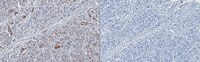
Evaluated by Immunohistochemistry (Paraffin) in human prostate cancer tissue sections.
Immunohistochemistry (Paraffin) Analysis: A 1:250 dilution of this antibody detected GOLM1 in human prostate cancer tissue sections.
Usage Statement
Unless otherwise stated in our catalog or other company documentation accompanying the product(s), our products are intended for research use only and are not to be used for any other purpose, which includes but is not limited to, unauthorized commercial uses, in vitro diagnostic uses, ex vivo or in vivo therapeutic uses or any type of consumption or application to humans or animals.
Generation and characterization of an anti-GP73 monoclonal antibody for immunoblotting and sandwich ELISA. Zhang, A; Cao, B J Biomed Res
26
467-73
2011
Recently, serum Golgi protein 73 (GP73) levels have been found to be elevated in patients with hepatocellular carcinoma (HCC), and GP73 has been proposed as a novel marker for HCC. However, GP73 levels in patients remain controversial due to the specificity of the anti-GP73 antibody-based enzyme linked immunosorbent assay (ELISA). Therefore, an anti-GP73 antibody with high specificity was highly demanded. In the present study, by hybridoma screening, we generated an anti-GP73 monoclonal antibody (mAb) designated as 6A2 using recombinant GP73 protein produced by prokaryotic expression. The specificity of 6A2 was evaluated by Western blotting, immunohistochemistry and immunoprecipitation. The results showed that 6A2 recognized GP73 in both native and denatured forms. In addition, we have developed a sandwich ELISA using 6A2 and GP73 polyclonal antibody generated in New Zealand white rabbits according to standard procedures, and measured the serum GP73 level of patients using this assay. Our results showed that serum GP73 levels of HCC patients were significantly higher than those of healthy controls (P = 0.0036). Furthermore, for the first time, GP73 serum level was found to be elevated in patients with breast cancer compared with healthy controls (P = 0.0172).