Wenn Sie das Fenster schließen, wird Ihre Konfiguration nicht gespeichert, es sei denn, Sie haben Ihren Artikel in die Bestellung aufgenommen oder zu Ihren Favoriten hinzugefügt.
Klicken Sie auf OK, um das MILLIPLEX® MAP-Tool zu schließen oder auf Abbrechen, um zu Ihrer Auswahl zurückzukehren.
Wählen Sie konfigurierbare Panels & Premixed-Kits - ODER - Kits für die zelluläre Signaltransduktion & MAPmates™
Konfigurieren Sie Ihre MILLIPLEX® MAP-Kits und lassen sich den Preis anzeigen.
Konfigurierbare Panels & Premixed-Kits
Unser breites Angebot enthält Multiplex-Panels, für die Sie die Analyten auswählen können, die am besten für Ihre Anwendung geeignet sind. Unter einem separaten Register können Sie das Premixed-Cytokin-Format oder ein Singleplex-Kit wählen.
Kits für die zelluläre Signaltransduktion & MAPmates™
Wählen Sie gebrauchsfertige Kits zur Erforschung gesamter Signalwege oder Prozesse. Oder konfigurieren Sie Ihre eigenen Kits mit Singleplex MAPmates™.
Die folgenden MAPmates™ sollten nicht zusammen analysiert werden: -MAPmates™, die einen unterschiedlichen Assaypuffer erfordern. -Phosphospezifische und MAPmate™ Gesamtkombinationen wie Gesamt-GSK3β und Gesamt-GSK3β (Ser 9). -PanTyr und locusspezifische MAPmates™, z.B. Phospho-EGF-Rezeptor und Phospho-STAT1 (Tyr701). -Mehr als 1 Phospho-MAPmate™ für ein einziges Target (Akt, STAT3). -GAPDH und β-Tubulin können nicht mit Kits oder MAPmates™, die panTyr enthalten, analysiert werden.
.
Bestellnummer
Bestellinformationen
St./Pkg.
Liste
Dieser Artikel wurde zu Ihren Favoriten hinzugefügt.
Wählen Sie bitte Spezies, Panelart, Kit oder Probenart
Um Ihr MILLIPLEX® MAP-Kit zu konfigurieren, wählen Sie zunächst eine Spezies, eine Panelart und/oder ein Kit.
Custom Premix Selecting "Custom Premix" option means that all of the beads you have chosen will be premixed in manufacturing before the kit is sent to you.
Catalogue Number
Ordering Description
Qty/Pack
List
Dieser Artikel wurde zu Ihren Favoriten hinzugefügt.
Spezies
Panelart
Gewähltes Kit
Menge
Bestellnummer
Bestellinformationen
St./Pkg.
Listenpreis
96-Well Plate
Menge
Bestellnummer
Bestellinformationen
St./Pkg.
Listenpreis
Weitere Reagenzien hinzufügen (MAPmates erfordern die Verwendung eines Puffer- und Detektionskits)
Menge
Bestellnummer
Bestellinformationen
St./Pkg.
Listenpreis
48-602MAG
Buffer Detection Kit for Magnetic Beads
1 Kit
Platzsparende Option Kunden, die mehrere Kits kaufen, können ihre Multiplex-Assaykomponenten in Kunststoffbeuteln anstelle von Packungen erhalten, um eine kompaktere Lagerung zu ermöglichen.
Dieser Artikel wurde zu Ihren Favoriten hinzugefügt.
Das Produkt wurde in Ihre Bestellung aufgenommen
Sie können nun ein weiteres Kit konfigurieren, ein Premixed-Kit wählen, zur Kasse gehen oder das Bestell-Tool schließen.
14-464
Sigma-AldrichFGFR3 Protein, active, 10 µg
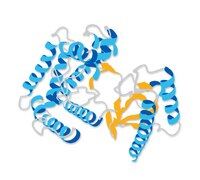
Active, recombinant human FGFR residues 447-761, containing an N-terminal His6-tag. For use in Kinase Assays.
More>>Active, recombinant human FGFR residues 447-761, containing an N-terminal His6-tag. For use in Kinase Assays. Less<<
FGFR3 Protein, active, 10 µg: SDB (Sicherheitsdatenblätter), Analysenzertifikate und Qualitätszertifikate, Dossiers, Broschüren und andere verfügbare Dokumente.
The protein encoded by this gene is a member of the fibroblast growth factor receptor family, where amino acid sequence is highly conserved between members and throughout evolution. FGFR family members differ from one another in their ligand affinities and tissue distribution. A full-length representative protein would consist of an extracellular region, composed of three immunoglobulin-like domains, a single hydrophobic membrane-spanning segment and a cytoplasmic tyrosine kinase domain. The extracellular portion of the protein interacts with fibroblast growth factors, setting in motion a cascade of downstream signals, ultimately influencing mitogenesis and differentiation. This particular family member binds acidic and basic fibroblast growth hormone and plays a role in bone development and maintenance. Mutations in this gene lead to craniosynostosis and multiple types of skeletal dysplasia. Alternative splicing occurs and additional variants have been described, including those utilizing alternate exon 8 rather than 9, but their full-length nature has not been determined.
FUNCTION: SwissProt: P22607 # Receptor for acidic and basic fibroblast growth factors. Preferentially binds FGF1. SIZE: 806 amino acids; 87710 Da SUBCELLULAR LOCATION: Membrane; Single-pass type I membrane protein. TISSUE SPECIFICITY: Expressed in brain, kidney and testis. Very low or no expression in spleen, heart, and muscle. In 20- to 22- week old fetuses it is expressed at high level in kidney, lung, small intestine and brain, and to a lower degree in spleen, liver, and muscle. Epithelial cells show exclusively isoform 2 transcripts while fibroblastic cells show a mixture of isoform 1 and isoform 2. DISEASE: SwissProt: P22607 # Defects in FGFR3 are the cause of achondroplasia (ACH) [MIM:100800]. ACH is an autosomal dominant disease and is the most frequent form of short-limb dwarfism. It is characterized by a long, narrow trunk, short extremities, particularly in the proximal (rhizomelic) segments, a large head with frontal bossing, hypoplasia of the midface and a trident configuration of the hands. & Defects in FGFR3 are a cause of Crouzon syndrome [MIM:123500]; also called craniofacial dysostosis type I (CFD1). Crouzon syndrome is characterized by craniosynostosis (premature fusion of the skull sutures), hypertelorism, exophthalmos and external strabismus, parrot-beaked nose, short upper lip, hypoplastic maxilla, and a relative mandibular prognathism. & Defects in FGFR3 are the cause of platyspondylic lethal skeletal dysplasia Sand Diego type (PLSD-SD) [MIM:270230]. Platyspondylic lethal skeletal dysplasias (PLSDs) are a heterogeneous group of chondrodysplasias characterized by severe platyspondyly and limb shortening. PLSD-SD is characterized by postnatal growth deficiency, mild developmental delay, short trunk, craniofacial abnormalities, platyspondyly, delayed ossification, generalized osteoporosis and thin ribs. & Defects in FGFR3 are a cause of thanatophoric dysplasia (TD) [MIM:187600, 187601]; also known as thanatophoric dwarfism. TD is the most common neonatal lethal skeletal dysplasia. Affected individuals display features similar to those seen in homozygous achondroplasia. It causes severe shortening of the limbs with macrocephaly, narrow thorax and short ribs. In the most common subtype, TD1, femur are curved, while in TD2, straight femurs are associated with cloverleaf skull. Mutations affecting different functional domains of FGFR3 cause different forms of this lethal disorder. & Defects in FGFR3 are a cause of hypochondroplasia (HCH) [MIM:146000]. HCH is an autosomal dominant disease and is characterized by disproportionate short stature. It resembles achondroplasia, but with a less severe phenotype. & Defects in FGFR3 are a cause of bladder cancer [MIM:109800]. Somatic mutations can constitutively activate FGFR3. & Defects in FGFR3 are a cause of cervical cancer [MIM:603956]. & Defects in FGFR3 are the cause of camptodactyly tall stature and hearing loss syndrome (CATSHL syndrome) [MIM:610474]. CATSHL syndrome is an autosomal dominant syndrome characterized by permanent and irreducible flexion of one or more fingers of the hand and/or feet, tall stature, scoliosis and/or a pectus excavatum, and hearing loss. Affected individuals have developmental delay and/or mental retardation, and several of these have microcephaly. Radiographic findings included tall vertebral bodies with irregular borders and broad femoral metaphyses with long tubular shafts. On audiological exam, each tested member have bilateral sensorineural hearing loss and absent otoacoustic emissions. The hearing loss was congenital or developed in early infancy, progressed variably in early childhood, and range from mild to severe. Computed tomography and magnetic resonance imaging reveal that the brain, middle ear, and inner ear are structurally normal. & A chromosomal aberration involving FGFR3 may be a cause of multiple myeloma (MM) [MIM:254500]. Translocation t(4;14)(p16.3;q32.3) with the IgH locus. & Defects in FGFR3 are a cause of lacrimo-auriculo-dento- digital syndrome (LADD syndrome) [MIM:149730]; also known as Levy- Hollister syndrome. LADD syndrome is a form of ectodermal dysplasia. Ectodermal dysplasias (EDs) constitute a heterogeneous group of developmental disorders affecting tissues of ectodermal origin. EDs are characterized by abnormal development of two or more ectodermal structures such as hair, teeth, nails and sweat glands, with or without any additional clinical sign. Each combination of clinical features represents a different type of ectodermal dysplasia. LADD syndrome is an autosomal dominant multiple congenital anomaly. It is characterized by aplastic/hypoplastic lacrimal and salivary glands and ducts, cup- shaped ears, hearing loss, hypodontia and enamel hypoplasia, and distal limb segments anomalies. In addition to these cardinal features, facial dysmorphism, malformations of the kidney and respiratory system and abnormal genitalia have been reported. Craniosynostosis and severe syndactyly are not observed. & Defects in FGFR3 are a cause of keratinocytic non- epidermolytic nevus [MIM:162900]; also called pigmented moles. Epidermal nevi of the common, non-organoid and non-epidermolytic type are benign skin lesions and may vary in their extent from a single (usually linear) lesion to widespread and systematized involvement. They may be present at birth or develop early during childhood. & Defects in FGFR3 are a cause of Muenke syndrome [MIM:602849]; also known as Muenke non-syndromic coronal craniosynostosis. In addition to coronal craniosynostosis some affected individuals show skeletal abnormalities of hands and feet, sensorineural hearing loss, mental retardation and respiratory insufficiency. SIMILARITY: SwissProt: P22607 ## Belongs to the protein kinase superfamily. Tyr protein kinase family. Fibroblast growth factor receptor subfamily. & Contains 3 Ig-like C2-type (immunoglobulin-like) domains. & Contains 1 protein kinase domain.
Molecular Weight
36.8kDa
Physicochemical Information
Dimensions
Materials Information
Toxicological Information
Safety Information according to GHS
Safety Information
Product Usage Statements
Quality Assurance
routinely evaluated by phosphorylation of Poly (Glu4-Tyr) (4:1) substrate
Usage Statement
Unless otherwise stated in our catalog or other company documentation accompanying the product(s), our products are intended for research use only and are not to be used for any other purpose, which includes but is not limited to, unauthorized commercial uses, in vitro diagnostic uses, ex vivo or in vivo therapeutic uses or any type of consumption or application to humans or animals.
Storage and Shipping Information
Storage Conditions
1 year at -70 °C
Packaging Information
Material Size
10 µg
Material Package
Also available in 250μg size (2x125μg)--call for pricing and availability and reference catalog number 14-464M when ordering the 250μg size.
Millipore offers a large portfolio of Kinases, Phophatases, Substrates, Inhibitors, Kits, reagents & tools for Signaling research. See below for a list of these products, in multiple pack sizes. Weitere Informationen >>