Wenn Sie das Fenster schließen, wird Ihre Konfiguration nicht gespeichert, es sei denn, Sie haben Ihren Artikel in die Bestellung aufgenommen oder zu Ihren Favoriten hinzugefügt.
Klicken Sie auf OK, um das MILLIPLEX® MAP-Tool zu schließen oder auf Abbrechen, um zu Ihrer Auswahl zurückzukehren.
Wählen Sie konfigurierbare Panels & Premixed-Kits - ODER - Kits für die zelluläre Signaltransduktion & MAPmates™
Konfigurieren Sie Ihre MILLIPLEX® MAP-Kits und lassen sich den Preis anzeigen.
Konfigurierbare Panels & Premixed-Kits
Unser breites Angebot enthält Multiplex-Panels, für die Sie die Analyten auswählen können, die am besten für Ihre Anwendung geeignet sind. Unter einem separaten Register können Sie das Premixed-Cytokin-Format oder ein Singleplex-Kit wählen.
Kits für die zelluläre Signaltransduktion & MAPmates™
Wählen Sie gebrauchsfertige Kits zur Erforschung gesamter Signalwege oder Prozesse. Oder konfigurieren Sie Ihre eigenen Kits mit Singleplex MAPmates™.
Die folgenden MAPmates™ sollten nicht zusammen analysiert werden: -MAPmates™, die einen unterschiedlichen Assaypuffer erfordern. -Phosphospezifische und MAPmate™ Gesamtkombinationen wie Gesamt-GSK3β und Gesamt-GSK3β (Ser 9). -PanTyr und locusspezifische MAPmates™, z.B. Phospho-EGF-Rezeptor und Phospho-STAT1 (Tyr701). -Mehr als 1 Phospho-MAPmate™ für ein einziges Target (Akt, STAT3). -GAPDH und β-Tubulin können nicht mit Kits oder MAPmates™, die panTyr enthalten, analysiert werden.
.
Bestellnummer
Bestellinformationen
St./Pkg.
Liste
Dieser Artikel wurde zu Ihren Favoriten hinzugefügt.
Wählen Sie bitte Spezies, Panelart, Kit oder Probenart
Um Ihr MILLIPLEX® MAP-Kit zu konfigurieren, wählen Sie zunächst eine Spezies, eine Panelart und/oder ein Kit.
Custom Premix Selecting "Custom Premix" option means that all of the beads you have chosen will be premixed in manufacturing before the kit is sent to you.
Catalogue Number
Ordering Description
Qty/Pack
List
Dieser Artikel wurde zu Ihren Favoriten hinzugefügt.
Spezies
Panelart
Gewähltes Kit
Menge
Bestellnummer
Bestellinformationen
St./Pkg.
Listenpreis
96-Well Plate
Menge
Bestellnummer
Bestellinformationen
St./Pkg.
Listenpreis
Weitere Reagenzien hinzufügen (MAPmates erfordern die Verwendung eines Puffer- und Detektionskits)
Menge
Bestellnummer
Bestellinformationen
St./Pkg.
Listenpreis
48-602MAG
Buffer Detection Kit for Magnetic Beads
1 Kit
Platzsparende Option Kunden, die mehrere Kits kaufen, können ihre Multiplex-Assaykomponenten in Kunststoffbeuteln anstelle von Packungen erhalten, um eine kompaktere Lagerung zu ermöglichen.
Dieser Artikel wurde zu Ihren Favoriten hinzugefügt.
Das Produkt wurde in Ihre Bestellung aufgenommen
Sie können nun ein weiteres Kit konfigurieren, ein Premixed-Kit wählen, zur Kasse gehen oder das Bestell-Tool schließen.
14-571M
Sigma-AldrichTrkA Protein, active, 250 µg
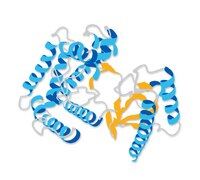
Active, N-terminal His6-tagged recombinant human TrkA, residues 440-end, for use in Kinase Assays.
More>>Active, N-terminal His6-tagged recombinant human TrkA, residues 440-end, for use in Kinase Assays. Less<<
TrkA Protein, active, 250 µg: SDB (Sicherheitsdatenblätter), Analysenzertifikate und Qualitätszertifikate, Dossiers, Broschüren und andere verfügbare Dokumente.
This gene encodes a member of the neurotrophic tyrosine kinase receptor (NTKR) family. This kinase is a membrane-bound receptor that, upon neurotrophin binding, phosphorylates itself and members of the MAPK pathway. The presence of this kinase leads to cell differentiation and may play a role in specifying sensory neuron subtypes. Mutations in this gene have been associated with congenital insensitivity to pain, anhidrosis, self-mutilating behavior, mental retardation and cancer. Alternate transcriptional splice variants of this gene have been found, but only three have been characterized to date.
FUNCTION: SwissProt: P04629 # Required for high-affinity binding to nerve growth factor (NGF), neurotrophin-3 and neurotrophin-4/5 but not brain- derived neurotrophic factor (BDNF). Known substrates for the Trk receptors are SHC1, PI 3-kinase, and PLC-gamma-1. Has a crucial role in the development and function of the nociceptive reception system as well as establishment of thermal regulation via sweating. Activates ERK1 by either SHC1- or PLC-gamma-1-dependent signaling pathway. SIZE: 796 amino acids; 87497 Da SUBUNIT: Exists in a dynamic equilibrium between monomeric (low affinity) and dimeric (high affinity) structures. Binds SH2B2. Interacts with SQSTM1 which bridges NTRK1 to NGFR (By similarity). SUBCELLULAR LOCATION: Cell membrane; Single-pass type I membrane protein (By similarity). Note=Endocytosed to the endosomes upon treatment of cells with NGF (By similarity). TISSUE SPECIFICITY: Isoform TrkA-II is primarily expressed in neuronal cells; isoform TrkA-I is found in non-neuronal tissues. PTM: Ligand-mediated auto-phosphorylation. Interaction with SQSTM1 is phosphotyrosine-dependent. DISEASE: SwissProt: P04629 # Defects in NTRK1 are a cause of congenital insensitivity to pain with anhidrosis (CIPA) [MIM:256800]. CIPA is characterized by a congenital insensitivity to pain, anhidrosis (absence of sweating), absence of reaction to noxious stimuli, self-mutilating behavior, and mental retardation. This rare autosomal recessive disorder is also known as congenital sensory neuropathy with anhidrosis or hereditary sensory and autonomic neuropathy type IV or familial dysautonomia type II. & Chromosomal aberrations involving NTRK1 are a cause of thyroid papillary carcinoma (PACT) [MIM:188550]. Translocation t(1;3)(q21;q11) with TFG generates the TRKT3 (TRK-T3) transcript by fusing TFG to the 3'-end of NTRK1; a rearrangement with TPM3 generates the TRK transcript by fusing TPM3 to the 3'-end of NTRK1. & Chromosomal aberrations involving NTRK1 are a cause of thyroid papillary carcinoma (PACT) [MIM:188550]. Intrachromosomal rearrangement that links the protein kinase domain of NTRK1 to the 5'-end of the TPR gene forms the fusion protein TRK-T1. TRK-T1 is a 55 kDa protein reacting with antibodies against the C-terminus of the NTRK1 protein. SIMILARITY: SwissProt: P04629 ## Belongs to the protein kinase superfamily. Tyr protein kinase family. Insulin receptor subfamily. & Contains 2 Ig-like C2-type (immunoglobulin-like) domains. & Contains 3 LRR (leucine-rich) repeats. & Contains 1 protein kinase domain.
Molecular Weight
41kDa
Physicochemical Information
Dimensions
Materials Information
Toxicological Information
Safety Information according to GHS
Safety Information
Product Usage Statements
Quality Assurance
routinely evaluated by phosphorylation of KKKSPGEYVNIEFG substrate
Usage Statement
Unless otherwise stated in our catalog or other company documentation accompanying the product(s), our products are intended for research use only and are not to be used for any other purpose, which includes but is not limited to, unauthorized commercial uses, in vitro diagnostic uses, ex vivo or in vivo therapeutic uses or any type of consumption or application to humans or animals.
Storage and Shipping Information
Storage Conditions
6 months at -70°C
Packaging Information
Material Size
250 µg
Material Package
Also available in 10 μg size (cat#14-571) and in bulk (cat# 14-571-K).
Millipore offers a large portfolio of Kinases, Phophatases, Substrates, Inhibitors, Kits, reagents & tools for Signaling research. See below for a list of these products, in multiple pack sizes. Weitere Informationen >>