Millipore Sigma Vibrant Logo

MABN2677-100UG Anti-phospho-Tau (Ser422) Antibody, clone AP422
MABN2677-100UG
100 μg  
Retrieving price...
Price could not be retrieved
Minimum Quantity is a multiple of
Maximum Quantity is
Upon Order Completion More Information
You Saved ()
 
Request Pricing
Limited Availability
In Stock 
Discontinued
Limited Quantities Available
Availability to be confirmed
    Remaining : Will advise
      Remaining : Will advise
      Will advise
      Contact Customer Service
      Contact Customer Service


      Contact Customer Service

      Overview

      Replacement Information
      Description
      Catalogue NumberMABN2677-100UG
      DescriptionAnti-phospho-Tau (Ser422) Antibody, clone AP422
      Alternate Names
      • Microtubule-associated protein tau
      • Neurofibrillary tangle protein
      • Paired helical filament-tau (PHF-tau)
      Background InformationMicrotubule-associated protein tau (UniProt: P10636; also known as Neurofibrillary tangle protein, paired helical filament-tau, PHF-tau) is encoded by the MAPT (also known as MAPTL, MTBT1, TAU) gene (Gene ID: 4137) in human. Tau, a heat-stable microtubule-associated protein, is expressed mainly in the brain, where it regulates the stability and orientation of microtubules in neurons, astrocytes, and oligodendrocytes. Tau protein is reported to be the major component of the paired helical filaments (PHFs) and neurofibrillary tangles (NFTs) that are characteristic of pathological brain lesions in Alzheimer s disease. Tau is a substrate for a multitude of protein kinases, and is phosphorylated at many different sites in Alzheimer s disease brain. It is believed that the phosphorylation of specific sites, rather than the overall extent of phosphorylation, is important in modulating the ability of Tau to bind microtubules and promote microtubule assembly. The de-phosphorylation of Tau protein promotes rapid and extensive microtubule polymerization, while the phosphorylation of Tau decreases its ability to promote microtubule assembly. Six isoforms of Tau have been described that are generated by alternative splicing in the central nervous system. This monoclonal AP422 Ab is specific for phosphoserine 422 (P10636-8, Tau-F; Tau-4, 2N4R) and strongly labels paired helical filament (PHF) tau from Alzheimer's disease brain in a phosphorylation-dependent manner. AP422 only labels a small fraction of fetal tau and a very small fraction of tau from adult brain. The amount of tau phosphorylated at Ser-422 in normal brain is minor relative to that phosphorylated at sites recognized by other phosphorylation-dependent anti-tau antibodies of known epitope. Studies shows that AP422 is the most specific anti-tau antibody available for detecting the neurofibrillary lesions of Alzheimer's disease and that, Ser-422 in tau is a good in vitro substrate for mitogen-activated protein kinase, but not for glycogen synthase kinase-3 or neuronal cdc2-like kinase. (Ref.: Hasegawa, M., et al. (1996). FEBS Lett. 384(1):25-30; Mukadam, A.S., et al. (2023). Science. 379(6639):1336-1341).
      References
      Product Information
      FormatPurified
      PresentationPurified mouse monoclonal antibody IgG1 in buffer containing 0.1 M Tris-Glycine (pH 7.4), 150 mM NaCl with 0.05% sodium azide.
      Quality LevelMQ200
      Applications
      ApplicationAnti-phospho-Tau (Ser422), clone AP422, Cat. No. MABN2677, is a mouse monoclonal antibody that detects Tau and is tested for use in Western Blotting, ELISA, Dot Blot, Immunohistochemistry, Electron Microscopy and Immunofluorescence.
      Key Applications
      • Western Blotting
      • Dot Blot
      • Electron Microscopy
      • Immunofluorescence
      • Immunohistochemistry
      • ELISA
      Application NotesTested Applications

      Immunofluorescence Analysis: A representative lot detected Tau in Immunofluorescence application (Mukadam, A.S., et al. (2023). Science. 379(6639): 1336-1341).

      Electron Microscopy: A representative lot detected Tau in Electron Microscopy application (Hasegawa, M., et al. (1996). FEBS Lett. 384(1): 25-30).

      Western Blotting Analysis: A representative lot detected Tau in Western Blotting application (Hasegawa, M., et al. (1996). FEBS Lett. 384(1): 25-30; Mukadam, A.S., et al. (2023). Science. 379(6639): 1336-1341).

      Immunohistochemistry Applications: A representative lot detected phospho-Tau (Ser422) in Immunohistochemistry applications (Hasegawa, M., et al. (1996). FEBS Lett. 384(1): 25-30).

      Dot Blot: A representative lot detected phospho-Tau (Ser422) in Dot Blot applications (Mukadam, A.S., et al. (2023). Science. 379(6639): 1336-1341).

      ELISA Analysis: A representative lot detected phospho-Tau (Ser422) in ElISA application (Mukadam, A.S., et al. (2023). Science. 379(6639): 1336-1341).

      Note: Actual optimal working dilutions must be determined by end user as specimens, and experimental conditions may vary with the end user.
      Biological Information
      ImmunogenA linear peptide corresponding to 15 amino acids surrounding phosphoserine 422 from the C-terminal half of human Tau.
      EpitopeC-terminal half
      CloneAP422
      Concentration1.0 mg/mL. Please refer to guidance on suggested starting dilutions and/or titers per application and sample type.
      HostMouse
      SpecificityClone AP422 is a mouse monoclonal antibody that specifically detects Tau phosphorylated on serine 422.
      IsotypeIgG1κ
      Species Reactivity
      • Human
      • Rat
      Species Reactivity NoteHuman, Rat
      Antibody TypeMonoclonal Antibody
      Entrez Gene Number
      Gene Symbol
      • MAPT
      Modifications
      • Phosphorylation
      Purification MethodProtein G purified
      UniProt Number
      Molecular WeightTarget molecular weight ~55 kDa observed; 45.85 kDa calculated. Uncharacterized bands may be observed in some lysate(s).
      Physicochemical Information
      Dimensions
      Materials Information
      Toxicological Information
      Safety Information according to GHS
      Safety Information
      Product Usage Statements
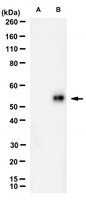
      Quality AssuranceEvaluated by Western Blotting in tau extracted from fetal rat brain tissue.

      Western Blotting Analysis (WB): A 1:1000 dilution of this antibody detected tau extracted from fetal rat brain tissue but not in PPase treated tau extracted from fetal rat brain tissue.
      Usage Statement
      • Unless otherwise stated in our catalog or other company documentation accompanying the product(s), our products are intended for research use only and are not to be used for any other purpose, which includes but is not limited to, unauthorized commercial uses, in vitro diagnostic uses, ex vivo or in vivo therapeutic uses or any type of consumption or application to humans or animals.
      Storage and Shipping Information
      Storage ConditionsRecommended storage: +2°C to +8°C.
      Packaging Information
      Material Size100 μg
      Transport Information
      Supplemental Information
      Specifications
      Global Trade Item Number
      Catalogue Number GTIN
      MABN2677-100UG 04065272163576