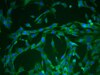
Our broad portfolio consists of multiplex panels that allow you to choose, within the panel, analytes that best meet your needs. On a separate tab you can choose the premixed cytokine format or a single plex kit.
Cell Signaling Kits & MAPmates™
Choose fixed kits that allow you to explore entire pathways or processes. Or design your own kits by choosing single plex MAPmates™, following the provided guidelines.
The following MAPmates™ should not be plexed together:
-MAPmates™ that require a different assay buffer
-Phospho-specific and total MAPmate™ pairs, e.g. total GSK3β and GSK3β (Ser 9)
-PanTyr and site-specific MAPmates™, e.g. Phospho-EGF Receptor and phospho-STAT1 (Tyr701)
-More than 1 phospho-MAPmate™ for a single target (Akt, STAT3)
-GAPDH and β-Tubulin cannot be plexed with kits or MAPmates™ containing panTyr
.
Catalogue Number
Ordering Description
Qty/Pack
List
This item has been added to favorites.
Select A Species, Panel Type, Kit or Sample Type
To begin designing your MILLIPLEX® MAP kit select a species, a panel type or kit of interest.
Custom Premix Selecting "Custom Premix" option means that all of the beads you have chosen will be premixed in manufacturing before the kit is sent to you.
Catalogue Number
Ordering Description
Qty/Pack
List
This item has been added to favorites.
Species
Panel Type
Selected Kit
Qty
Catalogue Number
Ordering Description
Qty/Pack
List Price
96-Well Plate
Qty
Catalogue Number
Ordering Description
Qty/Pack
List Price
Add Additional Reagents (Buffer and Detection Kit is required for use with MAPmates)
Qty
Catalogue Number
Ordering Description
Qty/Pack
List Price
48-602MAG
Buffer Detection Kit for Magnetic Beads
1 Kit
Space Saver Option Customers purchasing multiple kits may choose to save storage space by eliminating the kit packaging and receiving their multiplex assay components in plastic bags for more compact storage.
This item has been added to favorites.
The Product Has Been Added To Your Cart
You can now customize another kit, choose a premixed kit, check out or close the ordering tool.
The YUMM cell models recapitulate genetic drivers found in a significant proportion of human melanomas. YUMM1.3 cells retain genetic markers of the Braf/Pten mouse models, characterized by activation of Braf and inactivation of Pten and Cdkn2a, in which melanoma tumors develop with short latency.More >>
The YUMM cell models recapitulate genetic drivers found in a significant proportion of human melanomas. YUMM1.3 cells retain genetic markers of the Braf/Pten mouse models, characterized by activation of Braf and inactivation of Pten and Cdkn2a, in which melanoma tumors develop with short latency. Less <<
The YUMM cell lines recapitulate genetic drivers found in many human melanomas. YUMM5.4 retains WT Pten, permitting comparative analysis for parsing distinct contributions of PI3K-Akt signaling in melanoma tumorigenesis and immune evasion. More >>
The YUMM cell lines recapitulate genetic drivers found in many human melanomas. YUMM5.4 retains WT Pten, permitting comparative analysis for parsing distinct contributions of PI3K-Akt signaling in melanoma tumorigenesis and immune evasion. Less <<
The YUMM cell lines recapitulate genetic drivers found in many human melanomas. YUMM2 harbors the Braf V600E mutation and is homozygous negative for wt Pten and is Cdkn2+.More >>
The YUMM cell lines recapitulate genetic drivers found in many human melanomas. YUMM2 harbors the Braf V600E mutation and is homozygous negative for wt Pten and is Cdkn2+. Less <<
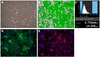
The YUMM1.4 cell line is driven by Braf activation, Pten inactivation, and Cdkn2a inactivation. The cell line is positive for the common melanoma marker, MelanA. The cells are syngeneic with C57BL/6J mice and are very tumorigenic in vivo. More >>
The YUMM1.4 cell line is driven by Braf activation, Pten inactivation, and Cdkn2a inactivation. The cell line is positive for the common melanoma marker, MelanA. The cells are syngeneic with C57BL/6J mice and are very tumorigenic in vivo. Less <<
The YUMM cell lines recapitulate genetic drivers found in many human melanomas. YUMM2.2 harbors a mutation that accelerates Braf/Pten-driven melanoma tumorigenesis and inactivates wt Pten and Cdkn2a.More >>
The YUMM cell lines recapitulate genetic drivers found in many human melanomas. YUMM2.2 harbors a mutation that accelerates Braf/Pten-driven melanoma tumorigenesis and inactivates wt Pten and Cdkn2a. Less <<
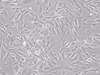
The YUMM cell lines recapitulate genetic drivers found in many human melanomas. YUMM5.2 cells are syngenic with C57BL/6 and retain markers of the Braf/Pten mouse model. More >>
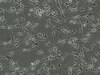
The YUMM cell lines recapitulate genetic drivers found in many human melanomas. YUMM5.2 cells are syngenic with C57BL/6 and retain markers of the Braf/Pten mouse model. Less <<
The YUMM cell lines recapitulate genetic drivers found in many human melanomas. YUMM1.1 is driven by Braf activation, Pten/Cdkn2a inactivation, and is highly tumorigenic in vivo. More >>
The YUMM cell lines recapitulate genetic drivers found in many human melanomas. YUMM1.1 is driven by Braf activation, Pten/Cdkn2a inactivation, and is highly tumorigenic in vivo. Less <<
The YUMM cell lines recapitulate genetic drivers found in many human melanomas. YUMM4.1 is homozygous negative for Pten and Cdkn2+, and has no activating Braf mutations.More >>
The YUMM cell lines recapitulate genetic drivers found in many human melanomas. YUMM4.1 is homozygous negative for Pten and Cdkn2+, and has no activating Braf mutations. Less <<
The YUMM cell lines recapitulate genetic drivers common in human melanomas. YUMM3.2 retains WT Pten, permitting comparative analysis for parsing distinct contributions of PI3K-Akt signaling in melanoma tumorigenesis and immune evasion.More >>
The YUMM cell lines recapitulate genetic drivers common in human melanomas. YUMM3.2 retains WT Pten, permitting comparative analysis for parsing distinct contributions of PI3K-Akt signaling in melanoma tumorigenesis and immune evasion. Less <<
The YUMM cell lines recapitulate genetic drivers found in many human melanomas. YUMM3.3 harbors the Braf V600E mutation and is homozygous negative for Cdkn2+.More >>
The YUMM cell lines recapitulate genetic drivers found in many human melanomas. YUMM3.3 harbors the Braf V600E mutation and is homozygous negative for Cdkn2+. Less <<