
PC130

Anti-Rad51 (Ab-1) Rabbit pAb
liquid, Calbiochem®
別名:
Anti-Rad51, Rabbit Anti-Rad51, Rad51 Detection Antibody
ログインで組織・契約価格をご覧ください。
サイズを選択してください
この商品について
NACRES:
NA.41
UNSPSC Code:
12352203
Clone:
polyclonal
Species reactivity:
mouse, rat, human
Application:
—
Citations:
213
biological source
rabbit
antibody form
affinity isolated antibody
antibody product type
primary antibodies
clone
polyclonal
form
liquid
contains
≤0.1% sodium azide as preservative
species reactivity
mouse, rat, human
manufacturer/tradename
Calbiochem®
storage condition
OK to freeze
dilution
(Immunoblotting (1:2500)
Immunoprecipitation (40 µL/500µg total protein from lysate)
Immunocytochemistry (1:500))
isotype
IgG
shipped in
wet ice
storage temp.
2-8°C
target post-translational modification
unmodified
Quality Level
Gene Information
human ... RAD51(5888)
General description
Affinity purified rabbit polyclonal antibody. Recognizes the ~43 kDa Rad51 protein.
Recognizes the ~43 kDa Rad51 protein in ovarian tissue.
The bacterial RecA and the yeast RAD51 proteins are involved in homologous recombination and DNA repair. The human RAD51 protein is the homologue of these two proteins. While the modular structure of these proteins is conserved and the homology is very strong with the bacterial protein there are functional differences seen with RAD51 including an ATP hydrolysis rate 1/10 that seen with RecA. Although RAD51 is a nuclear protein and is largely absent from the cytoplasm and nucleoli, the protein lacks a nuclear localization signal and requires other proteins in a complex to be translocated into the nucleus. Treatment of cells with DNA synthesis inducing agents will cause an increase in the levels of RAD51 protein which then undergo a shift in distribution becoming focal in nature. This focal distribution may be blocked by inhibitors of transcription. RAD51 can be shown to interact directly with the chromosomes and during the process of meiosis, its distribution of RAD51 undergoes dynamic change. RAD51 has been shown to interact with a wide variety of different proteins that include the wild-type form of p53, BRCA2, and RAD52, which specifically modulates its activity.
This Anti-Rad51 (Ab-1) Rabbit pAb is validated for use in Immunoblotting, Immunoprecipitation, Immunocytochemistry for the detection of Rad51 (Ab-1).
Immunogen
Human
recombinant, human Rad51
Application
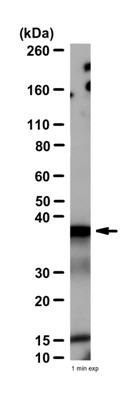
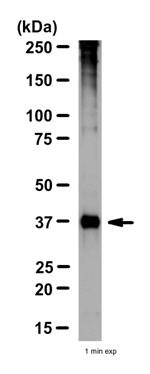
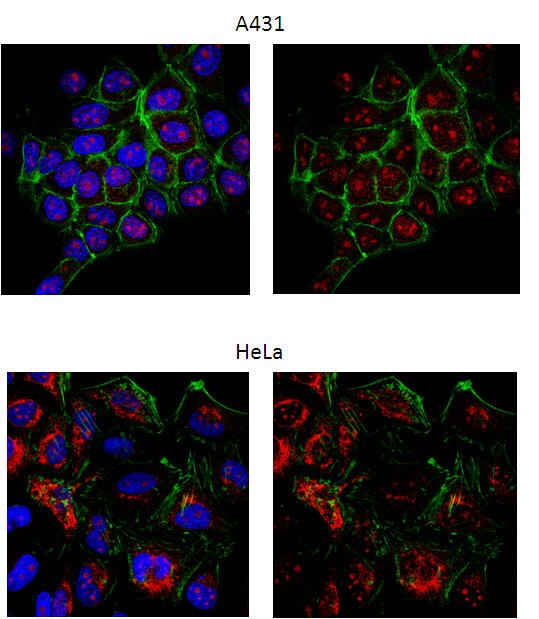
Immunoblotting (1:2500)
Immunoprecipitation (40 l/500g total protein from lysate)
Immunocytochemistry (1:500)
Physical form
In 150 mM NaCl, 100 mM Tris-Glycine, pH 7.4
Preparation Note
Following initial thaw, aliquot and freeze (-20°C).
Analysis Note
Positive Control
A431 cells, HeLa cells
A431 cells, HeLa cells
Other Notes
Brendel, V., et al. 1997. J. Mol. Evol.44, 528.
Boulikas, T., et al. 1997. Anticancer Res.17, 843.
Gupta, R.C., et al. 1997. Proc. Natl. Acad. Sci. USA94, 463.
Mizuta, R., et al. 1997. Proc. Natl. Acad. Sci. USA 94, 6927.
Sharan, S.K., et al. 1997. Nature386, 304.
Li, M.J., et al. 1996. Proc. Natl. Acad. Sci. USA93, 10222.
Shen, Z., et al. 1996. J. Biol. Chem.271, 148.
Sturzbecher, H.W., et al. 1996. EMBO J. 15, 1992.
Tashiro, S., et al. 1996. Oncogene12, 2165.
Ashley, T., et al. 1995. Chromosoma104, 19.
Haaf, T., et al. 1995. Proc. Natl. Acad. Sci. USA92, 2298.
Boulikas, T., et al. 1997. Anticancer Res.17, 843.
Gupta, R.C., et al. 1997. Proc. Natl. Acad. Sci. USA94, 463.
Mizuta, R., et al. 1997. Proc. Natl. Acad. Sci. USA 94, 6927.
Sharan, S.K., et al. 1997. Nature386, 304.
Li, M.J., et al. 1996. Proc. Natl. Acad. Sci. USA93, 10222.
Shen, Z., et al. 1996. J. Biol. Chem.271, 148.
Sturzbecher, H.W., et al. 1996. EMBO J. 15, 1992.
Tashiro, S., et al. 1996. Oncogene12, 2165.
Ashley, T., et al. 1995. Chromosoma104, 19.
Haaf, T., et al. 1995. Proc. Natl. Acad. Sci. USA92, 2298.
Due to a high degree of sequence identity, this antibody is also expected to cross-react with bovine, equine, and canine RAD51. Antibody should be titrated for individual systems.
Legal Information
CALBIOCHEM is a registered trademark of Merck KGaA, Darmstadt, Germany
Disclaimer
Toxicity: Standard Handling (A)
適切な製品が見つかりませんか。
製品選択ツール.をお試しください
保管分類
12 - Non Combustible Liquids
wgk
WGK 3
flash_point_f
Not applicable
flash_point_c
Not applicable
適用法令
試験研究用途を考慮した関連法令を主に挙げております。化学物質以外については、一部の情報のみ提供しています。 製品を安全かつ合法的に使用することは、使用者の義務です。最新情報により修正される場合があります。WEBの反映には時間を要することがあるため、適宜SDSをご参照ください。
PC130-100UL:
jan
試験成績書(COA)
製品のロット番号・バッチ番号を入力して、試験成績書(COA) を検索できます。ロット番号・バッチ番号は、製品ラベルに「Lot」または「Batch」に続いて記載されています。
Nuria Coll-Bonfill et al.
Proteomics, 20(5-6), e1800406-e1800406 (2019-12-14)
Hutchinson Gilford progeria syndrome (HGPS) is a devastating accelerated aging disease caused by LMNA gene mutation. The truncated lamin A protein produced "progerin" has a dominant toxic effect in cells, causing disruption of nuclear architecture and chromatin structure, genomic instability
Karen J Ouyang et al.
PLoS biology, 7(12), e1000252-e1000252 (2009-12-04)
The gene mutated in Bloom's syndrome, BLM, is important in the repair of damaged replication forks, and it has both pro- and anti-recombinogenic roles in homologous recombination (HR). At damaged forks, BLM interacts with RAD51 recombinase, the essential enzyme in
Roberto de la Fuente et al.
PLoS genetics, 3(11), e198-e198 (2007-11-07)
In most eutherian mammals, sex chromosomes synapse and recombine during male meiosis in a small region called pseudoautosomal region. However in some species sex chromosomes do not synapse, and how these chromosomes manage to ensure their proper segregation is under
Yue Sun et al.
Cell death & disease, 11(4), 292-292 (2020-04-29)
Genome instability is the fundamental hallmark of malignant tumors. Tumor suppressors often play a role in maintaining genome stability. Our previous genetic screen identified inositol polyphosphate 4-phosphatase type B (INPP4B), primarily hydrolyzing phosphatidylinositol 3, 4-disphosphate, is a potential tumor suppressor
Bianca M Sirbu et al.
PloS one, 6(8), e23053-e23053 (2011-08-23)
Homologous recombination (HR) is required for the restart of collapsed DNA replication forks and error-free repair of DNA double-strand breaks (DSB). However, unscheduled or hyperactive HR may lead to genomic instability and promote cancer development. The cellular factors that restrict
グローバルトレードアイテム番号
| カタログ番号 | GTIN |
|---|---|
| PC130-100ULCN | 07790788053949 |
ライフサイエンス、有機合成、材料科学、クロマトグラフィー、分析など、あらゆる分野の研究に経験のあるメンバーがおります。.
製品に関するお問い合わせはこちら(テクニカルサービス)