Wenn Sie das Fenster schließen, wird Ihre Konfiguration nicht gespeichert, es sei denn, Sie haben Ihren Artikel in die Bestellung aufgenommen oder zu Ihren Favoriten hinzugefügt.
Klicken Sie auf OK, um das MILLIPLEX® MAP-Tool zu schließen oder auf Abbrechen, um zu Ihrer Auswahl zurückzukehren.
Wählen Sie konfigurierbare Panels & Premixed-Kits - ODER - Kits für die zelluläre Signaltransduktion & MAPmates™
Konfigurieren Sie Ihre MILLIPLEX® MAP-Kits und lassen sich den Preis anzeigen.
Konfigurierbare Panels & Premixed-Kits
Unser breites Angebot enthält Multiplex-Panels, für die Sie die Analyten auswählen können, die am besten für Ihre Anwendung geeignet sind. Unter einem separaten Register können Sie das Premixed-Cytokin-Format oder ein Singleplex-Kit wählen.
Kits für die zelluläre Signaltransduktion & MAPmates™
Wählen Sie gebrauchsfertige Kits zur Erforschung gesamter Signalwege oder Prozesse. Oder konfigurieren Sie Ihre eigenen Kits mit Singleplex MAPmates™.
Die folgenden MAPmates™ sollten nicht zusammen analysiert werden: -MAPmates™, die einen unterschiedlichen Assaypuffer erfordern. -Phosphospezifische und MAPmate™ Gesamtkombinationen wie Gesamt-GSK3β und Gesamt-GSK3β (Ser 9). -PanTyr und locusspezifische MAPmates™, z.B. Phospho-EGF-Rezeptor und Phospho-STAT1 (Tyr701). -Mehr als 1 Phospho-MAPmate™ für ein einziges Target (Akt, STAT3). -GAPDH und β-Tubulin können nicht mit Kits oder MAPmates™, die panTyr enthalten, analysiert werden.
.
Bestellnummer
Bestellinformationen
St./Pkg.
Liste
Dieser Artikel wurde zu Ihren Favoriten hinzugefügt.
Wählen Sie bitte Spezies, Panelart, Kit oder Probenart
Um Ihr MILLIPLEX® MAP-Kit zu konfigurieren, wählen Sie zunächst eine Spezies, eine Panelart und/oder ein Kit.
Custom Premix Selecting "Custom Premix" option means that all of the beads you have chosen will be premixed in manufacturing before the kit is sent to you.
Catalogue Number
Ordering Description
Qty/Pack
List
Dieser Artikel wurde zu Ihren Favoriten hinzugefügt.
Spezies
Panelart
Gewähltes Kit
Menge
Bestellnummer
Bestellinformationen
St./Pkg.
Listenpreis
96-Well Plate
Menge
Bestellnummer
Bestellinformationen
St./Pkg.
Listenpreis
Weitere Reagenzien hinzufügen (MAPmates erfordern die Verwendung eines Puffer- und Detektionskits)
Menge
Bestellnummer
Bestellinformationen
St./Pkg.
Listenpreis
48-602MAG
Buffer Detection Kit for Magnetic Beads
1 Kit
Platzsparende Option Kunden, die mehrere Kits kaufen, können ihre Multiplex-Assaykomponenten in Kunststoffbeuteln anstelle von Packungen erhalten, um eine kompaktere Lagerung zu ermöglichen.
Dieser Artikel wurde zu Ihren Favoriten hinzugefügt.
Das Produkt wurde in Ihre Bestellung aufgenommen
Sie können nun ein weiteres Kit konfigurieren, ein Premixed-Kit wählen, zur Kasse gehen oder das Bestell-Tool schließen.
This Anti-Epithelial Sodium Channel-β Antibody is validated for use in ELISA, WB for the detection of Epithelial Sodium Channel-β.
More>>This Anti-Epithelial Sodium Channel-β Antibody is validated for use in ELISA, WB for the detection of Epithelial Sodium Channel-β. Less<<
Anti-Epithelial Sodium Channel-β Antibody: SDB (Sicherheitsdatenblätter), Analysenzertifikate und Qualitätszertifikate, Dossiers, Broschüren und andere verfügbare Dokumente.
This Anti-Epithelial Sodium Channel-β Antibody is validated for use in ELISA, WB for the detection of Epithelial Sodium Channel-β.
Key Applications
ELISA
Western Blotting
Application Notes
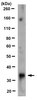
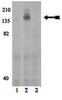
Western blot: 1-10 μg/mL using ECL. 83-90kDa bands, membrane preparations are recommended (Masilamani et al., 1999).
ELISA: 0.5-1.0 mg/mL using 1 mg/mL control peptide to coat plate.
Optimal working dilutions must be determined by the end user.
Biological Information
Immunogen
A 20 amino acid peptide sequence near the N-terminus of rat ENaC beta. The immunogen sequence is 100% conserved in mouse, 94% in rabbit, 81% in human, 76% in ovine and 64% in xenopus.
Concentration
Please refer to the Certificate of Analysis for the lot-specific concentration.
Host
Rabbit
Specificity
Recognizes rat Epithelial Sodium Channel beta (ENaC beta). The immunogen shows no significant sequence homology with other ENaC subunits.
FUNCTION: SwissProt: P51168 # Sodium permeable non-voltage-sensitive ion channel inhibited by the diuretic amiloride. Mediates the electrodiffusion of the luminal sodium (and water, which follows osmotically) through the apical membrane of epithelial cells. Controls the reabsorption of sodium in kidney, colon, lung and sweat glands. Also plays a role in taste perception. SIZE: 640 amino acids; 72659 Da SUBUNIT: Heterotetramer of two alpha, one beta and one gamma subunit. A delta subunit can replace the alpha subunit. Interacts with the WW domains of NEDD4, NEDD4L, WWP1 and WWP2. SUBCELLULAR LOCATION: Apical cell membrane; Multi-pass membrane protein. Note=Apical membrane of epithelial cells. PTM: Phosphorylated on serine and threonine residues (By similarity). DISEASE: SwissProt: P51168 # Defects in SCNN1B are a cause of autosomal recessive pseudohypoaldosteronism type 1 (PHA1) [MIM:264350]. PHA1 is a rare salt wasting disease resulting from target organ unresponsiveness to mineralocorticoids. There are 2 forms of PHA1: the autosomal recessive form that is severe, and the dominant form which is more milder and due to defects in mineralocorticoid receptor. Autosomal recessive PHA1 is characterized by an often fulminant presentation in the neonatal period with dehydration, hyponatraemia, hyperkalaemia, metabolic acidosis, failure to thrive and weight loss. & Defects in SCNN1B are a cause of Liddle syndrome [MIM:177200]. It is an autosomal dominant disorder characterized by pseudoaldosteronism and hypertension associated with hypokalemic alkalosis. The disease is caused by constitutive activation of the renal epithelial sodium channel. SIMILARITY: SwissProt: P51168 ## Belongs to the amiloride-sensitive sodium channel family.
Physicochemical Information
Dimensions
Materials Information
Toxicological Information
Safety Information according to GHS
Safety Information
Product Usage Statements
Usage Statement
Unless otherwise stated in our catalog or other company documentation accompanying the product(s), our products are intended for research use only and are not to be used for any other purpose, which includes but is not limited to, unauthorized commercial uses, in vitro diagnostic uses, ex vivo or in vivo therapeutic uses or any type of consumption or application to humans or animals.
Storage and Shipping Information
Storage Conditions
Maintain at -20°C in undiluted aliquots for up to 6 months from date of receipt. Avoid repeated freeze/thaw cycles.
Identification of a bone marrow-derived epithelial-like population capable of repopulating injured mouse airway epithelium. Amy P Wong,Armand Keating,Wei-Yang Lu,Pascal Duchesneau,Xinghua Wang,Adrian Sacher,Jim Hu,Thomas K Waddell The Journal of clinical investigation
119
2009
The bone marrow compartment is enriched in stem and progenitor cells, and an unidentified subpopulation of these cells can contribute to lung epithelial repair. Here we identify this subpopulation and quantitate its relative contribution to injured airway epithelium. A subpopulation of adherent human and murine bone marrow cells that expresses Clara cell secretory protein (CCSP) was identified using flow cytometry. When cultured at the air-liquid interface in ex vivo cultures, Ccsp+ cells expressed type I and type II alveolar markers as well as basal cell markers and active epithelial sodium channels. Ccsp+ cells preferentially homed to naphthalene-damaged airways when delivered transtracheally or intravenously, with the former being more efficient than the latter. Interestingly, naphthalene-induced lung damage transiently increased Ccsp expression in bone marrow and peripheral circulation. Furthermore, lethally irradiated Ccsp-null mice that received tagged wild-type bone marrow contained donor-derived epithelium in both normal and naphthalene-damaged airways. This study therefore identifies what we believe to be a newly discovered cell in the bone marrow that might have airway reconstitution potential in the context of cell-based therapies for lung disease. Additionally, these data could reconcile previous controversies regarding the contribution of bone marrow to lung regeneration.
Role of the alpha-, beta-, and gamma-subunits of epithelial sodium channel in a model of polygenic hypertension. Kreutz, R, et al. Hypertension, 29: 131-6 (1997)
1997
The pathophysiological basis of Liddle's syndrome, a rare autosomal dominant form of arterial hypertension, has been found to rest on missense mutations or truncations of the beta- and gamma-subunits of the epithelial sodium channel. The hypothesis has been advanced that molecular variants of these genes might also contribute to the common polygenic forms of hypertension. We tested this hypothesis by performing a cosegregation study in a reciprocal cross between the stroke-prone spontaneously hypertensive rat (SHRSPHD) and a Wistar-Kyoto rat (WKY-1HD) reference strain. We carried out genetic mapping and chromosomal assignment of the alpha-, beta-, and gamma-subunits of the epithelial sodium channel using both linkage analysis and fluorescent in situ hybridization techniques. We demonstrate that in the rat, the beta- and gamma-subunits, as in humans, are in close linkage; they map to rat chromosome 1 and cosegregate with systolic pressure after dietary NaCl (logarithm of the odds [LOD] score, 3.7), although the peak LOD score of 5.0 for this quantitative trait locus was detected 4.4 cM away from the beta-/gamma-subunit locus. The alpha-subunit was mapped to chromosome 4 and exhibited no linkage to blood pressure phenotype. Comparative analysis of the complete coding sequences of all three subunits in the SHRSPHD and WKY-1HD strains revealed no biologically relevant mutations. Furthermore, Northern blot comparison of mRNA levels for all three subunits in the kidney showed no differences between SHRSPHD and WKY-1HD. Our results fail to support a material contribution of the epithelial sodium channel genes to blood pressure regulation in this model of polygenic hypertension.
Mutations in subunits of the epithelial sodium channel cause salt wasting with hyperkalaemic acidosis, pseudohypoaldosteronism type 1 Chang, S.S. et al. Nat. Genet., 12(3):248-253 (1996)
1996
Cloning, chromosomal localization, and physical linkage of the beta and gamma subunits (SCNN1B and SCNN1G) of the human epithelial amiloride-sensitive sodium channel Voilley, N. et al. Genomics., 28(3):360-365 (1995)
1994
The epithelial amiloride-sensitive sodium channel constitutes the rate limiting step for sodium reabsorbtion by the epithelial lining the distal part of the kidney tubule, the urinary bladder and the distal colon. Reabsorbtion of sodium through this channel, which is regulated by hormones such as aldosterone and vasopressin, is one of the essential mechanisms involved in the regulation of sodium balance, blood volume and blood pressure. Here we isolate a DNA from epithelial cells of rat distal colon and identify it by functional expression of an amiloride-sensitive sodium current in Xenopus oocyte. The deduced polypeptide (698 amino acids) has at least two putative transmembrane segments. Expression of this protein in Xenopus oocytes reconstitutes the functional properties of the highly selective amiloride-sensitive, epithelial sodium channel. The gene encoding this rat sodium channel subunit shares significant sequence similarity with mec-4 and deg-1, members of a family of Caenorhabditis elegans genes involved in sensory touch transduction and, when mutated, neuronal degeneration. We propose that the gene products of these three genes are members of a gene family coding for cation channels.