Wenn Sie das Fenster schließen, wird Ihre Konfiguration nicht gespeichert, es sei denn, Sie haben Ihren Artikel in die Bestellung aufgenommen oder zu Ihren Favoriten hinzugefügt.
Klicken Sie auf OK, um das MILLIPLEX® MAP-Tool zu schließen oder auf Abbrechen, um zu Ihrer Auswahl zurückzukehren.
Wählen Sie konfigurierbare Panels & Premixed-Kits - ODER - Kits für die zelluläre Signaltransduktion & MAPmates™
Konfigurieren Sie Ihre MILLIPLEX® MAP-Kits und lassen sich den Preis anzeigen.
Konfigurierbare Panels & Premixed-Kits
Unser breites Angebot enthält Multiplex-Panels, für die Sie die Analyten auswählen können, die am besten für Ihre Anwendung geeignet sind. Unter einem separaten Register können Sie das Premixed-Cytokin-Format oder ein Singleplex-Kit wählen.
Kits für die zelluläre Signaltransduktion & MAPmates™
Wählen Sie gebrauchsfertige Kits zur Erforschung gesamter Signalwege oder Prozesse. Oder konfigurieren Sie Ihre eigenen Kits mit Singleplex MAPmates™.
Die folgenden MAPmates™ sollten nicht zusammen analysiert werden: -MAPmates™, die einen unterschiedlichen Assaypuffer erfordern. -Phosphospezifische und MAPmate™ Gesamtkombinationen wie Gesamt-GSK3β und Gesamt-GSK3β (Ser 9). -PanTyr und locusspezifische MAPmates™, z.B. Phospho-EGF-Rezeptor und Phospho-STAT1 (Tyr701). -Mehr als 1 Phospho-MAPmate™ für ein einziges Target (Akt, STAT3). -GAPDH und β-Tubulin können nicht mit Kits oder MAPmates™, die panTyr enthalten, analysiert werden.
.
Bestellnummer
Bestellinformationen
St./Pkg.
Liste
Dieser Artikel wurde zu Ihren Favoriten hinzugefügt.
Wählen Sie bitte Spezies, Panelart, Kit oder Probenart
Um Ihr MILLIPLEX® MAP-Kit zu konfigurieren, wählen Sie zunächst eine Spezies, eine Panelart und/oder ein Kit.
Custom Premix Selecting "Custom Premix" option means that all of the beads you have chosen will be premixed in manufacturing before the kit is sent to you.
Catalogue Number
Ordering Description
Qty/Pack
List
Dieser Artikel wurde zu Ihren Favoriten hinzugefügt.
Spezies
Panelart
Gewähltes Kit
Menge
Bestellnummer
Bestellinformationen
St./Pkg.
Listenpreis
96-Well Plate
Menge
Bestellnummer
Bestellinformationen
St./Pkg.
Listenpreis
Weitere Reagenzien hinzufügen (MAPmates erfordern die Verwendung eines Puffer- und Detektionskits)
Menge
Bestellnummer
Bestellinformationen
St./Pkg.
Listenpreis
48-602MAG
Buffer Detection Kit for Magnetic Beads
1 Kit
Platzsparende Option Kunden, die mehrere Kits kaufen, können ihre Multiplex-Assaykomponenten in Kunststoffbeuteln anstelle von Packungen erhalten, um eine kompaktere Lagerung zu ermöglichen.
Dieser Artikel wurde zu Ihren Favoriten hinzugefügt.
Das Produkt wurde in Ihre Bestellung aufgenommen
Sie können nun ein weiteres Kit konfigurieren, ein Premixed-Kit wählen, zur Kasse gehen oder das Bestell-Tool schließen.
AB3487
Sigma-AldrichAnti-Transferrin Antibody
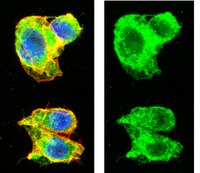
Anti-Transferrin Antibody detects level of Transferrin & has been published & validated for use in ELISA & WB.
More>>Anti-Transferrin Antibody detects level of Transferrin & has been published & validated for use in ELISA & WB. Less<<
Anti-Transferrin Antibody: SDB (Sicherheitsdatenblätter), Analysenzertifikate und Qualitätszertifikate, Dossiers, Broschüren und andere verfügbare Dokumente.
The protein encoded by this gene is a glycoprotein with an approximate molecular weight of 76.5 kDa. It is thought to have been created as a result of an ancient gene duplication event that led to generation of homologous C and N-terminal domains each of which binds 1 ion of ferric iron. The function of this encoded protein is to transport iron from the intestine, reticuloendothelial system, and liver parenchymal cells to all proliferating cells in the body. In addition to its function in iron transport, this protein may also have a physiologic role as granulocyte/pollen-binding protein (GPBP) involved in the removal of certain organic matter/allergins from serum.
FUNCTION: SwissProt: P02787 # Transferrins are iron binding transport proteins which can bind two Fe(3+) ions in association with the binding of an anion, usually bicarbonate. It is responsible for the transport of iron from sites of absorption and heme degradation to those of storage and utilization. Serum transferrin may also have a further role in stimulating cell proliferation. SIZE: 698 amino acids; 77050 Da SUBUNIT: Monomer. SUBCELLULAR LOCATION: Secreted. TISSUE SPECIFICITY: Expressed by the liver and secreted in plasma. DISEASE:SwissProt: P02787 # Defects in TF are the cause of atransferrinemia [MIM:209300]. Atransferrinemia is rare autosomal recessive disorder characterized by iron overload and hypochromic anemia. SIMILARITY: SwissProt: P02787 ## Belongs to the transferrin family. & Contains 2 peptidase S60 domains. MISCELLANEOUS: The peptidase S60 domains do not have protease function as the catalytic residues are missing.
Physicochemical Information
Dimensions
Materials Information
Toxicological Information
Safety Information according to GHS
Safety Information
Product Usage Statements
Usage Statement
Unless otherwise stated in our catalog or other company documentation accompanying the product(s), our products are intended for research use only and are not to be used for any other purpose, which includes but is not limited to, unauthorized commercial uses, in vitro diagnostic uses, ex vivo or in vivo therapeutic uses or any type of consumption or application to humans or animals.
Storage and Shipping Information
Storage Conditions
Maintain at -20°C in undiluted aliquots up to 6 months after date of receipt. Avoid repeated freeze/thaw cycles.
Transferrin (Tf) is the major iron binding protein in vertebrate serum. It shares homologous amino acid sequences with four other proteins: lactotransferrin, ovotransferrin, melanoma antigen p97, and HuBlym-1. Antigen p97 and the Tf receptor genes have been mapped on human chromosome 3. The goal of the study described here was to initiate the characterization of the Tf gene by identifying and characterizing its cDNA and mapping its chromosomal location. Recombinant plasmids containing human cDNA encoding Tf have been isolated by screening an adult human liver library with a mixed oligonucleotide probe. Within the 2.3 kilobase pairs of Tf cDNA analyzed, there is a probable leader sequence encoded by 57 nucleotides followed by 2037 nucleotides that encode the homologous amino and carboxyl domains. During evolution, three areas of the homologous amino and carboxyl domains have been strongly conserved, possibly reflecting functional constraints associated with iron binding. Chromosomal mapping by in situ hybridization and somatic cell hybrid analysis indicate that the Tf gene is located at q21-25 on human chromosome 3, consistent with linkage of the Tf, Tf receptor, and melanoma p97 loci.