


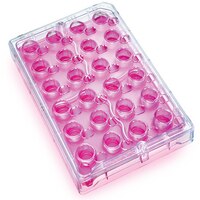
Millicell® 24-well Cell Culture Plate
An ideal 24-well plate system for a range of cell-based assays using a patented cell-culture plate which improves cell growth and analysis.
Less<<

Recommended Products
Overview
Specifications
Ordering Information
Documentation
References
| Reference overview | Application |
|---|---|
| Propagation of human embryonic stem cells in a microporous membrane-based indirect co-culture system Kelsey Albert, Steven Sheridan, Louise Laurent, Igor Ulitsky, Ron Shamir, Jeanne Loring, & Raj R. Rao Biochemical and Biophysical Research Communications 2010 | |
| Effects of cimetidine on the biological behaviors of human gastric cancer cells Jiang CG, Liu FR, Xu HM, Wu T, Gao J. Zhonghua Yi Xue Za Zhi. 2006 Jul 11;86(26):1813-6 2006 | |
| Overexpression of TIMP-1 mediated by recombinant adenovirus in hepatocellular carcinoma cells inhibits proliferation and invasion in vitro Xia D, Yan LN, Xie JG, Tong Y, Yan ML, Wang XP, Zhang MM, Zhao LY. Hepatobiliary Pancreat Dis Int. 2006 Aug;5(3):409-15. 2006 | |
| Glucose utilization by the retinal pigment epithelium: evidence for rapid uptake and storage in glycogen, followed by glycogen utilization. Senanayake P, Calabro A, Hu JG, Bonilha VL, Darr A, Bok D, Hollyfield JG. Exp Eye Res. 2006 Aug;83(2):235-46. Epub 2006 May 11. 2006 | Cell Culture |
| Development of mouse embryos co-cultured with polarized or non-polarized uterine epithelial cells using sequential culture media. Azadbakht M, Valojerdi MR, Mowla SJ. Anim Reprod Sci. 2006 Jul 27 2006 | Cell Culture |
| Astrocyte growth effects of vascular endothelial growth factor (VEGF) application to perinatal neocortical explants: Receptor mediation and signal transduction pathways Nina Mani, Alfia Khaibullina, Janette Krum and Jeffrey Rosenstein Experimental Neurology 192 (2005); 394-406 2005 | Cell Culture |
| Subcellular localisation of recombinant a and g-synuclein Christian Specht, Cezar Tigaret, George Rast, Agnea Thalhammer, York Rudhard and Ralf Schoepfer Mol. Cell. Neurosci., 28 (2005); 326-334 2005 | Cell Culture |
| Establishment of the organotypic model of amyotrophic lateral sclerosis from the SD rats' spinal cord Diao ZY, et. al,Beijing Da Xue Xue Bao. 2005 Apr 18;37(2):134-8. Chinese. Beijing Da Xue Xue Bao. 2005 Apr 18;37(2):134-8. Chinese. 2005 | Cell Culture |
| A comparison of polarized and non-polarized human endometrial monolayer culture systems on murine embryo development. Baghaban Eslami Nejad MR, Rezazadeh Valojerdi M, Kazemi Ashtiani S. J Exp Clin Assist Reprod. 2005 Apr 19;2(1):7. 2005 | Cell Culture |
| Neural stem cells protect against glutamate-induced excitotoxicitiy and promote survival of injured motor neurons through the secretion of neurotrophic factors Jeronia Llado, Christine Haenggeli, Nicholas Maragakis, Evan Snyder and Jeffrey Rothstein Mol. Cell. Neurosci. , 27 (2004); 322-331 2004 | Cell Culture |
FAQ
| Question | Answer |
|---|---|
| Why do the electrodes need to be replaced every six months? | In general, electrodes have a 6 month lifetime if they are used continuously. The electrodes have a silver-silver chloride pellete that is depleted everytime it is used. It is the silver silver chloride pellete that creates the potential. |
| What voltage value can I expect for my cell type? | We DO NOT recommend using this function on the instrument. The Millicell-ERS will make voltage readings on only a few kinds of high-voltage generating cells (for example, it will not work on MDCK cells). We do have information on epithelial cells which typically have voltage values of 0-30mV. |
| What resistance value can I expect for my cell types? | Some resistance values have been published for various cell types. Resistance measurements will also depend on the type of cell culture (i.e. cell line, tissue or native cells). In general, the resistance range for epithelial cells is 10-20,000 ohms/cm2. An example of an established epithelial cell line with well defined electrical resistance is MDCK cells. MDCK cells displaying tight junctions show resistance of 5000 ohms/cm2. |
| What is the porosity of the Millicell Culture Plate Inserts? | The porosity of the Millicell Insert membranes are as follows: HATF - approx 80% CM - approx 80% PC and PCF - approx 10% |
| What is the length of the legs on the Millicell Insert unit? | The legs on the Millicell unit are approximately 1-2mm. |
| What is the thickness of the Millicell-PC and -PCF membranes? | The thickness of the PC and PCF membranes are 10 um. |
| What is the thickness of the Millicell-CM membrane? | The thickness of the Millicell-CM memnbrane is approximately 50 um. |
| What is the overall height of the Millicell-CM Organotypic insert? | The overall wall height including the feet is 5 mm. |
| What Volume of media should be used on the inside and outside of the 12 mm and 30mm Millicell cell culture insert devices? | Inside and outside liquid heights are critical and must be adjusted until equal. The suggested volumes below can vary due to plate well volume variations allowed by different cell culture plate manufacturers. 12 mm inserts: Inside: 0.4 mL Outside: 0.6 mL |
| Which ECM coating do we recommend for endothelial cells? | We recommend the Type 1 Rat Tail Collagen for most endothelial cells. It is recommended to be done with ethanol wetting and is a very cost efficient way to do ECM and seems to be well tolerated by most endothelial cells. |
Related Products & Applications
Product Families

Millicell® Cell Culture InsertsOptimized cell growth, attachment and differentiationLearn More >> |
Related Products By: Application Facete
| Sample Preparation |
| Dialysis and Filtration |
Related Products By: Brand Facete
| Millicell® |
)
)
)